AI & Privacy Protection: Addressing The Need For An AI Confidentiality Privilege

Imagine you’re using ChatGPT to help you diagnose a medical issue you are having, giving the model personal details regarding the ailments you are experiencing. Or perhaps you are using it to get over a traumatic moment in your life, disclosing intimate details of your psyche, past experiences, and feelings to help you cope with the intense feelings you are experiencing. Now let’s fast forward, and say you’re involved in legal trouble, could be civil or criminal, and those submissions to ChatGPT are deemed to be relevant enough to be discoverable. Meaning that a lawyer and their team are allowed to sort through those intimate details you professed to ChatGPT and use them as evidence in court to help meet the necessary legal standard to obtain a conviction or money judgement against you.

Sam Altman, the CEO of Open AI, has acknowledged these privacy shortfalls. While on a podcast with Theo Von he said “People talk about the most personal shit in their lives to ChatGPT… People use it- young people, especially, use it as a therapist, a life coach; having these relationship problems and asking ‘what should I do?’ And right now, if you talk to a therapist or a lawyer or a doctor about those problems, there’s legal privilege for it. There’s doctor-patient confidentiality, there’s legal confidentiality, whatever. But we have not figured this out for ChatGPT”.

Mr. Altman has a point, there’s a significant gap in confidentiality when it comes to AI usage. In most U.S. jurisdictions, communications between a patient and a physician for the purpose of medical diagnosis or treatment are privileged meaning they cannot be disclosed without the patient’s consent, even if they meet hearsay exceptions in some instances. The same goes for communications with a therapist, the reasoning behind the need for confidentiality is to allow a therapist’s patients to feel free to open up about their feelings in order to help with their treatment. A similar exception also exists for priest and penitent relationships, protecting communications aimed at aiding people seeking spiritual guidance. However, under the current legal milieu there is not a widely recognized  carve out for submission into an Artificial intelligence model, and this omission is a cause of concern for consumers.

Realistically, not all of your conversations with an LLM model such as ChatGPT are entitled to confidentiality, after all you are inputting information into a database that is constantly monitored to improve the model, and to flag any misuse of the platform. However, that doesn’t mean some of your conversations should not be protected. It is vital that a legal framework is developed that helps guide AI developers, lawyers, and AI consumers regarding this vital impasse of privacy . The legislation would ideally address several issues such as copyright, intellectual property, consumer protection, and establishing transparency and accountability measures. But arguably the most important issue to address would be the use of confidential information regarding medical, religious, and psychological advice in court rooms.
Key Issues the AI Confidentiality Law Should Address

AI models that require inputs from users, such as ChatGPT, Claude, or Grok, should allow users to opt in to create a confidential channel of communication. Laws could be drafted to encourage AI service providers that offer conversational interfaces to provide users with a clearly marked “Confidential Communication Mode” that, when activated, triggers enhanced legal privacy protections equivalent to those afforded to traditional privileged communications. This feature must be easily accessible and explained in plain language to users.

The law should also address the need for affirmative consent to confidential mode activation through a multistep verification process that includes: (a) acknowledgment of the confidential nature of the communication, (b) understanding of the limitations and scope of protection, and (c) explicit consent to the creation of privileged communication records. Additionally, the user would have to agree that the use of the confidential mode activation would be used in good faith, in other words intended for appropriate scope of confidentiality regarding medical advice, religious confessions, and psychological therapy. Otherwise, bad actors could simply use the feature for illicit purposes not meant to be protected. The companies could expand the scope of the confidentiality mode to address other subjects, but that would not entitle communications that are not medical, religious, or psychological in nature from protection under the proposed law. However, while in confidential mode and despite not receiving the same privileged protection, users could still find value in confidential mode because the law would also address how the data is handled by the company.

For example, the law should also stipulate that communications designated as confidential must be stored in segregated, encrypted databases separate from general training data. This is similar to the Illinois Biometric Information Privacy Act (BIPA), which regulates the collection and storage of biometric data obtained from consumers The confidential communications could be used for model training in a more limited capacity for improvement. This added protection would ideally strip away all personally identifiable information to allow the models to train for improvement while maintaining user privacy. Further, like in BIPA, communications made under the proposed confidential mode must be subject to automatic deletion after a period not exceeding a year, unless the user explicitly consents to extending the retention period. Further, consumers must retain the unilateral right to delete confidential communications at any time without explanation or justification.

The scope for the AI confidentiality privileged will not be absolute.  Rather it will be limited similar to any other confidentiality privilege, with exceptions only for things such as: (a) imminent threat of harm to self or others, (b) child abuse reporting requirements, and (c) court-ordered disclosure following in-camera judicial review demonstrating compelling need and lack of alternative sources. This requires AI companies to rigorously flag any communication that falls below the aforementioned standards.

Further, any attempt to obtain confidential AI communications through legal discovery must meet a “clear and convincing evidence” standard demonstrating that: (a) the information is essential to the legal proceeding, (b) no alternative sources exist, (c) the probative value substantially outweighs privacy concerns, and (d) less invasive means of obtaining the information have been exhausted.

This legislative framework should also require a phased implementation approach, with major AI service providers having roughly 3 years from the establishment of the law to develop and deploy confidential communication capabilities. The legislation should include provisions for regular review and updates to address evolving technology and emerging privacy concerns, which is key in an ever evolving field.

This proposed AI law may well balance the legitimate need for AI’s development while balancing users’ fundamental privacy rights, creating a framework that recognizes the unique role AI is beginning to play in personal healthcare and psychological support while establishing meaningful legal protections comparable to traditional professional relationships.

Sources:

-A Brief History of Information Privacy Law
Daniel J. Solove

-The Rules of Federal Procedure

-This Past Weekend Episode 59 by Theo Von
Artificial Intelligence & American Copyright Law: Analyzing the Copyright Office’s AI Report

Copyright Office’s AI Report: The Good, The Bad, and The Controversial

The Copyright Office just dropped Part 3 of its AI report, which aimed at addressing certain copyright law in regards to Artificial Intelligence. The thing that’s got everyone talking is the fact that the report was supposed to tackle infringement issues head on, but instead teased us by saying that answer will come up in “Part 4” that is expected to be released at a later date. Let’s dive into what was actually discussed.

Legal Theory: A Case by Case Basis

The report’s central thesis is a pretty straightforward legal theory. Basically, they recommend that there will be no blanket rule on whether training AI on copyrighted content constitutes infringement or fair use. Everything gets the case by case treatment, which is both realistic and frustrating depending on where you sit. That’s because most lawyers like clear bright line rules backed up by years of precedent, but when attempting to make legal frameworks regarding emerging technologies, the brightline approach is easier said than done.

The report acknowledges that scraping content for training data is different from generating outputs, and those are different from outputs that get used commercially. Each stage implicates different exclusive rights, and each deserves separate analysis. So in essence, what’s  actually useful here is the recognition that AI development involves multiple stages, each with its’ unique copyright implications.

This multi stage approach makes sense, but it also means more complexity for everyone involved. Tech companies can’t just assume that fair use covers everything they’re doing and content creators can’t assume it covers nothing. The devil is in the details.

Transformative Use Gets Complicated

The report reaffirms that various uses of copyrighted works in AI training are “likely to be transformative,” but then immediately complicates things by noting that transformative doesn’t automatically mean fair. The fairness analysis depends on what works were used, where they came from, what purpose they served, and what controls exist on outputs.

This nuanced approach is probably correct legally, but it’s also a nightmare for anyone trying to build AI systems at scale. You can’t just slap a “transformative use” label on everything and call it a day. The source of the material matters, and whether the content was pirated or legally obtained can factor into the analysis. So clearly purpose also matters since commercial use and research use will likely yield different results in the copyright realm. Control and mitigation matter in this context because developing the necessary guardrails is paramount to preventing direct copying or market substitution.

Nothing too revolutionary here, but the emphasis on these factors signals that the Copyright Office is taking a more sophisticated approach than some of the more simplistic takes we’ve seen from various opinions on this matter. This should be reassuring since a one size fits all approach at such an early stage of developing AI could stifle innovation. However if things are left to be too uncontrolled copyrighted works may face infringements to their copyright.

The Fourth Factor Controversy

Here’s where things get interesting and controversial. The report takes an expansive view of the fourth fair use factor: which is the effect on the potential market for the copyrighted work. That is because too many copyrighted works flooding the market brings fears of market dilution, lost licensing opportunities, and broader economic impacts.

The Office’s position is that the statute covers any “effect” on the potential market, which is broad interpretation. But that broad interpretation has a reason, they are worried about the “speed and scale” at which AI systems can generate content, creating what they see as a “serious risk of diluting markets” for similar works. Imagine an artist creates a new masterpiece only to get it copied by an AI model which makes the piece easily recreatble by anyone, diluting the value of the original masterpiece. These types of things are happening on the market today.

This gets particularly thorny when it comes to style. The report acknowledges that copyright doesn’t protect style per se, but then argues that AI models generating “material stylistically similar to works in their training data” could still cause market harm. That’s a fascinating tension, you can’t copyright a style but you might be able to claim market harm from AI systems that replicate it too effectively. It is going to be interesting to see how a court applies these rules in the coming future.

This interpretation could be a game-changer, and not necessarily in a good way for AI developers. If every stylistic similarity becomes a potential market harm argument, the fair use analysis becomes much more restrictive than many in the tech industry have been assuming.

The Guardrails

One of the more practical takeaways from the report is its emphasis on “guardrails” as a way to reduce infringement risk. The message is clear: if you’re building AI systems, you better have robust controls in place to prevent direct copying, attribution failures, and market substitution.

This is where the rubber meets the road for AI companies. Technical safeguards, content filtering, attribution systems, and output controls aren’t just up to the discretion of the engineers anymore they’re becoming essential elements of any defensible fair use argument.

The report doesn’t specify exactly what guardrails are sufficient, which leaves everyone guessing. But the implication is clear: the more you can show you’re taking steps to prevent harmful outputs, the stronger your fair use position becomes. So theoretically if a model has enough guardrails they may be able to mitigate their damages if the model happens to accidently output copyrighted works.

RAG Gets Attention

The report also dives into Retrieval Augmented Generation (RAG), which is significant because RAG systems work differently from traditional training approaches. Instead of baking copyrighted content into model weights, RAG systems retrieve and reference content dynamically.

This creates different copyright implications: potentially more like traditional quotation and citation than wholesale copying. But it also creates new challenges around attribution, licensing, and fair use analysis. The report doesn’t resolve these issues, but it signals that the Copyright Office is paying attention to the technical details that matter.

Licensing

The report endorses voluntary licensing and extended collective licensing as potential solutions, while rejecting compulsory licensing schemes or new legislation “for now.” This is probably the most politically palatable position, but it doesn’t solve the practical problems.

Voluntary licensing sounds great in theory, but the transaction costs are enormous when you’re dealing with millions of works from thousands of rights holders. Extended collective licensing might work for some use cases, but it requires coordination that doesn’t currently exist in most creative industries.

The “for now” qualifier is doing a lot of work here. It suggests that if voluntary solutions don’t emerge, more aggressive interventions might be on the table later.

The Real Stakes

What makes this report particularly significant isn’t just what it says, but what it signals about the broader policy direction. The Copyright Office is clearly trying to thread the needle between protecting creators and enabling innovation, but the emphasis on expansive market harm analysis tilts toward the protection side.

For AI companies, this report is a warning shot. The days of assuming that everything falls under fair use are over. The need for licensing, guardrails, and careful legal analysis is becoming unavoidable.

For content creators, it’s a mixed bag. The report takes their concerns seriously and provides some theoretical protection, but it doesn’t offer the clear-cut prohibitions that some have been seeking.

The real test will come in the courts, where these theoretical frameworks meet practical disputes. But this report will likely influence how those cases get decided, making it required reading for anyone in the AI space.

As we can see AI and copyright law is becoming only more and more complex. The simple answers that everyone wants don’t exist, and this report makes that abundantly clear. The question now is whether the industry can adapt to this new reality or whether we’re heading for a collision that nobody really wants.

An American Sovereign Wealth Fund: The Key to American Prosperity?

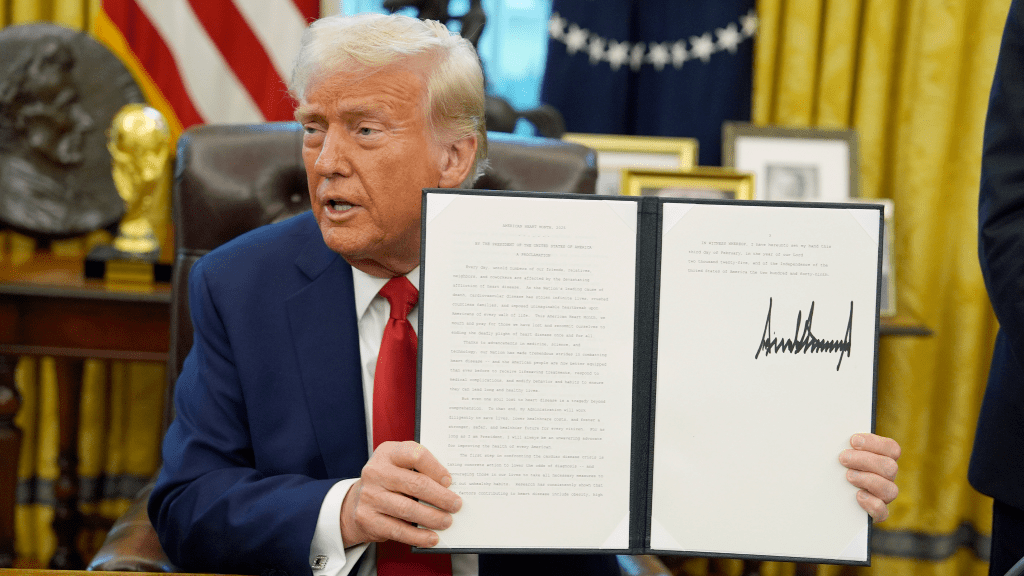
President Donald Trump has officially signed into law the creation of a U.S. sovereign wealth fund. This is one of the few of his controversial executive orders that have been signed that may have a bit of merit when it comes to addressing the affordability crisis the United States is facing.

A sovereign wealth fund is a government investment fund that pools and manages a nation’s revenues, often derived from natural resources, trade surpluses, or foreign exchange reserves, to generate long term wealth and stabilize the economy. Several economic powerhouses have a wealth fund: Norway,  Singapore, Saudi Arabia, and the United Arab Emirates (Dubai Fund) have used SWFs to diversify their economies, invest in global assets, and provide financial security for the youth. These funds have enabled these nations to achieve high levels of economic stability, global influence, & sustained growth, even during periods of global economic uncertainty, all while empowering their citizenry.

Trump signing the Executive Order 2/3/2023

The fund with the most long term exposure and demonstrated long term practical excellence is Singapore’s Central Provident Fund.

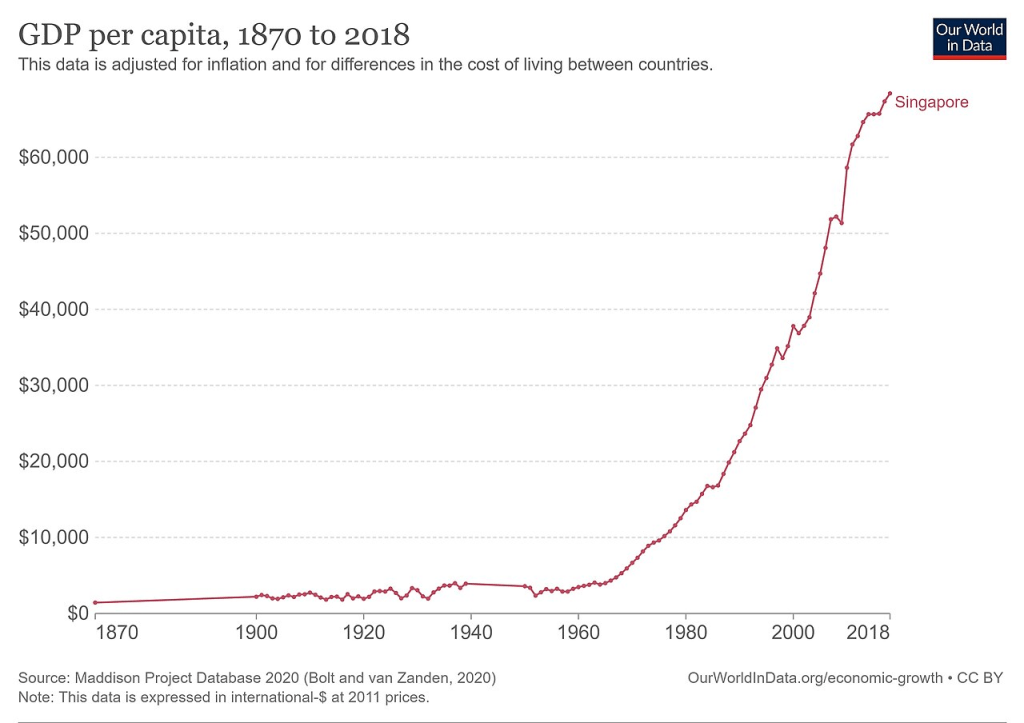
Singapore’s Central Provident Fund (CPF) offers a noteworthy model for the US. In the 1960s, Singapore faced significant economic challenges that necessitated comprehensive reforms. When Singapore became independent the nation faced significant economic challenges. Over 70% of households lived in overcrowded conditions, with a third residing in shanty towns on the city’s outskirts, and more than half of the population was illiterate. The situation was further exacerbated by a heavy influx of immigrants prior to Singapore’s expulsion from the Malaysian political union, leading to an unemployment rate of approximately 15-20%. (Asian Development Bank).

Fast forward 50 years, and Singapore’s transformation is remarkable. The literacy rate has soared to 97.65% as of 2021. The nation consistently ranks at the top globally in educational assessments for math, science, and reading. Unemployment has plummeted to around 2%, significantly lower than the global average of approximately 6%. Additionally, about 90.7% of Singaporeans are homeowners, a stark contrast to the United States, where the homeownership rate is at approximately 50%. This extraordinary progress can be largely attributed to the determination and hard work of Singapore’s populace,  as well as the Central Provident Fund. (Asian Development Bank).

The Central Provident Fund

Singapore’s exponential growth after establishment of CPF

Prime Minister Lee Kuan Yew recognized the potential of the existing Central Provident Fund (CPF), established in 1955 during British colonial rule, as a tool to address economic challenges. The Fund was originally designed as a compulsory savings scheme for retirement, the CPF required contributions from both employers and employees. Unlike traditional social security systems funded by taxes, the CPF allowed individuals to own and control their savings, providing flexibility in how funds were utilized. This structure enabled citizens to manage their accounts while also engaging with private banking institutions.

In 1968, the government expanded the CPF’s scope to include housing, permitting withdrawals for the purchase of government flats. This policy not only addressed housing shortages but also fostered social stability and economic growth. Over time, the CPF’s functions further extended to cover healthcare and education, ensuring that citizens’ basic needs were met and allowing them to focus on personal development and community engagement. These strategic expansions of the CPF were instrumental in transforming Singapore’s economy and enhancing the well-being of its population (Asian Development Bank, n.d.).

After the CPF expanded its focus to housing, enabling citizens to use their savings to purchase government built housing units the homeownership rate is now up to 90% in Singapore. For the U.S., a sovereign wealth fund could potentially support housing initiatives, allowing Americans to leverage tax advantaged savings for home purchases, thereby fostering ownership and equity building. (International Monetary Fund).

Beyond housing, the CPF encompasses healthcare and education, allowing citizens to allocate savings toward medical insurance and lifelong learning. This approach reduces financial burdens and enhances productivity by alleviating concerns over essential services. A U.S. sovereign wealth fund could adopt similar strategies, offering dedicated accounts for healthcare and education expenses, possibly with employer matched contributions to accelerate wealth accumulation. (International Monetary Fund).

Implementing such a system in the U.S. presents significant challenges and hurdles . Political resistance to state managed savings programs and the complexities of federalism could impede adoption. Additionally, effective management is crucial to prevent issues like corruption or market volatility. Nevertheless, the potential benefits such as; reduced wealth inequality, increased productivity, and a buffer against economic downturns- are alluring. (PricewaterhouseCoopers).

While the executive order establishing a U.S. sovereign wealth fund is still in its early stages, Singapore’s CPF demonstrates that integrating state oversight with individual agency can transform citizens into stakeholders. For modern Americans burdened by housing costs, medical debt, and student loans, a similar fund could offer substantial relief and innovate on America’s financial institutions in a positive way.

Richard E. Carroll explores the potential for sovereign wealth funds at both the state and federal levels in the United States as a solution to financial challenges. At the state level, 20 U.S. states have established SWFs to manage natural resource revenues and benefit their citizens. For example the Alaska Permanent Fund, established in 1976, is the most well known, currently valued at over $5 billion. Many Alaskans get dividends from this fund, giving them expendable income for education or subsistence needs. New Mexico has done something similar, reducing the tax burden of the average citizen by about $1,000. I for one am a firm advocate for a SWF.

The Fund could be used to invest in infrastructure projects, such as roads, bridges, renewable energy, and broadband, creating jobs and stimulating economic growth. However, generally Americans are skeptical of government run programs, particularly those involving personal savings and investments. Therefore, building public trust would be essential for the fund’s success, perhaps including an opt out for citizens would be beneficial, but after their decision to opt out they should not be eligible to receive any benefits from the program- which is within their right. However, if the fund is managed properly, a steady stream of income from the SWF, the federal government could reduce income, corporate, or sales taxes, which could in theory put money back into the pockets of citizens and businesses. In essence America would be paying you for contributing positively to the American economy.

Having outlined all of that, the key question is whether the U.S. can adapt this model at the Federal level complicated by its diverse landscape. Time will tell.

Sources:

______________________________________________

  • International Monetary Fund. (2020). Sovereign wealth funds and public savings: Lessons from global models.  

The Truth On The H-1B Visa Program: Myths vs. Reality & The Need For Reform.

There’s been a debate raging regarding an immigration program known as the H1b visa program. The H1b program is a program used to source specialized foreign workers into jobs that require specialized skills such as tech or engineering.  Two prominent individuals in the tech and political sphere spurred the debate. Republicans, Vivek Ramasway and Elon Musk, claimed the program was necessary because Americans were ‘too dumb and stupid’ to do the high level work America desperately needs to continue to be the haven of scientific research, innovation, and technical development. I suspect they thought this messaging would go down well with their MAGA base- it did not.  

Instead, countless Americans from backgrounds ranging from CEOs of tech companies, common workers, and Democrats challenged Vivek & Elon’s assertions that Americans were too stupid to work in tech and high skilled labor jobs.

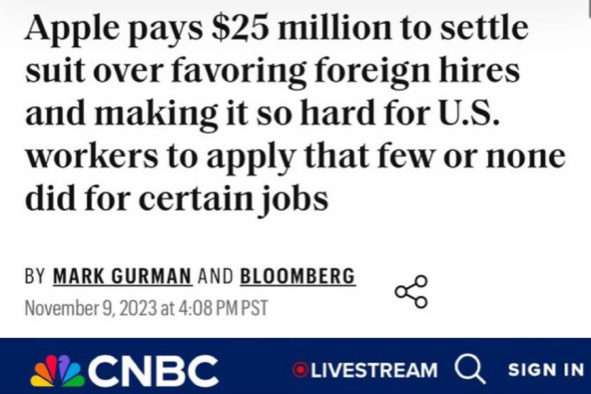
This inspired people to dig into the H1b visa program since a lot of the visas issued are within the public domain. What was revealed was a long list of fraud, discriminatory hiring, and deceptive practices. For example, it was found that several big companies such as Google and Apple settled multi million dollar settlements acknowledging they discriminated against American workers by undercutting them to hire cheaper foreign nationals from countries they preferred, mainly India, a country known for poor working conditions and subservient workers who do not fight labor abuses. Furthermore, it seems over 70% of H1b visas have been allocated to India at a disproportionate rate in comparison to other nations.

Here, we dissect four common misconceptions about the H1B visa, providing a clearer picture of its impact and operation.

Misconception 1: H1B is Necessary Because Americans Are Dumb

This sweeping statement is not only offensive but also a gross oversimplification of the program’s purpose. People claim the H1B visa aims to address specific skill shortages in fields like STEM, where there might be a lack of local talent or where companies need highly specialized skills. But that is not the case, the narrative of a skill shortage is often a facade for wage suppression, rather than an actual need for foreign talent due to intellectual inadequacy of Americans.

Numerous reports from the Economic Policy Institute highlight that the labor market’s dynamics are more complex, involving wage competition rather than a lack of skilled U.S. workers. The truth to the matter is that it is not about intelligence and more about under cutting American workers to hirer cheaper labor abroad. Simply put companies might find it more cost effective or convenient to employ foreign nationals rather than investing in domestic training or offering competitive wages to American workers.

American universities consistently produce graduates in STEM fields who are highly skilled, thanks to top tier education and research opportunities. Moreover, the U.S. has a rich ecosystem of tech education beyond traditional universities, including coding bootcamps, online learning platforms, and community colleges, which are turning out a steady stream of tech professionals equipped with the latest skills. The adaptability of the American workforce is a key factor; many professionals from diverse backgrounds are successfully transitioning into tech roles through reskilling and upskilling programs. The tech industry’s expansion across the U.S., not just in Silicon Valley, further supports the idea that domestic talent is abundant and capable. This diversity in tech roles, from software development to cybersecurity, means there’s a broad spectrum of jobs being filled by American workers. The issue, therefore, isn’t a shortage of American talent ready for tech jobs but rather ensuring that companies invest in this domestic workforce through competitive hiring practices, rather than automatically defaulting to hiring from abroad under the H1B visa program for cost efficiencies.

Misconception 2: H1B Gets the Best and Brightest

While the H1B visa does aim to attract highly skilled workers, the reality on the ground often differs from this ideal. Not every H1B visa holder is necessarily at the pinnacle of their profession. Research from UC Berkeley has shown that a substantial number of these workers are engaged in routine tasks rather than innovative or high level work, challenging the notion that the program solely brings in top tier talent. The Immigration Innovation Act of 2018 sought to refine this by prioritizing education and skills, but implementation has been inconsistent.

Research from UC Berkeley has shown that a substantial number of these workers are engaged in routine tasks rather than innovative or high level work, challenging the notion that the program solely brings in top tier talent. The Immigration Innovation Act of 2018 sought to refine this by prioritizing education and skills, but implementation has been inconsistent.

Further, Indian nationals and companies have been found engaging in widespread fraud, falsifying academic and work records, stealing from h1b salaries. Over the years, several high profile cases have come to light, highlighting a pattern of misuse and potential fraud. Companies like Infosys, TCS (Tata Consultancy Services), and Wipro, all Indian IT giants, have faced legal scrutiny for practices that include falsifying job roles, underpaying workers, and engaging in what’s colloquially known as the “bench and switch” scheme. This involves bringing workers into the country under the pretense of a specific job that does not exist, only to place them with another company or keep them on “bench” (unpaid or underpaid time) until a project becomes available.

One of the most significant cases involved Infosys, which in 2017 agreed to pay $34 million for allegedly misusing B1 visas instead of the more scrutinized H1B visas, thereby circumventing legal processes and wage regulations. Similarly, there have been instances where Indian consultancies were accused of submitting multiple applications for the same candidate to increase their chances in the H1B lottery, a practice that undermines the system’s integrity. This “gaming” of the lottery has been widely discussed on platforms like X, where users like @USTechWorkers have pointed out how these actions make the visa process a nightmare for genuine applicants.

Moreover, individual cases of fraud have been documented, such as the arrest of Ashish Sawhney in 2020, accused of a $21 million H1B visa fraud conspiracy by generating profits through fraudulent visa applications. Another case involved three Indian-origin men who pleaded guilty in 2024 to visa fraud, having operated a tech staffing firm that submitted fake job offers to secure H1B visas. These fraudulent activities not only exploit the visa system but also impact American workers by potentially displacing them with less expensive labor or filling positions with workers who might not meet the actual job requirements.

The broader implications include not just the legal ramifications for those involved but also a tarnished image of the H1B program, which was meant to benefit both the U.S. economy and the global talent pool.

Misconception 3: H1B Is A Fully Fair Practice with No Civil Rights Issues

There’s mounting evidence that the H1B visa could be part of a broader issue of workplace discrimination. Legal actions against companies like Cognizant, where a federal jury found discriminatory practices against non-Indian workers, illustrate this concern.

The U.S. Department of Labor and bodies like the EEOC are tasked with ensuring compliance with anti-discrimination laws, yet there are persistent allegations of preferential treatment for certain nationalities, particularly from India, in tech hiring. This raises significant civil rights questions about fairness and equality in employment opportunities.

The U.S. Department of Labor and the EEOC are tasked with ensuring compliance with anti-discrimination laws, yet there are persistent allegations and court dececiosn proving that preferential treatment for certain

nationalities, particularly from India, in tech hiring exists. This raises significant civil rights questions about fairness and equality in employment opportunities. The misuse of the H1B visa for cost-cutting rather than talent acquisition could lead to systemic discrimination against U.S. workers or workers from other nations, potentially violating civil rights by creating a workforce that does not reflect the diversity or merit of the broader talent pool.

Misconception 4: Indians Are Just Good at IT, Hence More H1B Visas

The dominance of Indian nationals in receiving H1B visas in the tech sector isn’t solely due to their aptitude in IT. Instead, it might reflect discriminatory practices by some firms. Indian IT consultancies have been accused of bias towards hiring from their own country, not just for cultural fit but also to leverage lower labor costs. This practice has led to lawsuits, with companies like Infosys and Wipro facing legal scrutiny for potentially discriminatory hiring practices.

While India has shown growth in its IT sector, its overall ranking in the World Competitiveness Yearbook by the Institute for Management Development (IMD) for IT infrastructure and digital competitiveness has not always placed India at the top. For instance, in the 2022 rankings, India was at 37th place, indicating it lags behind several countries in terms of overall IT competitiveness.  Reports from companies like NASSCOM have pointed out that only a fraction of engineering graduates are employable in industries needing high-level IT skills.

Despite India’s significant strides in adopting and developing technologies such as  machine learning, and blockchain, there’s a stark contrast in the skill readiness of its engineering workforce. Specifically, a report from TeamLease digital, an Indian research firm, indicates that only 2.5% of Indian engineers possess AI skills, and a mere 5.5% have basic programming capabilities. This statistic is alarming considering the technological ambitions of the nation and the USA’s receipt of their technical workers. The implications of this skills gap are profound. For India to maintain its competitive edge in the global tech landscape, it must not only invest in technology but also ensure that its workforce is equipped to leverage these advancements. For the USA we under utlizie the h1b program and undercut Americans who can actually do the job.

Big Tech and H1B Visas: A Closer Look

The involvement of big tech companies in H1B visa hiring practices adds another layer to this discussion. These tech giants are significant employers of H1B workers, with a notable number from India. Allegations of discriminatory hiring practices have surfaced, with lawsuits against companies like Google and Amazon for allegedly favoring foreign nationals, particularly from India, over U.S. workers. These companies have faced criticism for potentially sidelining American talent in favor of visa holders, which could be seen as an economic strategy to reduce labor costs. Despite diversity initiatives, the high reliance on

For example, Google, settled a lawsuit with the U.S. Department of Labor in 2018 for $11 million, accused of favoring H1B visa holders over American workers, indicating a systemic bias in hiring that might prioritize cost over local talent. Similarly, Amazon has faced allegations suggesting a preference for foreign workers through the H1B program, potentially at lower wages, though specific legal outcomes or settlements directly tied to these practices are less publicly documented. While not directly connected to H1B issues, Meta (formerly Facebook) has also been embroiled in allegations of broader discriminatory employment practices, which could indirectly influence perceptions of its visa hiring strategies.

The H1B visa program is not without its merits, offering a pathway for global talent to contribute to American innovation. Further Indian nationals have worked hard and contributed to the American economy in tremendous ways. However, it’s crucial to dispel myths with facts, understand the nuances of discrimination claims, and ensure that the program benefits both the economy and all workers fairly. The ongoing discussions and legal battles are essential in shaping a visa system that truly reflects the values of merit, diversity, and justice.

Overall one thing is certain: H1b reform is necessary if America wants to continue to prosper in the future.


Sources

  1. Economic Policy Institute Reports on Labor Market Dynamics
    • Economic Policy Institute. “H-1B Visa Program: Frequently Asked Questions.” epi.org.
  2. UC Berkeley Research on H-1B Visa
    • Mithas, Sunil, et al. “Skill Requirements in the H-1B Visa Program: Evidence from Job Postings.” UC Berkeley Research Papers, berkeley.edu.
  3. Infosys Legal Case
    • U.S. Department of Justice. “Infosys Agrees to Pay $34 Million to Settle Allegations of Visa Fraud and Abuse.” DOJ Press Release, 2017. justice.gov.
  4. Tata Consultancy Services (TCS) and Discrimination Allegations
    • Gupta, P. “Discrimination Allegations Against TCS.” Legal News, law360.com.
  5. Cognizant Discrimination Case
    • U.S. Equal Employment Opportunity Commission. “Cognizant Discrimination Verdict.” EEOC Case Files, eeoc.gov.
  6. Infosys and Other Companies’ Practices
    • National Association of Software and Service Companies (NASSCOM). “IT Practices and Worker Dynamics.” NASSCOM Reports, nasscom.in.
  7. Bench and Switch Schemes
    • Choudhury, Prithwiraj. “Gaming the H-1B Visa Lottery.” Research Papers, Harvard Business School. hbs.edu.
  8. TeamLease Digital Report on Indian Engineers
    • TeamLease Digital. “State of India’s Engineering Talent: AI and Programming Readiness.” TeamLease Research, teamlease.com.
  9. World Competitiveness Yearbook Rankings
    • Institute for Management Development. “World Competitiveness Yearbook: IT Infrastructure Rankings.” imd.org.
  10. Google Discrimination Settlement
    • U.S. Department of Labor. “Google Settles Allegations of Discrimination with $11 Million Fine.” DOL Press Release, 2018. dol.gov.
  11. Meta/Facebook Broader Employment Discrimination Issues
    • Lev-Ram, Michal. “Facebook Pays $14 Million to Settle Discrimination Allegations.” Fortune, 2021. fortune.com.
  12. Fraud Cases Involving H-1B Visa Holders
    • U.S. Immigration and Customs Enforcement. “Ashish Sawhney Arrested for H-1B Visa Fraud.” ICE Press Release, 2020. ice.gov.
  13. U.S. Tech Workers Advocacy
    • U.S. Tech Workers. “Investigations Into H-1B Fraud and Discrimination.” ustechworkers.com.
  14. Immigration Innovation Act of 2018
    • U.S. Congress. “Immigration Innovation Act (I-Squared).” Congressional Research Service Reports. congress.gov.
  15. Reports on Wage Competition and Visa Abuse
    • Hira, Ron. “The H-1B Program: Changes Needed to Better Protect U.S. and Foreign Workers.” Testimony Before the Senate Judiciary Committee, 2019. judiciary.senate.gov.
  16. National Foundation for American Policy
    • Anderson, Stuart. “H-1B Visas and America’s Global Competitiveness.” NFAP Policy Briefs. nfap.com.
  17. NASSCOM Reports on Employability
    • National Association of Software and Service Companies. “Analysis of STEM Education and Employability.” nasscom.in.
  18. EEOC and Labor Law Compliance
    • Equal Employment Opportunity Commission. “Discrimination Issues and Foreign Labor.” EEOC Reports. eeoc.gov.
  19. Indian IT Industry and Competitiveness

Why’s America Sleeping? A Discussion Regarding The United Healthcare CEO’s Assassination.

“It takes violent shocks to change an entire nations psychology.”

– John F. Kennedy

This quote written in John F. Kennedy’s Magnum Opus ‘Why England Slept’ encapsulates the current collective psychology of the United States after the tragic assassination of Brian Thompson. Some people celebrated the CEO’s death, a symbol of the frustration many Americans have been feeling regarding the nation’s healthcare system. Critiques of the healthcare system are definitely warranted, and Luigi Manginoni’s tragic act has once again put the nations healthcare debate at the forefront a public discourse.  

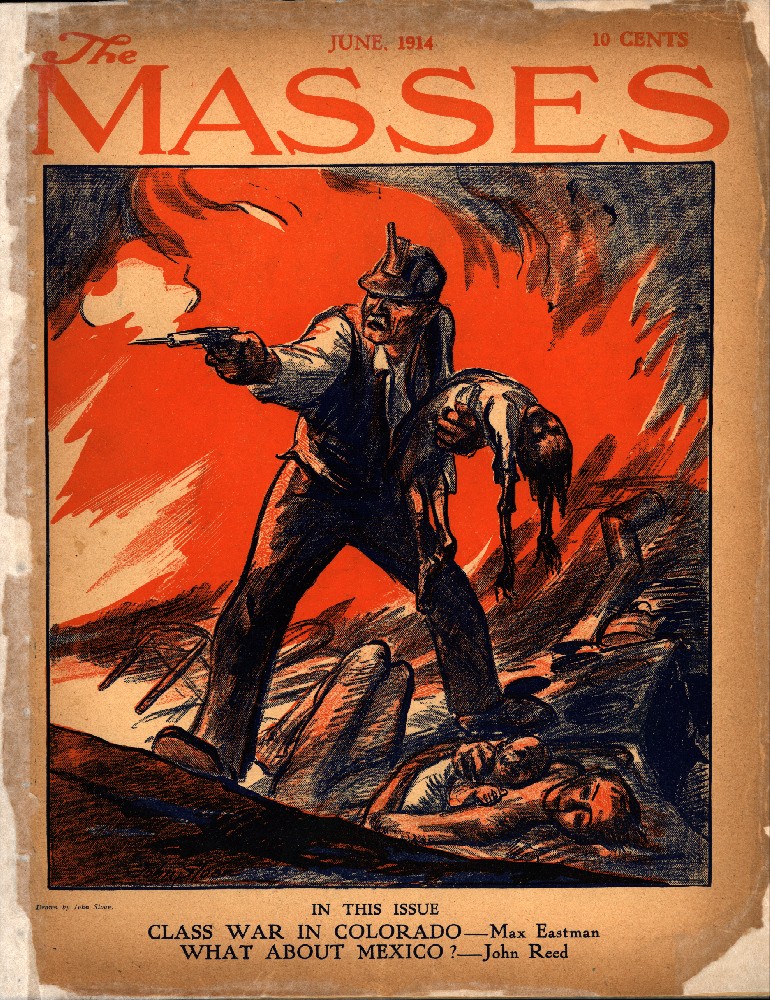
President Kennedy’s quote is correct, often violent acts can change an entire nations collective psychology, there are plenty of examples in history that agree with that proposition. However, people are wrong assuming that the assassination will trigger meaningful change due to the fear healthcare insurance executives may feel after the assassination of Brian Thompson. People’s idealism can cloud the reality on how institutions operate in the real world. History has proven powerful players rarely relinquish control freely. The healthcare industry could hypothetically double down and refuse to budge, further entrenching an “us vs. them” mentality that pervades many contemporary national debates. Though, admittedly, the act could hypothetically result in meaningful change in the healthcare industry- but not in the way people celebrating the death would imagine. A good case study as to why that is the case would be the Ludlow Massacre.

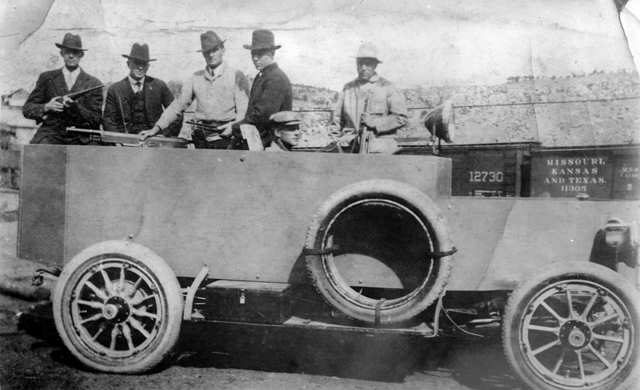
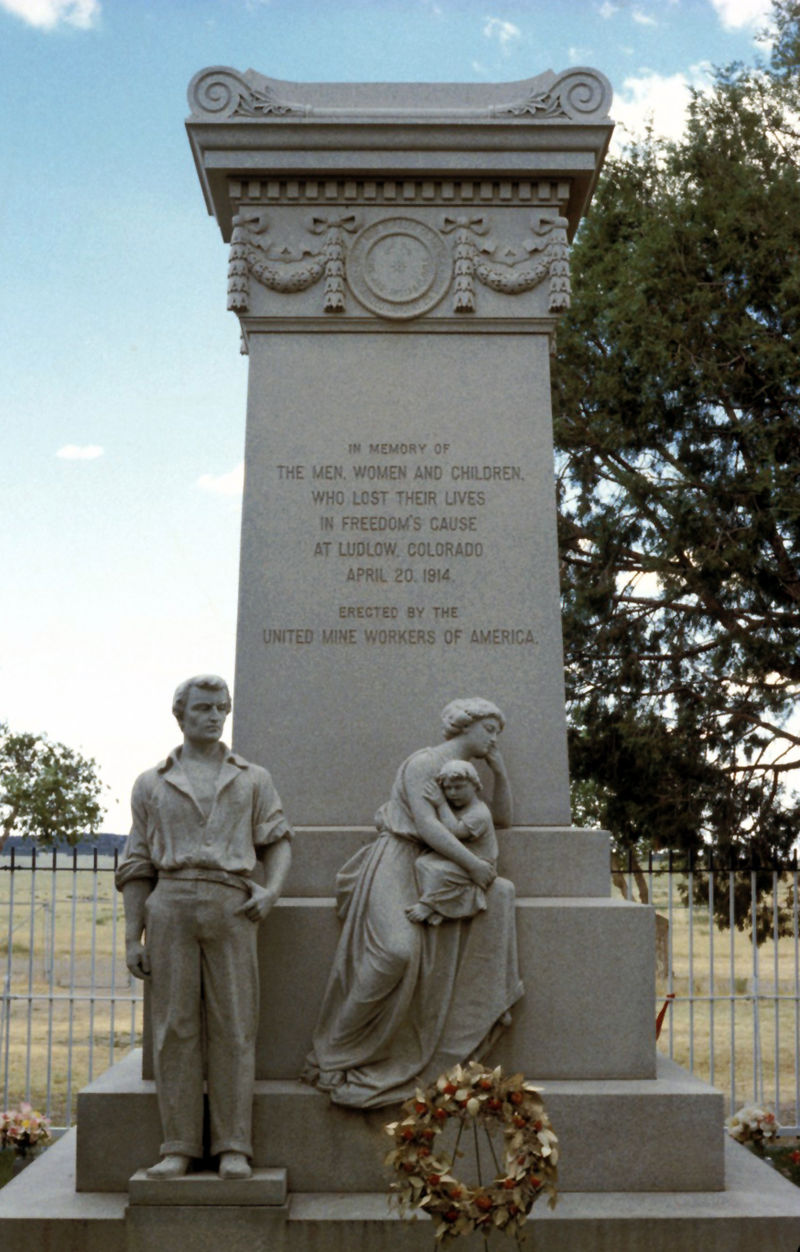
On April 20, 1914, in Ludlow, Colorado, striking coal miners demanded better pay, safer working conditions, and the right to unionize ( more info on Ludlow here). The strikers were attacked by the Colorado National Guard and company-hired guards, killing the protestors and some of their family members. The Ludlow Massacre lead to the Colorado Coalfield War, where workers formed a militia and started attacking Colorado National Guardsmen and private law enforcement . The workers successfully attacked many of their oppositions positions and had a lower casualty count but when the dust settled the strikers’ demands were not met, the union did not obtain recognition and many striking workers were replaced. Further 408 strikers were arrested, 332 of them were indicted for murder. The institution decided to double down on the crackdowns resulting in none of the strikers work demands being met.

Though the workers themselves did not reach their goals, the tragedy of Ludlow spurred a greater national debate on workers rights in the United States. Slowly the grievances raised by the Ludlow massacre lead to the enactment of federal labor laws that we still use today. American society should turn this tragedy into a positive and reinvigorate the discussion and action that will lead to fundamental changes in the healthcare industry. The Ludlow Massacre forced the nation to confront workers’ rights, and similarly the tragic assassination of Brian Thompson could prompt similar discussions about the systemic failures in healthcare. However, history shows that institutional change is slow and often requires sustained public pressure. Hopefully, this time around the change will come sooner, if not there are indications that matters may get worse rather than better.  Analyzing the economic incentives causing this turmoil will illuminate the problem areas in the sector and hopefully lead to some practical solutions.

Economic Moral Hazards

The problem with the healthcare sector is that it produces bad economic incentives. 1 Often healthy economic incentives encourage behavior that benefits both individuals and society, they are aimed at promoting positive economic action while discouraging negative consequence such as waste or harm. For example good economic incentives would be efficiency standards for cars, they incentivize manufacturers to produce efficient automobiles by offering various government benefits. For example, car companies may get tax breaks,  recognition for meeting higher energy efficiency standards, or might get access to lucrative government contracts. This makes energy utilization effective, lowers bills for consumers, and helps reduce environmental impacts by using wasteful technology.

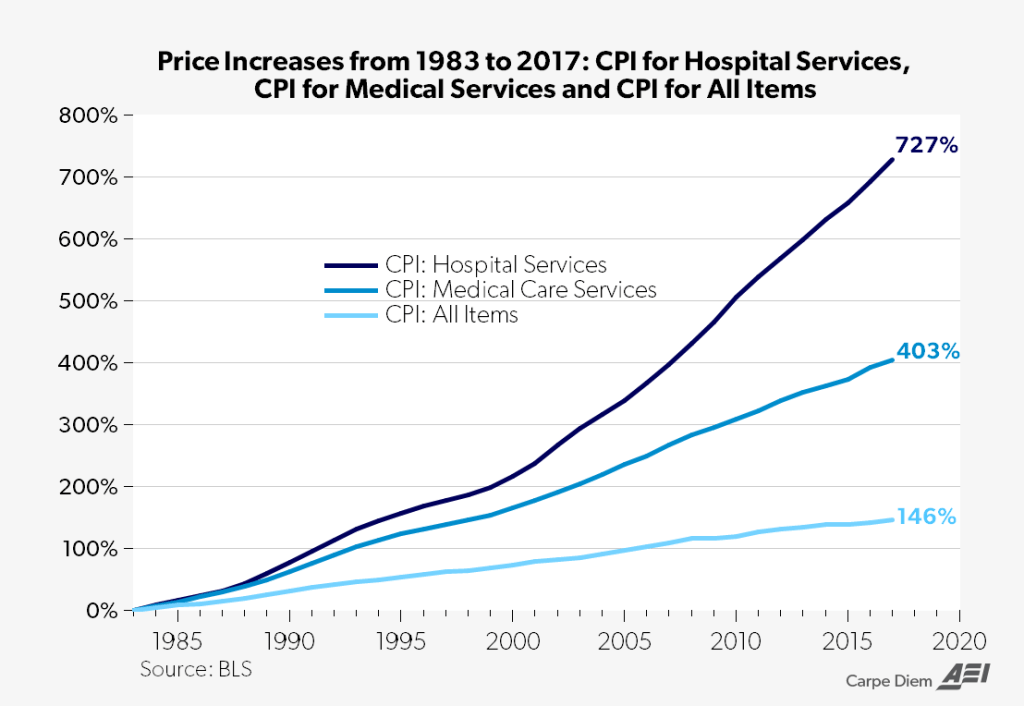
The healthcare industry seems to be running in the opposite direction regarding incentives. Large hospitals commonly increase prices for services and lab technology, knowing that insurers and government programs will foot the bill one way or the other. 2  A big reason hospitals can do this is due to lack of competition within the sector. 3 On average Americans have access to only a few healthcare providers, which incentives monopolistic practices such as price gouging. 4  These practices shift the financial burden onto patients, insurers, and taxpayers, exacerbating the system’s inefficiencies.  Insurance companies also contribute to producing bad economic incentives but in a different way.

Source: American Enterprise Institute

Health care Insurers also contribute to overall inflated healthcare prices. That’s because insurance companies have few incentives to negotiate for better rates or challenge the high prices set by hospitals.  They are well aware that they can pass those costs onto consumers in the form of higher premiums or deductibles in order to fulfill their fiduciary duty to their shareholders. 5 By passing those costs on to their consumers they ensure their shareholders are maximizing profits effectively fulfilling their duty. This leads to a disconnect between the price of healthcare and the actual cost to consumers leading to the  inflated cost of healthcare of the healthcare system.

Additionally, some companies during economic downturns might only focus on the volume of services provided, rather than the quality or necessity of those services. This may encourage doctors to prescribe unnecessary treatments overuse of healthcare and can result in unnecessary tests or procedures, which drive up the overall healthcare costs. If you are fully covered getting extensive tests is beneficial for your health but unnecessary care drives up the price for people who do not have adequate coverage. That is because higher utilization of healthcare services- necessary or not artificially inflates demand, which providers often use to justify price increases. Most insurance companies operate within fee-for-service payment systems, where providers are reimbursed based on the volume of services delivered rather than the value or outcomes. This further incentivizes unnecessary treatments, tests, and procedures, as healthcare providers have a financial interest in maximizing billable services

Further, the administrative complexity of health insurance also adds significant costs to the healthcare system. Insurers maintain vast bureaucracies to process claims, determine coverage, and manage provider networks, which requires substantial resources. Anecdotally, after spending some time in the insurance sector, a lot of the administrative tasks incentivize an incredible amount of waste.  These costs are ultimately passed on to consumers. For example, administrative expenses in the U.S. healthcare system account for nearly 8% of total spending, compared to 2-3% in countries with simpler, more centralized systems. 6

Action is Necessary

The tragic events surrounding Brian Thompson’s assassination have understandably stirred intense emotions and reignited a national conversation about the flaws in our healthcare system. While these tragedies can bring the issue to the forefront, history shows us that meaningful change doesn’t come from fleeting moments of outrage. The shockwaves from Thompson’s death can grab attention temporarily, but true change only happens when we confront the deeper economic incentives that drive the inefficiencies and inequalities in healthcare.

Reform, as we’ve seen in the past, is rarely quick or easy. It faces resistance from entrenched interests that benefit from the status quo. But the time to act is now. The monopolistic pricing, the disconnect between what healthcare actually costs and what patients pay, and the lack of meaningful negotiation from insurers- all of these must be tackled with urgency. It’s time to rethink the economic incentives behind the healthcare system and shift the focus toward transparency, competition, and patient-centered care. The current model is unsustainable, and the responsibility for change lies with all of us; policymakers, healthcare providers, insurers, and the public.

Let us use this tragedy not as a fleeting moment of anger but as a rallying point to demand systemic reform. By ensuring that economic incentives align with the well-being of patients and the long-term sustainability of the system, we can move toward a healthcare system that serves the needs of every American, not just the powerful few. Now is the time for thoughtful, deliberate action to reform the healthcare system in a way that reflects the values of justice, fairness, and efficiency for all.

“The time to repair the roof is when the sun is shining.”

-John F. Kennedy

Right now, I’m sad to say, it seems like we’re attempting to repair a roof in the middle of a tornado. Urgent action is needed.


Sources

  1. According to the Journal of the American Medical Association (JAMA), the U.S. healthcare system is plagued by administrative inefficiencies, price inflation, and overuse of medical services, which are driven by poorly aligned incentives among providers, insurers, and payers.

    Source: JAMA. “Waste in the US Health Care System: Estimated Costs and Potential for Savings.” (2019). ↩︎
  2. Research from the RAND Corporation indicates that hospitals charge private insurers an average of 247% of Medicare rates for the same services. This price disparity exists because private insurers lack the bargaining power to negotiate rates effectively, and hospitals rely on these inflated payments to subsidize their operations.

    Source: RAND Corporation. “Prices Paid to Hospitals by Private Health Plans Are High Relative to Medicare and Vary Widely.” (2020).. ↩︎
  3. Research shows that hospital consolidation reduces competition and leads to higher prices. A study by the National Bureau of Economic Research (NBER) found that hospital mergers result in price increases of 6% to 18%, depending on the level of market concentration.

    Source: NBER. “The Price Effects of Cross-Market Hospital Mergers.” (2018).
     The Health Care Cost Institute (HCCI) reports that the average price for hospital services is significantly higher in concentrated markets than in competitive ones.

    Source: HCCI. “Healthy Marketplace Index.” (2020). ↩︎
  4. The American Medical Association (AMA) found that in 2019, 90% of metropolitan areas in the U.S. were highly concentrated for hospital markets, meaning patients had limited choices among providers. This is also the case in more rural areas as well.

    Source: AMA. “Competition in Health Insurance: A Comprehensive Study of U.S. Markets.” (2019). ↩︎
  5. Premiums and deductibles for employer-sponsored health insurance have been steadily rising, with average family premiums increasing by 55% over the past decade. Insurers often attribute this to rising healthcare costs from hospitals and providers.

    Source: KFF. “2022 Employer Health Benefits Survey.” ↩︎
  6. The Study highlights the disproportionately high administrative costs in the U.S. healthcare system compared to other high-income nations with centralized systems, where administrative spending ranges between 2-3% of total healthcare expenditures             

       Source: Woolhandler, S., & Himmelstein, D. U. “Administrative Work Consumes One-Quarter of U.S. Physicians’ Working Hours and Lowers Their Career Satisfaction.” Health Affairs, 2014. ↩︎

Wage Theft in Iowa: Abuse of America’s Honest Worker.

Iowa, the heartland of America, often called the bread basket of the world due to the amount of food they export internationally. In Iowa the fields stretch endlessly and communities thrive on their hard work. Iowa’s residents are proud of their work ethic. Despite the beautiful green pastures and salt of the Earth people, an insidious problem lurks beneath the surface: wage theft.

Iowa, is renowned for its agricultural prowess and strong work ethic, but that does not mean Iowans are  immune to wage theft from employers, this is in spite of the State’s robust economy and reputation for fairness. Unfortunately, countless workers fall victim to wage theft each year, their rightful earnings siphoned away by unscrupulous employers. A new report from Common Good Iowa finds that employers are stealing over $900 million a year from an estimated 300,000 Iowa workers — about 1 in 7 workers and their families.

Wage theft encompasses a variety of illicit practices, including unpaid overtime, minimum wage violations, illegal deductions, and outright non-payment for hours worked. The effects are felt by various  workers from various industries. From farm laborers to restaurant staff, construction workers to healthcare professionals the problem seems to be systemic. In 2021 Tyler Technologies, a software company, settled claims for $3 million for not paying overtime wages to its employees in Iowa. The lawsuit was filed by a group of employees who alleged they were not properly compensated for overtime work. Roughly a year later, an employee at Short’s Burger & Shine in Iowa City realized she hadn’t been paid overtime for over 13 years. With the help of the Center for Worker Justice of Eastern Iowa, she was able to recover her the wages she was owed. However, recovering wages is not a guaranteed remedy. On average over 600 unpaid wage claims are filed with Iowa Workforce Development, and only a fraction of wages were recovered. Often, those most vulnerable to exploitation are immigrants, low-wage workers, and individuals with limited English proficiency, who may lack awareness of their rights or fear retaliation for speaking out. This is extremely alarming considering Iowa’s recent uptick in immigration.

Recently, Western Iowa Tech Community College’s settled for $3 million in a federal lawsuit filed by 13 Chilean students who accused the school of deceiving them about an internship program. The students compared the program to forced labor and human trafficking, claiming they were compelled to work up to 50 hours weekly, leaving minimal time for attending classes, studying, or resting. The students were promised to be enrolled in a 2 year culinary program, when in reality they worked 50 hours a week in meat packing factories. A far cry from the culinary arts. This is just one of the cases that was caught by the system due to the savviness of some of the international students. However, there are plenty of similar cases that fly low below the radar of any authorities or news outlets.

In Iowa, the consequences of wage theft ripple through communities, undermining economic stability and perpetuating cycles of poverty. When workers are denied their rightful pay, they struggle to make ends meet, facing difficulties in paying rent, buying groceries, and providing for their families. This not only harms individuals but has ramifications on the local economy, since decreased purchasing power leads to reduced consumer spending and stunted economic growth for the community as a whole.

On paper, Iowa has a robust labor law system. But despite existing labor laws designed to protect workers, enforcement mechanisms in Iowa remain inadequate, leaving many victims without recourse. The State’s Department of Labor, charged with investigating wage theft claims, is understaffed and underfunded, unable to keep pace with the scale of the problem. Further, Iowa’s Courts do not do a good job in upholding labor rights, where a majority of cases are decided on behalf of employers and corporations rather than an employee. Realistically the case split should be relatively even given the nature of labor cases. A 2012 study by the Iowa Policy Project estimated that dishonest employers defraud Iowa workers out of about $600 million annually in wages. This figure reflects the scale of wage theft before the recent escalation to $900 million. Further, Courts often tip toeing around issues in fear of reversal from a higher court.  Additionally, the complexity of the legal processes and fear of employer retaliation often deter workers from pursuing complaints, further perpetuating a culture of impunity.

To combat wage theft effectively, a multi-faceted approach is necessary, addressing both systemic flaws and individual grievances. Firstly, enhancing enforcement efforts through increased funding and staffing is essential to ensure that perpetrators are held accountable for their actions. This includes proactive investigations, targeted audits, and swift penalties for violators. These actions are paramount since too often than not Iowa’s executive branches refuse to exercise their ability to impose penalties.  Additionally, empowering workers with knowledge of their rights and avenues for redress is crucial, through outreach programs, legal assistance, and community organizing. Community organizing would do have a great deal of benefit since workers would be aware of their rights and have a strong support system to help enforce their rights when they are infringed. This includes partnerships between government agencies, advocacy groups, employers, and workers themselves to identify systemic issues, share best practices, and develop innovative strategies for prevention and enforcement. By harnessing the collective expertise and resources of diverse stakeholders, Iowa can forge a unified front against wage theft, ensuring that every worker is treated with dignity and respect.

Fostering a culture of compliance among employers is paramount, emphasizing the importance of fair labor practices and ethical conduct. This entails providing resources and incentives for businesses to uphold labor standards, such as certification programs, tax incentives, and public recognition for compliance. By incentivizing good behavior and penalizing violations, Iowa can create a more level playing field where honest businesses thrive and exploitative practices are marginalized.

Beyond regulatory measures, fostering collaboration between stakeholders is vital to address the root causes of wage theft and promote sustainable solutions. This includes partnerships between government agencies, advocacy groups, employers, and workers themselves to identify systemic issues, share best practices, and develop innovative strategies for prevention and enforcement. By harnessing the collective expertise and resources of diverse stakeholders, Iowa can forge a unified front against wage theft, ensuring that every worker is treated with dignity and respect. Recognizing the intersectionality of wage theft with other social issues is essential to achieve meaningful change. Problems like wage theft  require a multifaceted, especially when the issue disproportionately impacts marginalized communities. Efforts to combat wage theft must also address underlying disparities related to socioeconomic background, race, gender, and immigration status, By adopting an intersectional approach that centers the experiences of the most vulnerable, Iowa can advance equity and justice for all its residents.

From farms to factories, Main Street to the Capitol, the time has come to shine a light on the shadows where exploitation thrives, and to reclaim the promise of fair treatment and economic opportunity for every worker.  Meaning Iowa must confront wage theft head-on, the state has the opportunity to continue to uphold its values of integrity and fairness, ensuring that the heartland remains a place where hard work is rewarded and justice prevails. Or else Iowa risks being seen as a state that only exploits the workers that have built it up through generations.

Sources:

_____________________________________________

Common Good Iowa Report
Common Good Iowa. “Wage Theft in Iowa: An Analysis of Underpayment and Nonpayment of Wages,” 2024.

Tyler Technologies Overtime Pay Dispute
U.S. Department of Labor. “Tyler Technologies Settles Overtime Claims for $3 Million in Iowa,” 2021.

Short’s Burger & Shine Case
Center for Worker Justice of Eastern Iowa. “Employee Recovers 13 Years of Unpaid Overtime from Short’s Burger & Shine,” 2022.

Iowa Workforce Development Claims
Iowa Workforce Development. “Annual Report on Wage Claims and Recovery,” 2023.

Western Iowa Tech Community College Case
Radio Iowa, “Western Iowa Tech to Pay Millions to Students to Settle Lawsuit,” 2024. (https://www.radioiowa.com/2024/04/25/western-iowa-tech-to-pay-millions-to-students-to-settle-lawsuit/)

Iowa Policy Project Study
Iowa Policy Project. “The Cost of Wage Theft in Iowa,” 2012

Arbitration: A Key Piece To Africa’s Future Economic Success

This article is an excerpt of a larger working paper aimed at policy makers, economists, and investors. This article was aimed to be shorter and less technical than the larger paper.

International commercial arbitration has been touted by many members of the business community and legal profession as a suitable means of settling trade disputes outside of a formal court room. The reasons a person would want to choose to arbitrate a commercial dispute could range from the rapidness of arbitral proceedings in comparison to domestic courts to the ability to keep proceedings confidential. But the benefits of commercial arbitration are not strictly limited to the parties involved in the arbitrational proceedings. There have been numerous studies outlining how commercial arbitration also facilitates economic growth and social well being within nations. The United Nations has acknowledged the many benefits of commercial arbitration fact and has incentivized the use of arbitral institutions. No other continent can benefit more from arbitration than Africa.

The UN has facilitated arbitration by incentivizing a multilateral treaty regime for international commercial transactions. One of the main treaties that attempted to incentivize arbitral proceedings is formally known as United Nations Convention on the Recognition and Enforcement of Foreign Arbitral Awards (also known as the  ‘New York Convention’).  Every signatory to the New York Convention makes two fundamental promises. The first promise is to honor written agreements that call for parties to arbitrate matters that are capable of settlement by the arbitration agreement. And the second fundamental promise is that nations who are signatories to the New York Convention agree that their national domestic courts will recognize and enforce arbitral awards. (New York Convetion).  Out of 193 nations, 162 nations are signatories to the New York Convention. The 162 nations include some of the worlds trading powerhouses most notably China and the United States.

Africa is the continent with the least signatories to the New York Convention.  Further, in comparison to other continents, Africa is the least economically developed. (per the Global Policy Forum).  This is not a correlation that should be overlooked. International commercial arbitration attracts investment and can play a vital role in developing a nation’s overall political economy. At a surface level commercial arbitration facilities trade between nations increasing trade input and output, improving economic activity. However, there is subtle message being sent when a nation has a robust institutional system of commercial arbitration and has domestic courts willing to enforce arbitral awards. That message is simple, “we want to incentivize international trade in a fair and equitable manner”. When a nation does this business are more likely to invest and contract with people/entities within that nation, because they have the confidence that domestic courts will enforce arbitral awards. Continents which are considered to be ‘highly developed’, namely Europe and North America, have robust systems that facilitate international commercial arbitration. (Latham & Watkins).

During the 20th century Africa as a continent relied heavily on aid from other wealthier nations to develop. And foreign aid to this day still plays a major role in Africa, and has it’s benefits. However, research done by Mai Abdulaziz Alghamdi suggests that foreign aid may be doing more harm than good. (Alghamdi). He argues that burdensome amounts of foreign aid can have deleterious effects on aid-recipient countries. (Alghamdi). That is because Africa is the largest recipient of foreign aid. The effect of foreign aid on economic growth is positive however the net benefit of foreign aid is small, suggesting that foreign aid does not result in drastic increases in economic growth.( Alghamdi). Countries need aid to develop but there are negative consequences if a nation heavily relies on aid to fund its government and develop its economy. For example, Bazoumana Ouattara analyzed the effect of aid flow in Senegal. He found that that a large portion of aid flow (around 41%) is used to finance Senegal’s debt and 20% of the government’s resources are devoted to debt servicing. (Ouattara). Secondly, he found that the impact of aid flows on domestic expenditures is statistically insignificant, and that debt servicing has a significant negative effect on domestic expenditure. (Ouattara). In essence, the aid given to Senegal is used to finance the government and not neccesarily used to directly develop the economy as a whole. Several African nations seem to have recognized that in order to sustain meaningful economic development then they must not rely so much on foreign aid. Many nations have attempted to stimulate business activity within their jurisdiction via various economic initiatives. But Africa’s economic powerhouses seem to have one thing in common when it comes to economic/ legal development in the 21st century. They all are utilizing the tools of international commercial arbitration to stimulate economic growth.  One significant nation

Four years after Kenyan independence, that Kenya would enact its first sovereign arbitration legislation, The Arbitration Act of 1968. It was largely influenced by the Arbitration Ordinance of 1914 which was legislation used in colonial Kenya. However, for some unexplained reason, the act adopted outdated arbitral protocol when instead they ideally should have used the New York Convention as a model for Kenya’s arbitral legislation. So, in essence what occurred is that Kenya kept Britain’s colonial arbitral law intact. Unfortunately, the act allowed the court to retain their oversight over all arbitral proceedings in Kenya, meaning that parties could manipulate the court system to frustrate and delay the arbitral process. (Mbithi). In contrast to Kenya’s pre-colonial arbitral past. For example, in East African Power & Lightning Co. Ltd v Kilimanjaro Construction ltd, the Court of Appeals, declined to stay proceedings in favor of arbitration in spite of the fact of the existence of an arbitration agreement.

However a  comprehensive piece of arbitral legislation would come in to effect in 1995. After Kenya aggressively pursued policies that successfully attracted foreign direct investment, it quickly became apparent that the Arbitration Act of 1968 needed reform in order to keep foreign investment within Kenya high. (Mbithi). Kenya had some of its worst economic performances between the years of 1991-92. Growth stagnated. Inflation reached a historic level. Further the government’s budget deficit was over 10% of GDP. In effect, due to treaty requirements, bilateral and multilateral donors suspended their aid programs in Kenya in 1991, resulting in economic uncertainty. One of the ways Kenyan legislature attempted to remedy the dire economic situation was by repealing the old arbitration act and creating a new framework. (Mbithi).  The legislature enacted the Arbitration Act, No. 4 of 1995. The new piece of legislation adopted the UNCITRAL model law, a more modern framework arbitral framework. It also was expanded to include both domestic and international arbitration. (Mbithi).  But despite these major improvements, there was a profound change to the new piece legislation.  Section X of the Arbitration Act stipulated “except as provided in this Act, no court shall intervene in matters governed by this Act”. This not only had ramifications in international commercial arbitration, but it also was a check on the judiciary by the legislature, prior to this act the courts had absolute oversight over all adjudicative functions in the country.

In 2006, Kenya’s government drafted a new developmental program that would make sure that by 2030 Kenya is “newly industrialized, middle income country that provides a high quality of life to all it’s citizens”. (Vision 2030).  The plan is called Kenya Vision 2030.  As of 2020, the initiative has proven fruitful. (World Bank). Kenya far at performs its neighbors economically, mainly due to the influx of foreign investment and their well developed social and physical infrastructure. (World Bank). Further, in 2020 Kenya ranked number 56 in the Ease of Doing Business Index. This is a significant jump in rankings when compared to Kenya’s position in 2010 which was 95. This improvement can be partly explained by changes made within Kenya’s Constitution. In order to facilitate the Kenya Vision 2030 plan, the constitution was changed to include this provision: “alternative forms of dispute resolution including reconciliation, mediation, arbitration and traditional dispute resolution mechanisms shall be promoted, subject to clause”. (Muigua). Arbitration was now backed via statute and Kenya’s constitution. This signaled to foreign investors and businesses that commercial arbitration is being incentivized within the nation. After the constitution was changed, Kenya made exponential improvements economically, and their rankings in the Ease of Doing business index would continue to rise. (Muigua) Kenya will likely fulfill the goals set out in the Kenya Vision 2030 plan.

Section 230: From Jordan Belfort to Gonzalez- The Law That Made The Modern Internet

On May 24, 1995, Jordan Belfort’s brokerage firm Stratton Oakmont successfully sued Prodigy Communications Corporation in a New York court for defamation. Little did anyone know Stratton’s win over Prodigy would be the catalyst that changed the internet forever. The so called Wolves of Wallstreet had unknowingly set a dangerous precedent that threated the tech industry.

Stratton Oakmont v. Prodigy Services

Prodigy was an online internet service which more or less mirrored modern day social media sites, it serviced over 2 million people at its peak. Users were able to utilize a broad range of services such as getting access to news, weather updates, shopping, and bulletin boards. One of Prodigy’s notorious bulletin boards was called Money Talk, a popular forum where members would discuss economics, finance, and stocks- similar to Reddit’s  Wallstreet Bets forum. Prodigy also contracted with independent moderators to vet and participate in the board discussions, similar to editors in a Newspaper but who engaged with their audience a lot more.

In 1994, two posts would subject Prodigy to legal liability. An unidentified user posted on the Money Talk bulletin on the dates of October 23rd & 25th, claiming that Stratton Oakmont was committing SEC violations and engaging in fraud in regards to an IPO they were involved in (Solomon-Page’s IPO) . The poster claimed:

  • the Solomon-Page IPO  was a “major criminal fraud” and “100% criminal fraud”
  • Daniel Porush was a “soon to be proven criminal”
  • Stratton was a “cult of brokers who either lie for a living or get fired.”

Ironically many of these claims would turn out to be true, however at the time they were unsubstantiated since there was no concrete evidence to back them up. After Stratton was made aware of the posts, the company and Daniel Porush (aka Jonah Hill’s character in the movie) commenced legal action against Prodigy for defamation due to the libelous statements made on Money Talks.

In the United States defamation claims are not plaintiff friendly due to the strong protections the 1st Amendment offers. In general in order to succeed in a defamation, a plaintiff must prove four elements:

1) a false statement purporting to be fact;

2) publication or communication of that statement to a third person;

3) fault amounting to at least negligence; and

4) damages, or some harm caused to the reputation of the person or entity who is the subject of the statement.

In the suit brought by Stratton against Prodigy the court focused on element 2 and 3. Namely whether or not Prodigy was a publisher & if the moderator’s acts or omissions while editing the Money Talk bulletin board amounted to at least negligence. The court ruled in favor for Stratton Oakmont.

  The court reasoned that an operator of an online message board is considered a publisher for purposes of defamation liability. Specifically, if the online operator holds itself out as controlling the content of the message board and implements such control through guidelines and screening programs. An entity that repeats or otherwise republishes a libel post is subject to liability as if he had originally published it. But a party disseminating others’ content only faces libel liability if the party qualifies as a publisher rather than a distributor. If a party merely “distributes” others’ content, then the party is a distributor and is not subject to liability. The court used the phrase “passive conduits” to describe distributors. A passive conduit doesn’t face liability for libel absent a finding that the distributor knew or had reason to know that distributed content contained defamatory statements. Basically, if you had a content moderation system for user generated content your website was likely liable for defamation. Defenses such as the impracticability of moderating millions of user generated posts had no merit and would still subject the website to defamation claims. This ruling would shake the tech and internet industry, threatening to stunt and undo years of innovation.

To avoid a barrage of lawsuits the tech industry successfully lobbied Congress to act after the Stratton ruling. In 1996 Congress passed the Communications Decency Act which dealt with various internet related issues. The one most pertinent to us is Section 230(c).

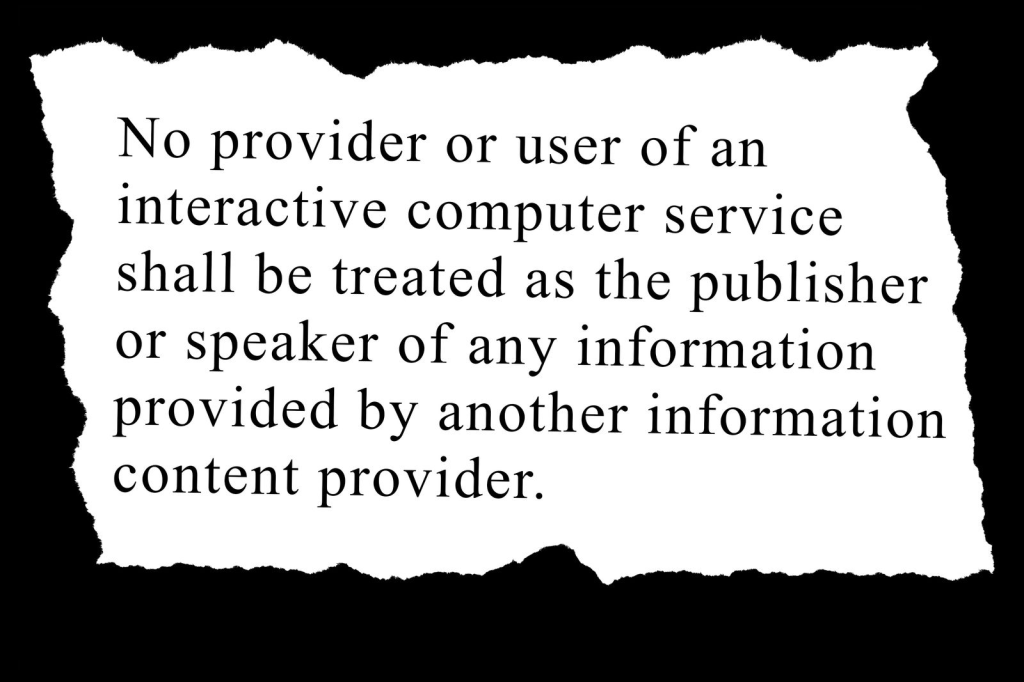
Jeff Kosseff one of the leading scholars on Section 230 describes it as “the twenty-six words that created the internet.” The 26 words are:

 “No provider or user of an interactive computer service shall be treated as the publisher or speaker of any information provided by another information content provider.”

These words provide immunity to online platforms from being held liable for user-generated content. Basically, it means that online platforms such as social media sites, forums, and search engines cannot be sued or prosecuted for what a user posts on their platforms. Even if the posts themselves are defamatory, false, or harmful .

This immunity has been vital in enabling the growth of the internet and the rise of social media platforms. It has allowed these platforms to provide a space for free expression and to facilitate the exchange of information and ideas without fear of legal consequences, unlike Prodigy who was a victim of pre Section 230 protection. This has also allowed smaller and newer online platforms to compete with established ones without having to worry about legal liabilities. Without Section 230, the internet me and you know and love would not exist- I likely would not be able to publish my articles without exposing myself to liability.

However, recently there have been attacks and concerns over the immunity Section 230 provides. Specifically that online platforms are basically not responsible  for any harmful content on their platforms, such as hate speech, harassment, and misinformation. Basically, people not in favor of the immunity argue that Section 230 has created an environment in which online hate speech and harassment can thrive. One recent case that puts forth such an argument Gonzalez v Google, has made it all the way to Supreme Court.

Gonzalez v. Google & It’s Implications

Gonzalez alleges ISIS generally used YouTube (owned by Google) to recruit members into its terror cells and “communicate its (ISIS’) desired messages.” which lead to the horrific events that occurred in Paris in 2015. Nohemi Gonzalez, a US citizen was unfortunately killed during the ISIS terror attacks that gripped the world in 2015. ISIS would later claim full responsibility for the attacks that lead to the untimely passing of Gonzalez.

Gonzalez argues that since YouTube videos helped fuel “the rise of ISIS” by knowingly recommending ISIS videos to its users, they are directly responsible for causing the Paris attack. They back up their argument that Google knew of such activity by claiming “[d]espite extensive media coverage, complaints, legal warnings, congressional hearings, and other attention for providing online social media platform and communications services to ISIS, prior to the Paris attacks Google continued to provide those resources and services to ISIS and its affiliates, refusing to actively identify ISIS YouTube accounts and only reviewing accounts reported by other YouTube users.” Their argument suggests that Google’s algorithms fall out of the scope of Section 230 and therefore subject them to liability.

Google contends that Section 230 fully immunizes them from such a suit based on judicial precedent and congressional intent, that their terms of services directly prohibit content that promotes terrorism, and they actively blocked such content when it was published by hiring Middle Eastern content moderators that worked 24/7 to flag terroristic content. Before the case arrived to the Supreme Court, all lower courts found in favor for Google.

Jess Miers a prominent Section 230 scholar mentions that this case “tees up a contentious question for the Supreme Court: whether Section 230 — a law that empowers websites to host, display and moderate user content — covers algorithmic curation.”. She points out that a vast majority of websites use non neutral algorithms, and that if the Supreme Court were to side in favor of Gonzalez it would open the flood gates of litigation against online services providers that rely on algorithms to function. Not only that but this ruling could incentivize states to curate the internet to achieve their ideological means, such as punishing websites for cracking down on misinformation or providing information for abortion services. This would give states too much power, and could lead to arbitrary curation of the information you see on the internet. A significant blow to consumers and arguably the facilitation of the 1st Amendment for Americans.

Only time will tell what happens with Section 230 as the court is expected to makes in ruling this summer. Hopefully, they make the right decision.

Sources:

STRATTON OAKMONT, INC. and Daniel Porush, Plaintiff(s),
v. PRODIGY SERVICES COMPANY, a Partnership of Joint Venture with IBM Corporation and Sears-Roebuck & Company, “John Doe” and “Mary Doe”, Defendant(s). Supreme Court, Nassau County, New York, Trial IAS Part 34.

Jeff Kosef: https://www.propublica.org/article/nsu-section-230

Jess Miers: High Court Should Protect Section 230 In Google Case https://www.law360.com/articles/1567399


Briefs of both parties in Supreme Court: REYNALDO GONZALEZ, et al., v. GOOGLE LLC,

Robert Moses: The Unelected Master Planner

Robert Moses is a figure that’s relatively obscure to the general public. However his influence has had a lasting impact throughout the United States. He would be paramount in engineering how cities in the States were structured, effectively influencing how and where Americans would spend their money.

Who was Robert Moses? Well, to start, he was unelected public official who held about 12 positions in the Greater New York city area. His stints in public office span from 1924-66. The positions he held had tremendous influence over urban planning. Urban planners aren’t often thought of as being political behemoths but Robert Moses’s tenure in these positions forces us to reconsider the influence unelected politicians may have over society.

Mr. Moses was a relentless, effective, and a calculated worker. His ability to start and finish public projects is arguably unmatched within the scope of American history. Furthermore, his ability to manipulate power goes far beyond the scope of anything Machiavelli could have imagined within a democratic republic. Robert Moses wasn’t fully understood or recognized outside of New York until the publication of Rob Caro’s Pulitzer winning book The Power Broker. The book gives us a grandiose look into the Moses. Robert Caro spent years researching for his book which spans roughly 1,300 pages. His scholarship, alongside with years of historical developments since the initial publication, are what guide my analysis on Robert Moses. Through our investigation of Robert Moses we will come to understand how a lot of cities in the United States mirror each other in terms of structure and societal development. And, albeit indirectly, an analysis of Moses forces us to consider a few philosophical questions when it comes to ideal local governance in the United States. But before we attempt to get understand why these two inquires are relevant , we have to investigate the rise of Robert Moses.

 Robert Moses assent spanned various societal backgrounds. His tenure in public office spans three major historical events in the United States. Moses held positions during the economic boom of the 1920s, a crippling Depression in the 1930’s, World War II, and the subsequent post war economic boom.

The 1920’s: The Rise to Power

After finishing up his PhD at Columbia University, Moses decides to enter New York politics as a political idealist motivated to make change. A story familiar to many young professionals who aim to change the “old guard” within political systems. Moses had plenty of issues he wanted to grapple over. The society he was living in was corrupt, had little to no consumer protection, and certain industries were dominated by monopolies. He briefly worked for the Bureau of Municipal Research and with the U.S. Food Commission. But soon he realized that philosophical theories and logic, no matter how beneficial, wouldn’t take you far when it came to political advancement. His initial propositions were brushed under the rug by the seasoned veterans of government. Though his theoretical understanding of politics would come in handy from time to time, his practical education of political power would be where he was able to hone the craft of political power.

After a series of fortunate events  Moses found himself appointed as the chief of staff to a woman named Belle Moskowitz. She was the leader of a commission tasked with organizing New Yorks administrative structure. A responsibility which came with significant power. It’s worthy to note Belle Moskowitz wasn’t elected by anyone. Rather, Moskowitz was appointed by Alfred Smith the Governor of New York. Smith was of course elected. I include these details not to be redundantly informative but rather to highlight the opaque nature of local government when it comes to transparency. People who you may assume are in control are passing that responsibility to an “advisor”, meaning there are various puppeteers pulling the strings. Moses’s time with Moskowitz is where he would learn the “tricks of the trade” in terms local governance. After managing to impress Alfred Smith through the early 1920’s, Moses found himself appointed to his first positions of power. The appointments would lead him to a notorious political squabble with an eventual US president, Mr. Franklin Delano Roosevelt.

The Appointed One & The Fight with Roosevelt.

In 1924 Moses was appointed as the leader of both the Long Island State Park Commission and State Council of Parks. Moses actually drafted the legislation that created the power of these commission earlier in his career. Personally, when I read the names of these positions I didn’t immediately think POWER.  But let’s remember that Moses was calculated.  He strategically used the power that he did have to gain even more power. Being head of these political bodies allowed him unprecedented control over land-use and highway construction. Behind the scenes he usurped control over certain political entities from elected officials. Moses would lobby constituents, politicians, and special interest groups into allowing him to have independent control over land-use and highway development commissions. Overtime he began to resemble a mini dictator. However, his power wouldn’t go unchallenged.

LC645-600Border
Young Roosevelt.

Franklin Roosevelt, at the time leader of the Taconic State Parkway Commission, had a political spat with Moses. It all started when Roosevelt had a plan to build a parkway through a region of New York City called the Hudson Valley. Moses had different plans. He managed to funnel all the funds from Roosevelt’s project to his own project. Moses was able to keep the funding to Roosevelt’s project so low that it could barely even maintain operations. Roosevelt complained to the governor that Moses was “skinning” Smith’s administration alive. But nothing happened. Eventually, Roosevelt became governor and eventually his parkway project was completed. Roosevelt had another goal in mind, and that was to remove Moses from power. But the removal of Moses was almost impossible by the time Roosevelt became governor. Robert Moses had set up a powerful base of political independence by using legislation, public funding, the press, and young political reformers to support his positions. He would later spearhead a commission which aimed to consolidate 187 separate agencies into eighteen departments. In just 10 year’s Moses was able to absorb power from potential opponents and build a powerful network to get his projects done. But this was just the start there was much more to come from Robert Moses.

The Depression & Beyond

During the 1930’s the United States suffered an economic depression. During this economic catastrophe Robert Moses would blossom. Ironically, his former rival actually enabled this via New Deal legislation lead by President Roosevelt. Moses was granted even more executive and monetary incentive to solidify his power by the Federal Government. Roosevelt, not forgetting his political tenure in New York, attempted to get Moses ousted by making federal funds available only if Moses was removed from office. Moses wasn’t threatened. He told the press of Roosevelts demands. Subsequently, the Federal Government had to stop after increasing public pressure. But as World War II was being waged, Robert Moses’s influence on New York City began to take shape.  The Master Builder started to work on his vision. One unnamed federal official commented on Moses during this era saying:

“Because Robert Moses was so far ahead of anyone else in the country, he had greater influence on urban renewal in the United States – on how the program developed and on how it was received by the public – than any other single person.”

That quote gives us an insight on the magnitude of power Moses had. He was responsible for many projects ranging from the United Nations Headquarters, Shea Stadium, and the Pratt Institute. But he also led initiatives to spur more highway developments, suburban housing developments, strip malls, and other public amenities. Moses got even better at getting projects done. A common strategy involved starting projects knowing that financially they couldn’t be accomplished , but he would leverage political clout in order to manipulate political officials to complete his projects anyway. While in the depression his projects employed a largely jobless populous during the Great Depression. During this era, he held numerous public positions at the same time. None of the positions required him to be publicly elected.

WWII & The New America

The world dramatically changed after World War II. The United States emerged as an economic and political powerhouse within the International community.  Moses understood this and he wanted to further influence the new world around him. His goal for NYC was one that attempted to integrate an urban center to suburban areas which would all be interconnected via parkways. The bureaucrat’s vision would influence America for the years to come.

After World War II America’s social community began to change. Women entered the work force in droves, the nation was in better economic shape than a lot of nations in the world, and the ideal of “Americanness” began to solidify. What do I mean by Americanness? I mean white picket fences, increased home & automobile ownership, and the development of mass consumerism. After WWII plenty of soldiers came home to start anew. They were incentivized to start “nuclear” families, to buy homes, develop their market skills, and most importantly to spend money in order to expand the American economy. Robert Moses was fully aware of this societal shift. He saw the traditional layout of American cities as archaic and counter intuitive to the world’s economic demands. Small retail owners were dismissed in favor of shopping behemoths

download (1)
Robert Moses and NYC Mayor Jimmy Walker.

such as Macy’s, Sears, and the advent of the shopping mall. Local restaurants were forgotten as Dairy Queen and McDonalds slowly became staples in the American diet. Automobiles slowly eliminated the reliance on public transport, allowing people to buy suburban properties further away from NYC.  Moses preferred a sprawl model over concentrated urban communities. And he developed plenty of projects to incentivize the sprawl model. New Yorkers, such as Robert Caro, criticize Moses for destroying New York neighborhoods in favor of vast highways that connected the suburbs to the City. When developing these projects Moses displaced hundreds of thousands of people, destroyed economic centers, and arguably community identity. This led critics to surmise that Moses perhaps preferred automobiles and shopping centers over people. Furthermore, Moses played a part in depleting New York’s resources to develop his projects.  But despite that, the Moses model was in demand in post war America. Plenty of public officials from around the country demanded Robert Moses’s expertise in developing their city plans. This may explain why many American cities, especially in the Midwest, mirror each other in a plethora of ways.

In hindsight Moses’s city planning was a perfect model for a globalized economy. It was predictable; generally people would work a similar hourly schedule, consistently consume products from publicly traded corporations, and, by driving, consumers would

download
Robert Moses

support the gas, oil, and automobile industry. This model has its merits. It’s predicable, safe, and allows people to consume their preferred products. However, a community too reliant on the Moses model is more susceptible to global economic crises. This isn’t just a theoretical proposition, practical examples are evident when we look at Detroit and Las Vegas during the 2008 financial crisis. But it’d be remiss to not mention how many new and innovative developments Moses was responsible for. He was able to engineer and execute massive urban plans that did help a considerable amount of people. But at the expense of displacing many people out of their communities. But one of the most disturbing things about Robert Moses is his ability to become an immensely influential political figure without having to get elected into political office.

Moses’s story forces us to think about the type of local (& perhaps national) governments people would prefer. Do we prefer governments that can be taken over by “Mosesesque” figures in order to get long term, and perhaps beneficial, projects done? Or do we want a system that is a bit more decentralized which doesn’t allow any one sole “political will” to dominate? Whatever you prefer, each has its positive and negative implication.

Which begs a peripheral question: How much do YOU know about the unelected officials in your local government? A question to consider.

Sources:

Power Broker by Robert Caro

ROBERT MOSES AND THE RISE OF NEW YORK THE POWER BROKER IN PERSPECTIVE by KENNETH T. JACKSON

A Consumer’s Republic: The Politics of Mass Consumption in Postwar America by Lizabeth Cohen

https://www.pbs.org/wnet/need-to-know/environment/the-legacy-of-robert-moses/16018/

http://fordhampoliticalreview.org/the-legacy-of-robert-moses/

America’s Forgotten Civil War: Colorado’s Coalfield War

     The first article of the new five part Forgotten American History series! The Forgotten American History series aims to introduce readers to the less commonly known aspects of American history. The first edition takes us to Colorado! Hope you enjoy. 


Colorado’s Coalfield War is one of the most violent yet obscure events in American history. Which is a bit puzzling since The Coalfield War has all the allure of the quintessential American story. It has divisiveness, the quest for the American dream, violence, and an underdog. The Coalfield War took place after a rapid economic boom in the United States. The early 20th century saw the development of notable business magnates. Some you are most likely familiar with such as Andrew Carnegie, John D. Rockefeller, and Henry Ford. During their time they were commonly referred to as ‘industrialist”. That’s mainly due to the economic supremacy they had on industries such as fossil fuel, manufacturing, and transportation. The business strategies commonly used by these magnates were monopolistic. Common techniques used to monopolize included unilateral corporate acquisitions, price controls, and wage suppression. However, a new social development would attempt to countervail the monopolistic tendencies of these business tycoons.  The development being worker’s unions.

Laborers in the early 20th century worked in abhorrent conditions. An unnamed worker who grew up in one of Pennsylvania’s mining communities provides an account on what life was like for a miner:

Our daily life is not a pleasant one. When we put on our oil soaked suit in the morning we can’t guess all the dangers which threaten our lives. We walk sometimes miles to the place- to the man way or traveling way, or to the mouth of the shaft on top of the slope. Add then we enter the darkened chambers of the mines. On our right and on our left we see the logs that keep up the top and support the sides which may crush us into shapeless masses, as they have done to many of our comrades. We get old quickly. Powder, smoke, after-damp, bad air- all combine to bring furrows to our faces and asthma to our lungs.”

Wages were often not paid in US dollars. Rather, workers were paid with metallic strips which were redeemable in company stores. A stark contrast to how modern wage payment is facilitated. Furthermore, workers often lived at their work sites. Worker’s would often build their own dwellings which ranged from tents to shacks. This led to the development of work specific settlements.  In addition, workers often lacked representation in terms of corporate boardrooms. However, workers unions began to spring up providing an opportunity for representation. Exploited laborers could finally voice their frustration en masse.

Colorado’s Coalfield War gives us a perfect opportunity to examine the early relationship between industrialists and workers unions. The stereotypical relationship is often framed idealistically. The cliché often goes like this; workers are in discontent due to their impoverished work situation.  They then begin to band together and organize. Managers are often against organizing but after some convincing they slowly join the workers’ cause. And in one harmonious swoop the workers walk over to administrative offices and demand that the industrialist improve conditions. The industrialist, understanding the gravity of the situation, then succumbs to their demands. And after both parties reach an agreement. But realistically it was never that straightforward.  Colorado’s Coalfield War will give us a realistic glimpse of how a lot of early labor disputes panned out in the United States.

The story of Colorado’s Coalfield War begins in the coal mines of southern Colorado during the 1910’s. Colorado’s coal industry at the time was booming. So much so that roughly 10 percent of the state’s population was employed by the coal sector. At the time coal was highly profitable due to the demand of America’s expanding railroad system which needed coal to fuel their engines. One of the nation’s richest people were involved

Apr20family-298x300
One of Colorado’s mining families that was living in a tent community

in the coal industry. For example, John D. Rockefeller Jr (heir to John D. Rockefeller) recognized an opportunity to capitalize and acquired ownership of the Colorado Fuel and Iron company (CFI).

Coal mining for the CFI was physically arduous and hazardous work. CFI’s coal miners were under a considerable amount of fatal risk compared to other American coal miners. Statistically, miners in Colorado were twice as likely to die on the job compared to their peers in other states. That’s not to say that the other states were a pleasant place work. But Colorado’s coal mines were considerably risky. The fear of explosion, suffocation and collapsing mines was the reality for many coal miners . Ironically, Colorado had some of the best mining laws in the country. But Colorado’s mining laws were rarely enforced. The United States House Committee on Mines once declared:

Colorado has good mining laws and such that ought to afford protection to the miners as to safety in the mine if they were enforced, yet in this State the percentage of fatalities is larger than any other, showing there is undoubtedly something wrong in reference to the management of its coal mines

Furthermore, mining labor in Colorado was egregiously exploited. Worker’s were paid for the tonnage of coal produced. However, their “dead work” (maintenance, supply runs, and infrastructure repairs) were unpaid.

By 1913, 10,000 of Colorado’s miners had enough with their work environment and decided to strike. The strikers attempted to unionize via the United Mine Workers of America. They demanded improved work conditions, better wages, strict enforcement of Colorado’s mining laws, and union recognition. The CFI responded by rejecting all of the union’s demands.


Ludlow_Death_Car
Baldwin- Felts employees with an armored car.

There were considerable measures taken to countervail unionization. The CFI employed strikebreakers to keep the company running. The company evicted strikers from their company homes forcing the striker to build tents for their families nearby. Under Rockefellers orders, the CFI hired Baldwin- Felts Detective Agency (a private detective agency) to harass the strikers.  The agency would shine spotlight on tents, fire live ammunition at strikers’ tents, and patrolled the tent communities with an armored vehicle that had a machine gun mounted unto it. Clearly these were terror tactics. The strikers were unphased. Strikers responded to the terror tactics by taking up arms and defending their tents. Eventually, the skirmishes were acknowledged by the governor of Colorado and he responded by sending the National Guard to the tent community in Ludlow. The strikers were under the impression that the National Guard was there to protect them. But several hundred strikers were arrested by them and often beat the strikers. The National Guard would add more fuel to the fire when they discovered that a strikebreaker had been murdered. The National Guard had been financed by the CFI to cover the expenses of deployment, so they had an implicit obligation to make sure the CFI’s interests were met. One day while the tent dwellers were at funerals commemorating two infants, the National Guard began to dismantle the tent community. However, the community members rebuilt the tents and they continued the strike, persevering through the winter. However, things would come to a boiling point on April of 1914.

The Ludlow Massacre

On April 20th 1914, two national guard posts were deployed on top of a hill, encircling the Ludlow tent community. They deployed an armed post with a machine gun overlooking the strikers. No one is exactly sure what instigated the violence. Some historical records suggest that the National Guard was demanding the release of a

Masses_1914_John_Sloan
The Masses cover art depicting the Ludlow Massacre

hostage, but the strikers refused to give the hostage up. One of the sides then opened fire (it’s unclear who fired the first shot). Nevertheless, a battle would ensue which lasted the whole day. The casualties included high ranking union members such as Louis Tikas. Innocent bystanders (mainly women and children) hid in their tents to avoid the gunfire. The strikers retreated. The National guard then went to the tents, doused them with kerosene, and set them on fire. One of the tents that were set on fire housed 11 children and 2 women. The women and children all died, they were either burned or suffocated to death. These casualties were deemed a massacre by several periodicals in Colorado. The news of the National Guard’s atrocities would then spread across the nation like wild fire.

   Height of The Coalfield War

In Denver, the United Mine Workers declared “A Call to Arms”. They suggested that all union members should gather all “arms and ammunition legally available.” . Subsequently an insurgency would take place in Colorado. Three hundred armed strikers marched from all over Colorado to the Ludlow area. When they made it, the insurgents cut telephone and telegraph wires. And they prepared for battle. The New York Times described the event as such:

“With the deadliest weapons of civilization in the hands of savage-mined men, there can be no telling to what lengths the war in Colorado will go unless it is quelled by force … The President should turn his attention from Mexico long enough to take stern measures in Colorado

Furthermore, in an act of solidarity railroad workers refused to transport National Guard soldiers from Trinidad to Ludlow via railway. Up north in Colorado Springs, union

CC-X-60543
Colorado National Guardsman at an Outpost in Southern Colorado.

miners walked off their jobs and set off to Trinidad. They carried revolvers, rifles, and shotguns. Support was even shown on the East Coast. In New York City, picketers marched in front of the Rockefeller office located on 26 Broadway, New York City. However, these demonstrations were quickly quashed by local law enforcement.

When all the miners met in southern Colorado violence naturally ensued. They attacked antiunion town officials, supervisors/guards, and strikebreakers. Sporadic violence was rampant in southern Colorado as the miners carried out targeted killings, the statistical figures on fatalities vary considerably. So, a precise number can’t be drawn on how many people died. The insurgents also damaged a considerable amount of mining infrastructure.  The Associated Press estimated the financial losses at $18 million (which is about $450,239,203 in 2019).  The CFI alone lost $1.6 million. They were also able to strategically take control of an area that was roughly 50 miles long and 5 miles wide. However, this control didn’t last long. President Woodrow Wilson dispatched federal troops to Colorado, and the miners subsequently surrendered.

         Aftermath

After the Coalfield Wars, Congress held hearings with John D. Rockefeller Jr, union leaders, and several high-ranking members of the National Guard. Though atrocities were recognized by both sides during the hearing, no one was ever formally indicted for their crimes. Unfortunately, a lot of the tangible benefits the strikers were fighting didn’t materialize.  But all wasn’t lost. Rockefeller, feeling political pressure, lead an initiative so workers could have internal representation in the CFI. A measure akin to modern internal corporate arbitration. He also created an internal company union. And encouraged internal social services such as creating a YMCA for the Mining department. During this era, the YMCA played a substantial role in influencing morality and promoting athletic activity within American communities. But it’s important to remember these measures are a far cry from what the original demands the UMWA fought for. It can be argued that these measures were a bit of strategic marketing from Rockefeller. Think about internal company unions will always have corporate interest in mind. So full workers representation isn’t fulfilled. But there is a silver lining, the UMWA gained 4,000 new  members.

In all the Coalfield War gives us an interesting look into the dynamic relationship between industrialists, the government, and workers. Namely, that when disenfranchised workers sought better work conditions that undermined corporate interests, considerable measures were taken to curtail workers goals. Measures which would disgusts modern American sentiments.  Hiring private companies to terrorize workers, bringing in government officials to suppress workers, and massacring innocent bystanders would likely surprise many American households in the 21st century. We also get a key insight on what happens when “the people” get pushed too far in terms of getting their grievances acknowledged. Violent civil disobedience.


I’ll leave readers with song lyrics about the Ludlow massacre by Woody Guthrie:

It was early springtime when the strike was on,

800px-Ludlow_Monument_Cropped
Ludlow Memorial

They drove us miners out of doors,

Out from the houses that the Company owned,

We moved into tents up at old Ludlow.


I was worried bad about my children,

Soldiers guarding the railroad bridge,

Every once in a while a bullet would fly,

Kick up gravel under my feet.


We were so afraid you would kill our children,

We dug us a cave that was seven foot deep,

Carried our young ones and pregnant women

Down inside the cave to sleep.


That very night your soldiers waited,

Until all us miners were asleep,

You snuck around our little tent town,

Soaked our tents with your kerosene


Works Cited:

https://coloradoencyclopedia.org/article/ludlow-massacre

https://www.zinnedproject.org/news/tdih/ludlow-massacre/

https://www.pbs.org/wgbh/americanexperience/features/rockefellers-ludlow/

https://upcolorado.com/university-press-of-colorado/item/download/301_0c3ef02f967b1fa4d978737d608bc159

The Ludlow Massacre: Class, Warfare, and Historical Memory in Southern Colorado by Mark Walker (Historical Archaeology Vol. 37, No. 3, Remembering Landscapes of Conflict (2003), pp. 66-80)

A Miner’s Story The Independent, LIV (June 12, 1902), 1407-10. (http://www.digitalhistory.uh.edu/voices/social_history/14miner.cfm)