Why’s America Sleeping? A Discussion Regarding The United Healthcare CEO’s Assassination.

“It takes violent shocks to change an entire nations psychology.”

– John F. Kennedy

This quote written in John F. Kennedy’s Magnum Opus ‘Why England Slept’ encapsulates the current collective psychology of the United States after the tragic assassination of Brian Thompson. Some people celebrated the CEO’s death, a symbol of the frustration many Americans have been feeling regarding the nation’s healthcare system. Critiques of the healthcare system are definitely warranted, and Luigi Manginoni’s tragic act has once again put the nations healthcare debate at the forefront a public discourse.  

President Kennedy’s quote is correct, often violent acts can change an entire nations collective psychology, there are plenty of examples in history that agree with that proposition. However, people are wrong assuming that the assassination will trigger meaningful change due to the fear healthcare insurance executives may feel after the assassination of Brian Thompson. People’s idealism can cloud the reality on how institutions operate in the real world. History has proven powerful players rarely relinquish control freely. The healthcare industry could hypothetically double down and refuse to budge, further entrenching an “us vs. them” mentality that pervades many contemporary national debates. Though, admittedly, the act could hypothetically result in meaningful change in the healthcare industry- but not in the way people celebrating the death would imagine. A good case study as to why that is the case would be the Ludlow Massacre.

On April 20, 1914, in Ludlow, Colorado, striking coal miners demanded better pay, safer working conditions, and the right to unionize ( more info on Ludlow here). The strikers were attacked by the Colorado National Guard and company-hired guards, killing the protestors and some of their family members. The Ludlow Massacre lead to the Colorado Coalfield War, where workers formed a militia and started attacking Colorado National Guardsmen and private law enforcement . The workers successfully attacked many of their oppositions positions and had a lower casualty count but when the dust settled the strikers’ demands were not met, the union did not obtain recognition and many striking workers were replaced. Further 408 strikers were arrested, 332 of them were indicted for murder. The institution decided to double down on the crackdowns resulting in none of the strikers work demands being met.

Though the workers themselves did not reach their goals, the tragedy of Ludlow spurred a greater national debate on workers rights in the United States. Slowly the grievances raised by the Ludlow massacre lead to the enactment of federal labor laws that we still use today. American society should turn this tragedy into a positive and reinvigorate the discussion and action that will lead to fundamental changes in the healthcare industry. The Ludlow Massacre forced the nation to confront workers’ rights, and similarly the tragic assassination of Brian Thompson could prompt similar discussions about the systemic failures in healthcare. However, history shows that institutional change is slow and often requires sustained public pressure. Hopefully, this time around the change will come sooner, if not there are indications that matters may get worse rather than better.  Analyzing the economic incentives causing this turmoil will illuminate the problem areas in the sector and hopefully lead to some practical solutions.

Economic Moral Hazards

The problem with the healthcare sector is that it produces bad economic incentives. 1 Often healthy economic incentives encourage behavior that benefits both individuals and society, they are aimed at promoting positive economic action while discouraging negative consequence such as waste or harm. For example good economic incentives would be efficiency standards for cars, they incentivize manufacturers to produce efficient automobiles by offering various government benefits. For example, car companies may get tax breaks,  recognition for meeting higher energy efficiency standards, or might get access to lucrative government contracts. This makes energy utilization effective, lowers bills for consumers, and helps reduce environmental impacts by using wasteful technology.

The healthcare industry seems to be running in the opposite direction regarding incentives. Large hospitals commonly increase prices for services and lab technology, knowing that insurers and government programs will foot the bill one way or the other. 2  A big reason hospitals can do this is due to lack of competition within the sector. 3 On average Americans have access to only a few healthcare providers, which incentives monopolistic practices such as price gouging. 4  These practices shift the financial burden onto patients, insurers, and taxpayers, exacerbating the system’s inefficiencies.  Insurance companies also contribute to producing bad economic incentives but in a different way.
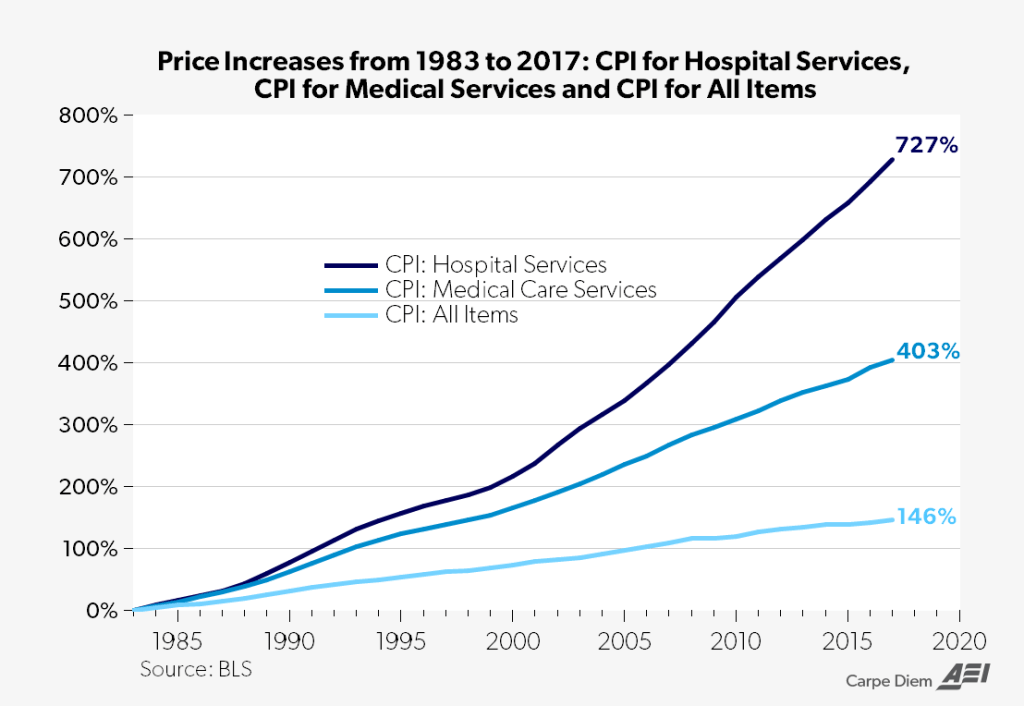
Source: American Enterprise Institute

Health care Insurers also contribute to overall inflated healthcare prices. That’s because insurance companies have few incentives to negotiate for better rates or challenge the high prices set by hospitals.  They are well aware that they can pass those costs onto consumers in the form of higher premiums or deductibles in order to fulfill their fiduciary duty to their shareholders. 5 By passing those costs on to their consumers they ensure their shareholders are maximizing profits effectively fulfilling their duty. This leads to a disconnect between the price of healthcare and the actual cost to consumers leading to the  inflated cost of healthcare of the healthcare system.

Additionally, some companies during economic downturns might only focus on the volume of services provided, rather than the quality or necessity of those services. This may encourage doctors to prescribe unnecessary treatments overuse of healthcare and can result in unnecessary tests or procedures, which drive up the overall healthcare costs. If you are fully covered getting extensive tests is beneficial for your health but unnecessary care drives up the price for people who do not have adequate coverage. That is because higher utilization of healthcare services- necessary or not artificially inflates demand, which providers often use to justify price increases. Most insurance companies operate within fee-for-service payment systems, where providers are reimbursed based on the volume of services delivered rather than the value or outcomes. This further incentivizes unnecessary treatments, tests, and procedures, as healthcare providers have a financial interest in maximizing billable services

Further, the administrative complexity of health insurance also adds significant costs to the healthcare system. Insurers maintain vast bureaucracies to process claims, determine coverage, and manage provider networks, which requires substantial resources. Anecdotally, after spending some time in the insurance sector, a lot of the administrative tasks incentivize an incredible amount of waste.  These costs are ultimately passed on to consumers. For example, administrative expenses in the U.S. healthcare system account for nearly 8% of total spending, compared to 2-3% in countries with simpler, more centralized systems. 6

Action is Necessary

The tragic events surrounding Brian Thompson’s assassination have understandably stirred intense emotions and reignited a national conversation about the flaws in our healthcare system. While these tragedies can bring the issue to the forefront, history shows us that meaningful change doesn’t come from fleeting moments of outrage. The shockwaves from Thompson’s death can grab attention temporarily, but true change only happens when we confront the deeper economic incentives that drive the inefficiencies and inequalities in healthcare.

Reform, as we’ve seen in the past, is rarely quick or easy. It faces resistance from entrenched interests that benefit from the status quo. But the time to act is now. The monopolistic pricing, the disconnect between what healthcare actually costs and what patients pay, and the lack of meaningful negotiation from insurers- all of these must be tackled with urgency. It’s time to rethink the economic incentives behind the healthcare system and shift the focus toward transparency, competition, and patient-centered care. The current model is unsustainable, and the responsibility for change lies with all of us; policymakers, healthcare providers, insurers, and the public.

Let us use this tragedy not as a fleeting moment of anger but as a rallying point to demand systemic reform. By ensuring that economic incentives align with the well-being of patients and the long-term sustainability of the system, we can move toward a healthcare system that serves the needs of every American, not just the powerful few. Now is the time for thoughtful, deliberate action to reform the healthcare system in a way that reflects the values of justice, fairness, and efficiency for all.

“The time to repair the roof is when the sun is shining.”

-John F. Kennedy

Right now, I’m sad to say, it seems like we’re attempting to repair a roof in the middle of a tornado. Urgent action is needed.


Sources

  1. According to the Journal of the American Medical Association (JAMA), the U.S. healthcare system is plagued by administrative inefficiencies, price inflation, and overuse of medical services, which are driven by poorly aligned incentives among providers, insurers, and payers.

    Source: JAMA. “Waste in the US Health Care System: Estimated Costs and Potential for Savings.” (2019). ↩︎
  2. Research from the RAND Corporation indicates that hospitals charge private insurers an average of 247% of Medicare rates for the same services. This price disparity exists because private insurers lack the bargaining power to negotiate rates effectively, and hospitals rely on these inflated payments to subsidize their operations.

    Source: RAND Corporation. “Prices Paid to Hospitals by Private Health Plans Are High Relative to Medicare and Vary Widely.” (2020).. ↩︎
  3. Research shows that hospital consolidation reduces competition and leads to higher prices. A study by the National Bureau of Economic Research (NBER) found that hospital mergers result in price increases of 6% to 18%, depending on the level of market concentration.

    Source: NBER. “The Price Effects of Cross-Market Hospital Mergers.” (2018).
     The Health Care Cost Institute (HCCI) reports that the average price for hospital services is significantly higher in concentrated markets than in competitive ones.

    Source: HCCI. “Healthy Marketplace Index.” (2020). ↩︎
  4. The American Medical Association (AMA) found that in 2019, 90% of metropolitan areas in the U.S. were highly concentrated for hospital markets, meaning patients had limited choices among providers. This is also the case in more rural areas as well.

    Source: AMA. “Competition in Health Insurance: A Comprehensive Study of U.S. Markets.” (2019). ↩︎
  5. Premiums and deductibles for employer-sponsored health insurance have been steadily rising, with average family premiums increasing by 55% over the past decade. Insurers often attribute this to rising healthcare costs from hospitals and providers.

    Source: KFF. “2022 Employer Health Benefits Survey.” ↩︎
  6. The Study highlights the disproportionately high administrative costs in the U.S. healthcare system compared to other high-income nations with centralized systems, where administrative spending ranges between 2-3% of total healthcare expenditures             

       Source: Woolhandler, S., & Himmelstein, D. U. “Administrative Work Consumes One-Quarter of U.S. Physicians’ Working Hours and Lowers Their Career Satisfaction.” Health Affairs, 2014. ↩︎

Wage Theft in Iowa: Abuse of America’s Honest Worker.

Iowa, the heartland of America, often called the bread basket of the world due to the amount of food they export internationally. In Iowa the fields stretch endlessly and communities thrive on their hard work. Iowa’s residents are proud of their work ethic. Despite the beautiful green pastures and salt of the Earth people, an insidious problem lurks beneath the surface: wage theft.

Iowa, is renowned for its agricultural prowess and strong work ethic, but that does not mean Iowans are  immune to wage theft from employers, this is in spite of the State’s robust economy and reputation for fairness. Unfortunately, countless workers fall victim to wage theft each year, their rightful earnings siphoned away by unscrupulous employers. A new report from Common Good Iowa finds that employers are stealing over $900 million a year from an estimated 300,000 Iowa workers — about 1 in 7 workers and their families.

Wage theft encompasses a variety of illicit practices, including unpaid overtime, minimum wage violations, illegal deductions, and outright non-payment for hours worked. The effects are felt by various  workers from various industries. From farm laborers to restaurant staff, construction workers to healthcare professionals the problem seems to be systemic. In 2021 Tyler Technologies, a software company, settled claims for $3 million for not paying overtime wages to its employees in Iowa. The lawsuit was filed by a group of employees who alleged they were not properly compensated for overtime work. Roughly a year later, an employee at Short’s Burger & Shine in Iowa City realized she hadn’t been paid overtime for over 13 years. With the help of the Center for Worker Justice of Eastern Iowa, she was able to recover her the wages she was owed. However, recovering wages is not a guaranteed remedy. On average over 600 unpaid wage claims are filed with Iowa Workforce Development, and only a fraction of wages were recovered. Often, those most vulnerable to exploitation are immigrants, low-wage workers, and individuals with limited English proficiency, who may lack awareness of their rights or fear retaliation for speaking out. This is extremely alarming considering Iowa’s recent uptick in immigration.

Recently, Western Iowa Tech Community College’s settled for $3 million in a federal lawsuit filed by 13 Chilean students who accused the school of deceiving them about an internship program. The students compared the program to forced labor and human trafficking, claiming they were compelled to work up to 50 hours weekly, leaving minimal time for attending classes, studying, or resting. The students were promised to be enrolled in a 2 year culinary program, when in reality they worked 50 hours a week in meat packing factories. A far cry from the culinary arts. This is just one of the cases that was caught by the system due to the savviness of some of the international students. However, there are plenty of similar cases that fly low below the radar of any authorities or news outlets.

In Iowa, the consequences of wage theft ripple through communities, undermining economic stability and perpetuating cycles of poverty. When workers are denied their rightful pay, they struggle to make ends meet, facing difficulties in paying rent, buying groceries, and providing for their families. This not only harms individuals but has ramifications on the local economy, since decreased purchasing power leads to reduced consumer spending and stunted economic growth for the community as a whole.

On paper, Iowa has a robust labor law system. But despite existing labor laws designed to protect workers, enforcement mechanisms in Iowa remain inadequate, leaving many victims without recourse. The State’s Department of Labor, charged with investigating wage theft claims, is understaffed and underfunded, unable to keep pace with the scale of the problem. Further, Iowa’s Courts do not do a good job in upholding labor rights, where a majority of cases are decided on behalf of employers and corporations rather than an employee. Realistically the case split should be relatively even given the nature of labor cases. A 2012 study by the Iowa Policy Project estimated that dishonest employers defraud Iowa workers out of about $600 million annually in wages. This figure reflects the scale of wage theft before the recent escalation to $900 million. Further, Courts often tip toeing around issues in fear of reversal from a higher court.  Additionally, the complexity of the legal processes and fear of employer retaliation often deter workers from pursuing complaints, further perpetuating a culture of impunity.

To combat wage theft effectively, a multi-faceted approach is necessary, addressing both systemic flaws and individual grievances. Firstly, enhancing enforcement efforts through increased funding and staffing is essential to ensure that perpetrators are held accountable for their actions. This includes proactive investigations, targeted audits, and swift penalties for violators. These actions are paramount since too often than not Iowa’s executive branches refuse to exercise their ability to impose penalties.  Additionally, empowering workers with knowledge of their rights and avenues for redress is crucial, through outreach programs, legal assistance, and community organizing. Community organizing would do have a great deal of benefit since workers would be aware of their rights and have a strong support system to help enforce their rights when they are infringed. This includes partnerships between government agencies, advocacy groups, employers, and workers themselves to identify systemic issues, share best practices, and develop innovative strategies for prevention and enforcement. By harnessing the collective expertise and resources of diverse stakeholders, Iowa can forge a unified front against wage theft, ensuring that every worker is treated with dignity and respect.

Fostering a culture of compliance among employers is paramount, emphasizing the importance of fair labor practices and ethical conduct. This entails providing resources and incentives for businesses to uphold labor standards, such as certification programs, tax incentives, and public recognition for compliance. By incentivizing good behavior and penalizing violations, Iowa can create a more level playing field where honest businesses thrive and exploitative practices are marginalized.

Beyond regulatory measures, fostering collaboration between stakeholders is vital to address the root causes of wage theft and promote sustainable solutions. This includes partnerships between government agencies, advocacy groups, employers, and workers themselves to identify systemic issues, share best practices, and develop innovative strategies for prevention and enforcement. By harnessing the collective expertise and resources of diverse stakeholders, Iowa can forge a unified front against wage theft, ensuring that every worker is treated with dignity and respect. Recognizing the intersectionality of wage theft with other social issues is essential to achieve meaningful change. Problems like wage theft  require a multifaceted, especially when the issue disproportionately impacts marginalized communities. Efforts to combat wage theft must also address underlying disparities related to socioeconomic background, race, gender, and immigration status, By adopting an intersectional approach that centers the experiences of the most vulnerable, Iowa can advance equity and justice for all its residents.

From farms to factories, Main Street to the Capitol, the time has come to shine a light on the shadows where exploitation thrives, and to reclaim the promise of fair treatment and economic opportunity for every worker.  Meaning Iowa must confront wage theft head-on, the state has the opportunity to continue to uphold its values of integrity and fairness, ensuring that the heartland remains a place where hard work is rewarded and justice prevails. Or else Iowa risks being seen as a state that only exploits the workers that have built it up through generations.

Sources:

_____________________________________________

Common Good Iowa Report
Common Good Iowa. “Wage Theft in Iowa: An Analysis of Underpayment and Nonpayment of Wages,” 2024.

Tyler Technologies Overtime Pay Dispute
U.S. Department of Labor. “Tyler Technologies Settles Overtime Claims for $3 Million in Iowa,” 2021.

Short’s Burger & Shine Case
Center for Worker Justice of Eastern Iowa. “Employee Recovers 13 Years of Unpaid Overtime from Short’s Burger & Shine,” 2022.

Iowa Workforce Development Claims
Iowa Workforce Development. “Annual Report on Wage Claims and Recovery,” 2023.

Western Iowa Tech Community College Case
Radio Iowa, “Western Iowa Tech to Pay Millions to Students to Settle Lawsuit,” 2024. (https://www.radioiowa.com/2024/04/25/western-iowa-tech-to-pay-millions-to-students-to-settle-lawsuit/)

Iowa Policy Project Study
Iowa Policy Project. “The Cost of Wage Theft in Iowa,” 2012

Thales & Heraclitus: What Russell Got Wrong.

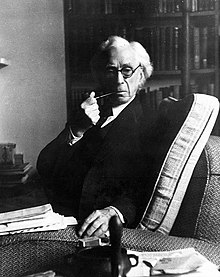
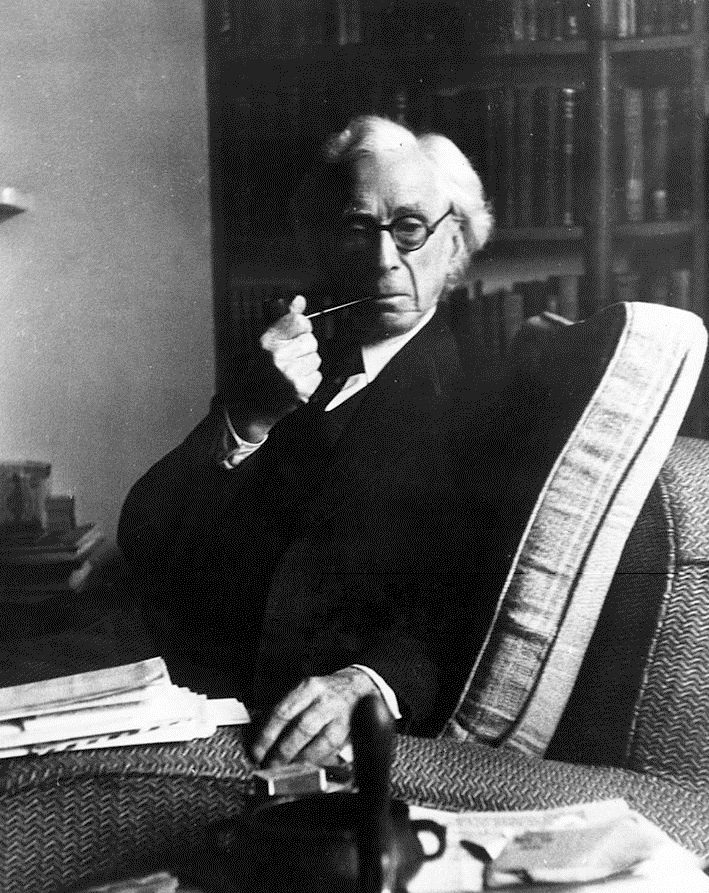
Bertrand Russell Chiefing A Pipe.

    Often Bertrand Russell is revered in the mainstream philosophical community. And rightly so, the work he’s done in the fields of logic, linguistics, and mathematics have had a profound impact on the world. His influence has led him to be credited as the founder of analytic philosophy. But people often forget that Russell was also interested in history, so much so that he penned a lengthy history of Western Philosophy, which he called A History of Western Philosophy. This article will discuss Bertrand Russell’s account of Heraclitus and Thales. Two philosophers who came before Plato and Aristotle. The reason such a discussion is necessary is due to the fact that Russell may not be giving an accurate portrayal of either philosopher in his book. The reason being is that Russel relies on problematic sources to back his claims. This piece will attempt to outline the thoughts Russell had on these thinkers, and then we will criticize certain elements of his arguments. But in order to conduct a proper analysis we must understand the overal goal of Russel book.

    In the History of Western Philosophy  Bertrand Russell attempts to provide a coherent timeline for western philosophical thought. He claims that in order to successfully attempt such a project a specific method of analysis must be used. A method which is “philosophical”. By “philosophical” Russell means that he’ll attempt to synthesize the historical development of two different styles of inquiry, those being scientific and theological traditions (Russell Xiii). Both have different functions, but yet throughout history they’ve reinforced one another in various ways. For Russel, theology is useful because it allows us to make “speculation on matters as to which definite knowledge has, so far, been unascertainable.”(Russell Xiii). In other words, theology allows human reason to explore the unknowable. Now on the other hand, science allows human reason to explore the knowable (Russell Xiv). According to Russell, both have limitations; theology induces dogmatic belief (which he disapproves of), while science tells us what we can in fact know but “what we can know is little” (Russell xiv). Having acknowledged their flaws, Russell proceeds to argue that the development of human intellectual history has been shaped by those two methods of inquiry interacting with one another over time. Theology picks up the methodological flaw inherent in science, and vice versa. It’s this symmetric relationship which allows Russell to put various thinkers in dialogue with one another. Giving readers a coherent narrative to follow in terms of the development of western philosophical thought. But Russell’s methods have drawn scrutiny amongst critics. Frederick Copleston, a contemporary of Russel, acknowledged that “[Russell] treatment of a number of important philosophers is both inadequate and misleading.”. The inadequacy and misleading nature of Russell’s work is evident in his description of two philosophers who came before Socrates, Thales and Heraclitus.  


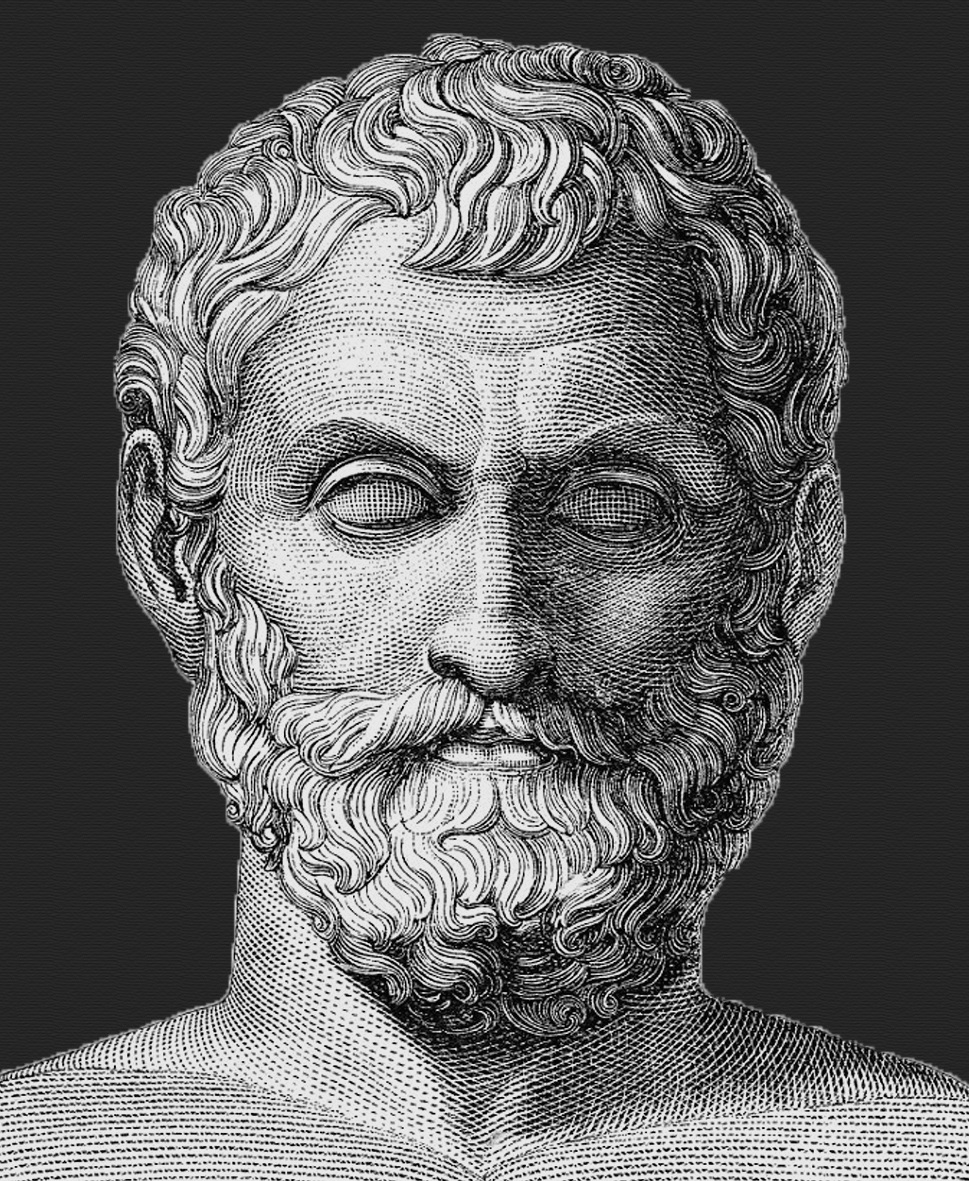
Bertrand’s Thales

Image result for thales
Thales the “scientist”

    In order to understand and identify the “inadequate and misleading” elements of Russel’s work we must analyze his descriptions of certain philosophers. Some of the problematic elements of his descriptions can be found when he describes Thales, a thinker who was active in the 6th century BCE. To be frank, little is known about Thales specific work, as none of his writing survived. But despite that fact, society can get a general idea about Thales by reading some second hand accounts about his teachings.  Russell provides an introduction to Thales, writing: 

“There is…ample reason to feel respect for Thales, though perhaps rather as a man of science than as a philosopher in the modern sense of the word.” (Russell 24)

This sentence should warrant our attention because we can analyze and infer a few things from Russell’s statement. One, that Bertrand holds Thales in high regard compared to the other philosopher of that particular era. And secondly, we should hold a favorable opinion on him because compared to these philosophers Thales is a “man of science”. Why does Russell feel this way? Well, it all stems from a theory attributed to Thales which professes that everything is made of water. A problematic theory to credit onto Thales in the first place, but the reason for that will be addressed in a different section in this paper. Russell explains that Thales’s theory of water shouldn’t be taken as some “foolish” hypothesis but rather as a scientific hypothesis (Russell 26). 

Now the reason he feels like Thales warrants such high praise is due to some scientific discoveries made while he wrote his book. While Russell was writing his book in the 20th century, the scientific consensus seemed to match well with Thales water theory. The consensus was largely contingent on the fact that the theoretical work done by the scientist Willaim Prout on atoms was true. Prout hypothesized that the hydrogen atom was the only fundamental element of the universe. Furthermore, he said that the atoms of other elements were actually just collection of different hydrogen atoms (Rosenfeld). This is similar to Thales’s theory since hydrogen is a pretty important component when it comes to water, but is different since Prout specifies the element hydrogen.  So this background information helps explain why Russell felt so confident in Thales. And explains assertions such as this: 

The statement that everything is made of water is to be regarded as a scientific hypothesis… Twenty years ago, the received view was that everything is made of hydrogen, which is two thirds water…. His [Thales] science and his philosophy were both crude, but they were such as to stimulate both thought and observation.” (Russell 26)

Now the last part of that sentence describes how his science and philosophy were “crude” but are acceptable since they aimed to stimulate both thought and observation. So, one can infer that theoretical frameworks which stimulate thought and observation, are ones which Russell approves of. But Russell also lets readers know what kind of frameworks he doesn’t appreciate. That leads us to Russell’s description of Heraclitus. 

Bertrand’s Heraclitus

Related image
Heraclitus the “mystic”

    The way Heraclitus is portrayed in Russell’s book plays on the theme of science and theology interacting with each other overtime. Russell generally views Heraclitus in a negative light, but acknowledges the difficulty science has had in refuting Heraclitus’s theory of perpetual flux. Additionally, Heraclitus is strangely categorized as “mystical” rather than “scientific”. Russell describes the nature of Heraclitus thought as such: 

Heraclitus, though an Ionian, was not in the scientific tradition of the Milesians. He was a mystic, but of a peculiar kind. He regarded fire as the fundamental substance, everything… is born by the death of something else “ (Russell 41)

Russell doesn’t give us a clear reason why Heraclitus shouldn’t be considered scientific, but we can imply that it’s due to his heavy reliance on intuition and speculation. Heraclitus brand of mysticism is categorized as reforming the religion of his day (Russell 42). Additionally, elements of Heraclitus doctrine are criticized by Russell. Specifically he attacks Heraclitus views on war, contempt for mankind, and his disapproval of democracy. 

Now having outlined what Russell says about these thinkers. It’s time to shift focus on what Russell may have gotten wrong when discussing these philosophers.  For instance we can use the reasoning Bertrand used to praise Thales to talk about Heraclitus as a “scientific thinker”. Additionally, we can also conceive as Thales as a “mystic”. Furthermore, we can learn to understand how Russell came to these conceptions when investigating the sources he decided to use. 


Analysis of Russell’s claims 

  Our criticism of Russell should begin with looking at what kind of information Russell based his critiques on. He’s pretty transparent in letting the readers know where he got his information from, writing: 

“According to Aristotle, he thought that water is the original substance out of which all others are formed; and he maintained that the earth rests on water”(Russell 26)

But there’s an issue with Russell’s apparent transparency. In the next paragraph he goes on to take Aristotle’s account as pure fact, and basis his entire scientific description of Thales on it. Never once does the problematic nature of Aristotle’s account of Thales get mentioned. But thankfully, recent scholarship done by Frede tells us why Aristotle’s writings on Thales aren’t to be taken as absolute fact. Frede explains that:

it is not Aristotle’s aim to provide an account of his origin of philosophy and its evolution for its own sake, to satisfy his and his readers own historical interests “(Frede 503)

Basically, Frede notes that Aristotle wasn’t entirely fair when it came down to providing accurate descriptions of certain thinkers, but rather was using their doctrines to validate his work (Frede). Now having considered that fact Thales can be seen as a mystic because not a lot of his doctrine was written down, and getting an accurate description of his work is difficult. But the school of thought he was a part of (the Milesian school) had mystical tendencies that Bertrand speaks of.  Additionally, Aryeh Finkelberg notes that: 

“Heraclitus, and other early Greek thinkers, did not set out to found philosophy and science, or pave the way for Aristotle—who has long been criticized “for reading his philosophical concerns into the early thinkers (Finkelberg, Heraclitus and Thales’ Conceptual Scheme). “So the method Bertrand uses to put them in dialogue together is problematic since none of these thinkers thought of themselves as either scientists, philosophers or mystics.

    Now having mentioned the problematic nature of the sources, I will provide  sources which allow us to think of Thales as a “mystic” and Heraclitus as a “scientist”. To begin I will refer to a source used by Russell himself- Aristotle. As noted previously Russell relies on Aristotle’s account of Thales to prove that the thinker was indeed scientific. But he conveniently leaves out an account that could hint at him being less “scientific”. In Aristotle’s work On the Soul  Thales is framed as a thinker who’s influenced by “mysticism” and attempts to explain the world via religious terms.  The account goes as such: 

“Thales too (as far as we can judge from people’s memoirs) apparently took the soul to be a principle of movement…Some say that the universe is shot through with soul, which is perhaps why Thales too though that all things were full of Gods”( Aristotle, On the Soul 405a)

There’s a lot to unpack from this phrase. Firstly, Aristotle is relying on testimonials from various people to get Thales’s account on souls. So we can infer that Thales Soul/Movement Theory was one that was known and discussed among contemporaries that were familiar with Thales. Secondly, we can see that Thales theory is based on metaphysical concepts (soul), and that these concepts have at least some effect on our material world (movement). And lastly, we can surmise that Thales’s world view largely consists of things having Gods within them. Arguably, this is a pretty “mystical” way to perceive reality. But from this phrase it’s unclear if Gods and Soul are in the same realm in terms of metaphysics. From the quote, soul is something metaphysical since it’s “principal of movement” and not movement itself. But Gods can be seen as both physical and metaphysical, since the universe being “shot with Soul” would have impact if whether things were filled with Gods or not. But it’s unclear from this reading if Gods are physical, metaphysical, or both. What we can clearly analyze is that Thales does have some mystical element in his analysis. Rendering Russell’s description as inadequate and a bit misleading. 

    Furthermore, Thales theory of water as the fundamental source of everything isn’t necessarily true. He may have never postulated that. Aristotle explains that he did indeed say that water is the fundamental source, but he also claims that he may not have seen it that way after all. Explaining that the earth and water could be reinforcing each other as elements ( Aristotle,On the Heavens, 292-294b). Thales could’ve easily believed that there didn’t need to be one principal element that’s responsible for everything. For all we know Thales could’ve theorized that several elements contributed to the forces of the world. But because Aristotle is using Thales to justify his own theories, conceptualizing him as a philosopher who believes that one fundamental source is responsible for everything is necessary in order to legitimize Aristotle’s views . 

    Let’s transition over to Heraclitus, aka the “mystical” thinker. Firstly, I’d like to mention that Russell dismissal of the claim that “everything is fire” and approval of “everything is water” is absurd. The way he justifies his reasoning, though understandable, is equally as silly. He uses Prout’s work on atoms to back up that claim but you could do the same for Heraclitus. After all everything in the universe emits heat, and if we understand fire to mean “element that emits heat”, then (considering 21st century physics) Heraclitus theory shouldn’t be taken as foolish either. Further, he can been seen as scientific due to observations such as these: 

Sea: water most pure and most tainted, drinkable and wholesome for fish, but undrinkable and poisonous for people”( Hippolytus, Refutation of All Heresies,)

&

Corpses should be disposed of more readily than dung” (Strabo, Geography).

The first quote is an empirical observation on how one element can nourish one animal but yet be dangerous to another. While the second can be interpreted as a public service announcement that corpses are as unsanitary as dung. Though not completely “scientific” in our modern use of the term, these statements are observations on the general nature of the world, and are valid. Thales allegedly made similar observations but Russell holds him in higher esteem compared to Heraclitus. 

    In all we can see that Bertrand Russell’s claims in the  History of Western Philosophy are problematic. Mainly because the notion that these thinkers were either scientific or mystical are inaccurate conceptions in the first place,since the thinkers didn’t even see themselves as such. And since we can conceptualize each thinker as both a “mystic” and “scientist” Russel’s analysis is misleading. Furthermore, the evidence used by Russell isn’t the best since the source itself, Aristotle, is biased.


Source(s):

Frede, Michael. “Aristotle’s Account of the Origins of Philosophy – Oxford Handbooks.” Oxford Handbooks – Scholarly Research Reviews, 27 Apr. 2018, http://www.oxfordhandbooks.com/view/10.1093/oxfordhb/9780195146875.001.0001/oxfordhb-9780195146875-e-20.

“Heraclitus and Thales’ Conceptual Scheme.” Heraclitus and Thales’ Conceptual Scheme | Reading Religion, 31 May 2017, readingreligion.org/books/heraclitus-and-thales-conceptual-scheme.

Rosenfeld, Louis. “William Prout: Early 19th Century Physician-Chemist.” Clinical Chemistry, Clinical Chemistry, 1 Apr. 2003, clinchem.aaccjnls.org/content/49/4/699.

Russell, Bertrand. History of Western Philosophy. Routledge, 2015.


Aristotle: On the Soul and On the Heavens


Hippolytus: Refutation of All Heresies,


Strabo: Geography


A Brief Critique of Locke: Deconstruction and Reconstruction

words in their primary or immediate signification stand for nothing but the ideas in the mind of him that uses them (p. 146).”

The quote above is taken out of the work called An Essay Concerning Human Understanding by John Locke. Specifically, the quote is from Book III which talks about how humans come to understand words and communicate ideas to one another. From the quote above the reader can get a general idea of John Locke’s theory on words. We can reason that Locke thinks words are equal to ideas when he says “Words in the their primary…. signification stand for nothing BUT ideas in the mind…”. Additionally, he goes on to explain that humans are endowed with various thoughts that are supposed to benefit other people. But there’s a catch, these thoughts are all locked up within the individual. Despite this dilemma, words allow these ideas to become unlocked from the individual. According to Locke the unlocking process is what allows society to flourish (Chapter ii sec1. Pg 146 Locke). From that readers are compelled to conceptualize language as a phenomenon which instructs and provides knowledge in order for society to flourish. Furthermore, sharing ideas would be living in accordance with human nature, since he also believes that humans are inherently designed to be sociable (Chap I sec 1 pg 145). Since for Locke ideas are used to be sociable, that means words have utility as well. He argues there are two use values when it comes to recording words: 1. it aids memory 2. It brings ideas out in the open where others can see them (Chapter ii sec 2 pg 146). But words would become too idiosyncratic if people conceived of their own “markings” to translate their ideas. So words that flourish are a “mark” which are universally recognized. Locke explains this notion by saying:

nobody can apply a word, as a mark, immediately to anything else. For that would involve making the word be a sign of his own conceptions, …applying the word as a mark of a thing involves applying it intending it to stand for that thing, which means applying it with an accompanying thought about the word’s significance.”

So if you want an idea to universally stand for a certain mark that means one must find a mark within the world which can generally signify the idea you are trying to convey. This process is what facilitates proper communication with others. So, for example,  if “x” signified the idea “car” in a certain society, then another mark such as “y” (y= not car) would be inappropriate to use for car since “y” isn’t generally understood to mean car. Though Locke has interesting reasons to justify his views on words and ideas, that doesn’t exempt his arguments from criticism.

One objection to Locke’s reasoning would be one that challenges the claim that recording words aid personal memory. While yes, generally this may seem true, readers should analyze the full extent of this claim. Let’s consider a brief example. Imagine an individual who has trouble with long term memory but is proficient at remembering locations. Now let’s say this person is attending a speech and wants to remember the way the orator was talking, and so writes down “Remember the address”. Later on in the week the person finds the paper and reads what he had written. According to Locke the words written down on the paper should aid our forgetful person in remembering the infliction of the orator. But problems arise considering the fact the person is proficient at remembering locations. So he reads it and thinks “Right, it was 5th street”. On the surface this seems like it aided his memory but his initial intention was to remember the infliction of the orators voice, and not the location. After all the person is already good at remembering locations and didn’t necessarily need the words to remind him where the speech was. This could be mitigated by recording his voice (since address (location) and address (speech style) can have different pronunciations). But this would be problematic if the person voice recorded words like “councilor/counselor” or “bank”. Because these words sound the same, the forgetful individual might still find trouble in remembering what they meant.

Another detail we must pay attention to in Locke’s reasoning is the concept that when we write symbols to denote ideas we are doing this to share ideas with others. This once again is generally true. And we get a qualifier on why sometimes it may not be true, since popular symbols must be used to signify ideas (“x”= car example above). So Locke successfully explains why sometimes people don’t understand words that explain ideas. The symbols are too idiosyncratic. But he fails to go deeper on what makes these symbols generally understood in the first place. It’s not as if when human’s with linguistic capacity look at objects they immediately have word impressions of that object. Quite plainly, when you look at a dog in the real world, the brains initial impression doesn’t initially stimulate the cognitive impression of “dog!”. And if you were to pan over to a chair your brain doesn’t exclaim “chair!”. It just understands these objects as such. The word and the object here don’t seem to be directly linked to one another in terms of recognizing objects in our consciousness. But nonetheless these names exist and we have formulated them, so in that sense Locke is correct in saying words are ideas. But it’s wrong to say the inverse, that ideas are words. Mainly because objects in themselves don’t contain the property “word”. But rather, this cognitive property assignment comes from humans. He acknowledges the arbitrary nature of word denotation but still believes that the impressions of objects warrant an automatic denotation. But this isn’t an accurate conceptions of human cognitive thinking. We don’t get impressions from objects in the world and immediately think “this object is that”, rather the brain seems to conduct a process of pattern recognition. The brain’s process seems to fall under reasoning like this “this object is this object, which generally falls under this set of symbols/sound in the world”. This distinction, though small, opens up the scope of Locke’s inquiry into the human mind. Here, we can begin to understand the creatures we are. We aren’t creatures who cognitively just process objects and translate them to ideas, but rather we do that and then inquire about its relationship in the world. This process happens quickly, and most humans master this skill by around the age of 3. That’s how we are able to come closer to understanding each others intentions. Animals are generally good at understanding intentions. Humans obviously fall in that category too, but we are different in that we are able to connect patterns with certain sounds and symbols. Let’s imagine, I invite you over for dinner but I don’t speak your language. Now, I could be standing at a table with some spaghetti on a plate and I can point to it and say “fleeblah” and then have another family member come to it and say “fleeblah”, and a person who has never even heard “fleeblah” uttered can reason the sound “fleeblah” has something to do with that spaghetti. Now if I go even further and open up my phone and google many pictures of spaghetti. And then point and say “fleeblah” that person is inclined to understand that when I utter “fleeblah” I am intending to put the idea spaghetti into their head. This recognition of intention should warrant our attention when we speak about human cognition and language. It seems as if when humans utter/ write words we are intending to put ideas into other people’s cognition. This turns Locke’s assertion that words are used to bring ideas out in the social world, into a question of “what do humans intend with words when they try to bring ideas out in the social world?”. A question which may be tackled in a future post.

Singapore’s Economic Rise: A Synthesis of Economic Principals

Full Disclosure: I am not advocating Marxism, Neoliberal capitalism, or Communism. I disagree with Marxist ideology but it has been influential on the political scene. 
My understanding of Marxism was influenced by lectures taken by me at Rutgers by Professor Sam Carter, an analytic philosopher with  degrees from Oxford &Edinburgh. His research at Rutgers is conducted in linguistics and higher order logic. His work can be found here: https://www.samjbcarter.com/

This article will discuss how one of the founding fathers of Singapore, Lee Kuan Yew, was influenced by Marxist notions of the relations of production have helped Singapore’s economy since the 1950’s. Pioneering leaders, such as Lee Kuan Yew have pushed towards reform specifically targeting the relations of production in order to create economic prosperity in the nation. Arguably, it’s Yew’s Marxist influence which allowed him to actualize a form of state capitalism never before seen in Singapore.

Yew was not an ardent communist as leader of Singapore but may have been influenced by his early encounters with the ideology as a youth.  Lee was influenced by a Marxist organization called the Fabian Society in his youth. He asserted that “cooperation and competition between people” which he believed was a compromise between communism which relied too much on collectivism, and capitalism which he considered to rely too much on competition. This lead his focus on the plights of poor people in Singapore, allowing him to create favorably economic conditions for his constituents. This form of capitalism has allowed Singapore to outperform the USA in terms of  Neoliberal economics used and popularized by the USA. This is the case because it’s clear that Singapore’s economic rise can be directly correlated to the enfranchisement of its working class and the use of various financial instruments popularized by Wall Street. And that was only possible via reforms that looked to reorganize certain relations of production. Specifically, reorganization was possible via the establishment of the Central Provident Fund. The reason why the Central Provident Fund was so important in changing the relations of production was that it enfranchised Singapore’s citizens in terms of healthcare, housing, and other financial means- enabling Singapore’s economy to grow at an exponential rate.  But this enfranchisement didn’t come in the form of a “hand out”, rather it incentivized productivity and entrepreneurship.

IMG_0998.jpg
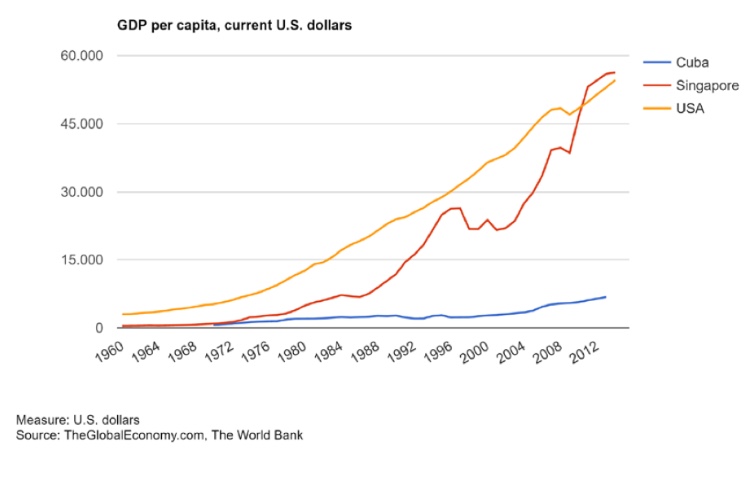
This graph shows Singapore’s economic rise in terms of GDP over time compared to Cuba & The USA. Worthy to note Singapore achieved this growth with a lot less debt than the USA.

In order to understand Singapore’s exponential economic rise under a Marxist framework, a few Marxist terms Lee was likely familiar with must defined. These definitions will act as reference points which allow for a clear understanding on how Lee’s early exposure to Marxist ideology may have played a role in Singapore’s state capitalism. One of the fundamental Marxist notions that needs to be analyzed is the phrase “subsistence needs”. Arguably, it is nearly impossible to understand Karl Marx’s writings without defining this core phrase. Mainly, because Marx believes that without understanding that phrase, accurately conceptualizing how humans organize their material lives would be difficult. Marx emphasizes this point by saying that humans:

 “…begin to distinguish themselves from animals as soon as they begin to produce their means of subsistence, a step which is conditioned by their physical organization. By producing their means of subsistence men are indirectly producing their actual material life.” (Marx German Ideology sec: A. Idealism and Materialism).

So clearly it’s an important definition because defining what a societies subsistence needs exactly are  will give valuable insight on the physical organization of that society. Naturally, the next question ought to be: what are human subsistence needs? One could reason that human subsistence needs are reflective of natural human impulses. And it’s these impulses which drive humans to organize themselves the way they do. Furthermore, Marx seems to give insight on what these “human impulses” are, claiming that humans meet their subsistence needs via biological means (eating, drinking, delaying death etc) and cultivating individual gifts, and that is all done because humans have a natural tendency to do things for the community ( Marx German Ideology sec: D. Proletarians and Communism). This is important to the discussion regarding Singapore’s economic development because the way Singapore’s government institutions decided to improve their society was to make sure certain subsistence’s needs were facilitated and guaranteed to their citizenry. Under a Marxist framework, one can observe how Singapore addressed these subsistence needs of its populous by observing the societies relations of production.

The second and final term that needs to be properly analyzed is the phrase relations of production. For Marx, the relations of production seemed to serve as an important part of analysis in terms of understanding a particular society. The reason he thought this can be best explained by Marx:

“The totality of these relations of production constitutes the economic structure of society, the real foundation, on which arises a legal and political superstructure and to which correspond definite forms of social consciousness.” (Marx A Contribution to the Critique of Political Economy sec Preface).

So in essence the relations of productions for Marx are a reflection of a number of things such as: the economy, law, and political climate. The reason that Marx thinks the relation of production can provide an adequate description of society is due to the fact that it describes individuals’ relationship with productive forces. Mainly, he seems to pay close attention to who exactly owns these productive forces, because for Marx that determines how a particular society is organized. A brief excerpt from Marx’s magnus opus, Das Kapital allows for a more thorough explanation on the topic of relations of production:

The latter is as much a production process of material conditions of human life as a process taking place under specific historical and economic production relations, producing and reproducing these production relations themselves, and thereby also the bearers of this process, their material conditions of existence and their mutual relations…their particular socio-economic form. For the aggregate of these relations, in which the agents of this production stand with respect to Nature and to one another, and in which they produce, is precisely society…”

The prose used by Marx gives insight on the importance of the relations of production if one is to fully grasp society via a Marxist framework. So, in order to understand Singapore’s economic rise under Marxist terms, we need to look at Singapore’s relations of production. But in order to do that a brief history of Singapore’s economic development must be discussed.

 Singapore: A Brief Economic History.

sagostreet3.jpg
Sago Street in the 1960’s

Though Singapore has a rich history stretching back to antiquity, this work will focus on modern developments. Specifically, the scope will be limited to Singapore’s development from the mid-20th century to our present day. The two main reasons for that are: the data from this period is extensive, and this is the period Singapore’s contemporary national identity comes to fruition. Singapore’s story beings in 1965, after Malaysia expelled them from their political union via parliamentary resolution, due to growing racial tension that was perceived as directly undermining the Malaysian economy. (US Library of Congress). After this forced independence, Singapore immediately found itself in a fiscally disadvantaged situation. The situation for the citizenry was dismal. Over 70 percent of households lived in overcrowded communities, a third squatted in shanty towns outside of the urban center, and over half the population was illiterate. (World Bank). Additionally, Singapore faced a heavy influx of immigration before they were kicked out of the Malay political union, further exacerbating the situation. This wave contributed to a high level of unemployment (roughly 15-20%) (World Bank). A visitor living in Singapore during this tumultuous time provides a firsthand account on what this society looked like to him:

“The undercover walkways are usually taken over by hawker stalls and junk. Laundry hangs from poles thrust out of windows above—just like in old Shanghai. This is Singapore, in the early 1970s. We were all devastated at the time—we who didn’t live here. From 1871 to 1931 the city’s Chinese population rose from 100,000 to 500,000. By 1960 it is estimated that more than 500,000 Chinese were living in slum-like conditions—indoors. Equipped with only one kitchen and one bathroom, the shophouses were designed for two extended families at most. After extensive partitioning many of them housed up to 50 individuals.” (Yeo)

It’s worthy to note this person wasn’t in the outskirts where the shanty towns were prevalent. But rather close to the Urban center highlighting the destitute situation a majority of Singaporeans faced. Now this was all going on in the 1960’s-70’s. But now let’s fast forward 50 years, and look at the state of Singapore now.

Contemporary Singapore is far removed from its impoverished past. Their progress is reminiscent and analogous to the Rocky Balboa series. Once a land where

sago-street.jpg
Sago Street in the 21st century

over half the population was illiterate, Singapore now boasts a literacy rate of 96.8% (Knoema). Furthermore, Singapore can take pride in being number one worldwide in terms of educational prowess in math, science and reading (OECD.)Additionally, the unemployment rate has drastically fallen to a staggering 2%. Now comapare that to the world average which falls roughly around 6% (World Bank). And not only that, but roughly 90.7 % of Singaporeans are home owners (Singapore State Government). Comparatively the USA, which is perceived to have a reputable standard in terms of homeownership, has about a 64% rate (US Census). How has the populous of Singapore improved so exponentially? A lot of credit should be given to the population itself.  The large majority of the people who immigrated to Singapore in the early days were impoverished and looked to work hard in order to change their circumstances. However, it would be remiss not to mention the contribution of an individual who started at the grassroots level and would end up at the highest office in Singapore’s government, Lee Kuan Yew.

Lee Kuan Yew

It would be disingenuous to talk about Singapore’s meteoric rise without mentioning the contributions of its first prime minister Lee Kuan Yew.  He grew up during the Japanese colonial occupation of Singapore which would influence his politics in the coming future. But a specific event would have profound effect on Yew. On his way home from work Yew was randomly ordered by a Japanese guard to join a group of Chinese people who were being round up for a “routine” inspection. Luckily for Yew, he spoke Japanese and was able to convince an Imperial soldier to let him go get a better pair of cloths from home. That “routine” inspection group ended up being the victims of the Sook Ching Massacre, a Japanese atrocity that would cause the deaths of roughly 50,000- 100,000 ethnic Chinese. Yew’s close encounter with Japanese oppression inspired him to say “My colleagues and I are of that generation of young men who went through… the Japanese Occupation and emerged determined that no one…had the right to push and kick us around”(Yeo 87). That sentiment inspired him to enter politics, joining the Communist Party of Malaya, where one can assume he was exposed to terms such as the relations of production and subsistence needs. After a complicated series of events Yew would find himself at the helm of Singapore’s newly independent state, inheriting an economic and humanitarian crisis few would ever want to deal with. But his early Marxist influence may have given him an idea on where to start. That can be argued by analyzing some of the reforms he introduced which set up a solid economic base for Singapore’s population to prosper in the future. But it is worthy to note that Singapore is NOT a Marxist state but rather a state influenced by Marxism.

The Central Provident Fund

In order to tackle the economic crisis that plagued Singapore in the 1960’s sweeping reforms that addressed these economic woes needed to be established. Luckily for Yew he inherited the Central Provident Fund which was created under the old Malay regime in 1955. The CPF was the social security system used by the previous regime as a retirement plan, which was funded via taxes. This fund is owned and controlled by individuals but it allows for a bit more autonomy in terms of where the money from the fund is spent, in comparison to other social security systems. Essentially, it creates a bank account for all of it’s citizens. But at the same time allows citizens to use private banks in conjunction with the CPF. Additionally, the CPF can be seen as a government voucher which allows users to save or spend the capital within it whenever they want. Another difference in social security lies in who is qualified for social security services. That’s because all that’s needed to be eligible for the CPF is Singaporean citizenship (CPF).But when Yew came to power the CPF’s power was limited in scope. However, he must’ve realized the potential of the social security system because his regime greatly expanded it over the years, and in hindsight it paid dividends. That’s because the CPF covers 3 layers of subsistence needs which arguably allow Singapore’s population to focus on other things such as: self-fulfillment, community engagement, or social leisure. The 3 layers that allow that are: Shelter, Health, and Education. Each of these would be addressed via the CPF, but the first expansion of the CPF occurred in 1968 and it aimed to address one of the biggest problems challenging Singapore’s prosperity.

Public Housing Scheme

            In 1968 Lee Kuan Yews government was tasked with handling an economic crisis, and one of the first things they decided to address was the housing problem. They did this by expanding the CPF social security apparatus in order to foster viable living conditions, the government also mass produced housing units, which eased the burden felt by the populous during this tumultuous time. (CPF History of CPF). In addition to this, the government made it it’s priority to insure that citizen’s private wages didn’t go into buying houses but rather housing was paid via the CPF (CPF History of CPF). Having said that, this isn’t traditional public housing where the state owns the houses, but rather it insures citizens with an opportunity to become homeowners. That’s possible because the CPF essentially was expanded to act as a state sponsored investment account and as a social security system. When taxes are taken out the funds, they are immediately redistributed to everyone’s CPF account. In addition to that, individuals can choose to contribute more funds to this account via private wages, and if that’s done the private employer is expected to match that amount, similar to 401k schemes in the USA except more full in scope. Moreover, citizens have the option to use their CPF funds as resources to invest in global markets, individuals can invest in low risk accounts or high risk accounts at their discretion. All of these benefits of the CPF enfranchise individuals to become homeowners. These developments explain the aforementioned high percentage of homeowners in Singapore.

Under Marxist terms we can argue that the productive forces in terms of housing were aimed to eventually belong to the people of Singapore. Because when the development first started the government owned the productive forces since they built everything, but over time that debt was paid and individuals owned their houses. Furthermore, they could later sell them to other individuals. In essence, ownership of a house is predicated mainly on citizenship and partly on labor power. The reason it’s partly labor power is because individuals can contribute their private wages to the fund, increasing its value compared to someone who didn’t want to. Reducing the anxiety of shelter must’ve been a much needed relief for the citizenry, allowing them to focus on their own personal endeavors. But that’s not all, the healthcare sector would also be targeted by the CPF leading to further reform in their society.

Medisave

After an economic expansion in the face of the recessions of the early 1980’s, Singapore was able to further improve upon the CPF, guaranteeing yet another subsistence need. They addressed one of the essential parts of subsistence- healthcare. In 1984, the Singaporean government passed legislation which would expand the CPF’s role in its citizens lives. The expansion would be called Medisave. The financial mechanisms used by the CPF to guarantee housing are also used to finance the healthcare sector. At first the funds could only be used for public hospitals but after ample amounts of private economic expansion Medisave was combined with a new model Medishield which allowed CPF funds to be used at private hospitals. Arguably, this new expansion further diminished the worries of the populous. That’s because once subsistence needs are taken care of, people can free up their resources towards other societal endeavors. And certain societal endeavors taken by individuals can also have tremendous effect on the overall economy. More minds can focus on developments in medicine rather than survival. Singapore’s government seems like it incentivizes these private endeavors, and the data can back it up. It ranks number 2 in the index of economic freedom which measure what countries best protect the liberty of individuals to pursue their own economic interests allowing for greater prosperity for  society at large (Heritage Foundation). Compare that to the USA, often perceived as the ideal in terms individual economic freedom, who currently ranks 18th . So in Marxist terms it seems as if the government of Singapore wants workers to make and own the productive forces in Singapore. In nontechnical language they want to develop as many entrepreneurs as possible.

In the end,  Singapore’s development was exponential. Arguably, one could reason this was influenced by addressing Marxist concepts to improve their economy. Specifically, by addressing subsistence needs Singapore could improve the nations relations of production, effecting greater economic society. They were able to do that with a government financial instrument called the Central Provident Fund, which enabled and incentivized home ownership, entrepreneurship, and other personal endeavors. Though not a communist state, Singapore seems to have tried to help their citizens realize their potential. Capitalism and Marxist techniques have been used hand in hand to increase efficiency in a Neoliberal capitalist system.


Works used:

“Adult Literacy Rate by Countries, 2017.” Knoema, Knoema, knoema.com/atlas/topics/Education/Literacy/Adult-literacy-rate?baseRegion=SG.

“Country Rankings.” The Heritage Foundation, http://www.heritage.org/index/ranking.

“Households – Latest Data.” Singapore Department of Statistics (DOS), http://www.singstat.gov.sg/find-data/search-by-theme/households/households/latest-data.

Huff, W.g. “The Developmental State, Government, and Singapore’s Economic Development since 1960.” World Development, vol. 23, no. 8, 1995, pp. 1421–1438., doi:10.1016/0305-750x(95)00043-c.

“OECD Data.” The OECD, data.oecd.org/.

Yeo, Kim Wah. Political Development in Singapore, 1945-1955. U.P., 1973.

“Das Kapital” “A Contribution to the Critique of Political Economy” & German Ideology” by Karl Marx


Sago images:  Lam Chun See http://goodmorningyesterday.blogspot.com/2005/11/my-memories-of-chinatown-part-1-chu.html

http://www.focussingapore.com/photo-gallery/streets-malls/sago-street/


Catalonia: Spain’s Savage Hypocrisy

Catalonia, a region in Northeastern Spain with a unique culture, language, and identity. A culture and history you can argue that is distinctly not “Spanish”.

Catalonia has seemed to have it’s identity trapped within the walls of Spain throughout it’s history. Before the kingdoms of Castille and Aragon combined their lands in the 15th century (this would later become modern day Spain), Catalonia was largely independent. It wasn’t until later centuries of Spanish conquest that Catalonia found itself on the losing side of a series of wars, which led to it’s absorption into Spain. But despite this, the Catalan culture and economy remained vibrant and vehemently independent.

EP603
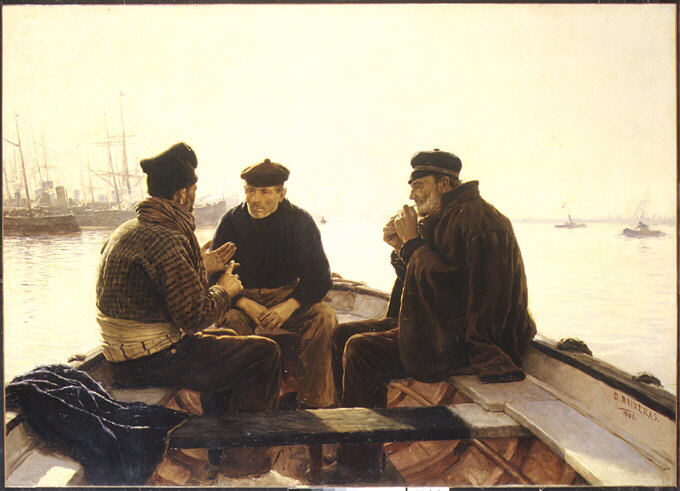
“The Boatman Of Barcelona” by Dionisio Baixeras y Verdaguer (Spanish, Barcelona 1862–1943 Barcelona)

Fast forward to the 1930’s in Catalonia. Nationalism is running high and the Spanish Civil War is in full effect in the region. The Catalans recognized the void and decided to fight for their independence.However, despite their efforts the separatist would lose. That resulted in a win for Francisco Franco, a dictator backed by Nazi Germany. He went on to suppress civil liberties by banning the Catalan language, books, and other cultural events. He imprisoned and killed many Catalan leaders and activists in the process. This suppression would last until 1975 when Franco died.

Now the argument for the separation of Spanish and Catalan culture in it’s essence could be chalked up as subjective. People perhaps might say that they are different yet synonymous, along the lines of a symbiotic relationship. But one thing that isn’t subjective (or symbiotic) is Catalonia’s huge economic contributions to Spain’s overall GDP (Catalonia’s nominal GDP in 2014 was €200 billion the highest in Spain). Which is excellent for Spain’s tax revenue, but undermines a majority of Catalans who feel as if they’re being ‘robbed’ by the central government in Madrid. Because often, the way the tax revenue is used neglects Catalonia’s regional interests. Giving way for feelings of neglect and exploitation. Symbiotic relationships require two parties to benefit, but by definition when only one party benefits it becomes a PARASITIC relationship. It’s these idiosyncratic differences (both cultural and economic) that have put the region at odds with the Spain’s central government throughout history, and even more so in our modern political sphere.

The modern Catalan sentiment is that the region does more for Spain in terms of the economy than what it gets in return from Spain. That frustration, mixed with the Catalan historical identity has been fuel for recent separatist movements. Recently the regional Catalan parliament passed a law on Sept. 6th 2017 to hold a referendum on independence, Spain’s national government said it was illegal and filed a complaint to the National Constitutional Court. Spain ruled that the referendum was unconstitutional. Nevertheless the Catalans went on with referendum process. Spain responded by shutting down the referendums website, sending the police to stop any polls that had been set up for the referendum, and they confiscated about 10 million ballot papers/ millions of advertising posters. Successfully suppressing the democratic process. Additionally, around 700 of Catalonia’s about 900 mayors are being held under investigation for their role for preparing the referendum. Many of them could possibly face bans on holding democratically elected public office. Despite this many of them will continue to represent their constituents in Catalonia.

At the moment it’s unclear what’s going to happen in Spain amidst this democratic and political crisis. Things seem to be a bit rocky in terms of institutional implementation. Regardless, the world is watching.


Sources: AP

https://www.britannica.com/place/Catalonia

My Junior Year Research Paper

and Wikipedia for dates


Imprisonment & Economics: The Art of Legislation

You are who you imprison. Well, that’s what Plato would’ve said if he would’ve written The Republic in the modern era. Actually maybe not, but he would’ve been able to see the connection between modern economics, legislation and imprisonment. Being the genius that he was he’d probably devise a theory about this correlation, it’d be lofty, and well articulated. But since he’s no longer with us you’ll have to settle for my condensed version.

The first aggressive and transparent instances of this correlation emerge around the age of Mercantilism. They would debut in the form of legislative mandates all across Europe, particularly the Anglo-sphere. Michele Foucault (Historian and author of Madness and Civlisation) argues and points out that during this period:

“The first houses of corrections were opened in England during a full economic recession. The act of 1610 recommended only certain mills and weaving & carding shops to all houses of correction in order to occupy the pensioners. But what had been a moral requirement became an economic tactic when commerce and industry recovered after 1651, the economic situation having been re-established by the Navigation act and the lowering of the discount rate. All able-bodied manpower was to be used to the best advantage, that is, as cheaply as possible. When John Carey established his workhouse project in Bristol he ranked the need for work first: “the poor of both sexes…. May be employed in beating hemp,dressing and spinning flax, or in carding wool and cotton”…Sometimes there were even arrangements which permitted private entrepreneurs to utilize the manpower of the asylums for their own profit” (Madness and Civilisation 52-53) 1834titlepage5.jpg

In a nutshell, Foucault emphasizes the interdependence between economics/legislation, and the effect they had on the development of correctional facilities in the age of Mercantilism. In this case an economic recession has hit England and in response the government passed legislation in order to regulate the economy. A fairly normal measure for governments trying to lessen the effects of an economic catastrophe. But it’s the methods that are deployed which raise cause for alarm.

In a desperate attempt to save the economy England outlawed abject poverty, homelessness, and “loose, idle  and disordley behavior(the latter was never given a clear legal definition) . They sent all “offenders” to correctional facilities, where they were locked in a cell and forced to work . The proper terminology for this systemic means of punishment is called Poor Relief. It was a way for the government to absorb the “non productive” members of society into a system of regulated labor. That newly established labor pool was then used by the big businesses of the time to make a profit during the economic recession.  These organizations would come into these ‘houses of correction’ and use the free prison labor enabling them to turn a profit during a recession. Basically they exploited the new source slave labor.

Additionally, Poor Relief should be looked at as a form of societal control in the face of economic hardship. By rounding up the impoverished of society, England was able to mask how catastrophic things were by forcing everyone to be economically productive. This enables a suppression of any societal/political agitation. After all people without jobs can’t protest the state of the economic climate if they’ve already been arrested for not having a job.  That allowed England to ‘kill two birds with one stone’:( 1) because more of the population is able contribute to the economy (increasing economic efficiency) and (2 )the threat of civil unrest is suppressed. The first instances of modern mass incarceration have begun to take shape.

(in hindsight England was able to fully recover from their economic catastrophe)

Fast forward to the latter part of the 20th century. A time of extreme ideological tension across the globe. Perpetrated by an ongoing Cold War between two world superpowers, the USSR and the USA. During the Reagan administration the goal was clear; the Soviets had to be stopped. The administration would spend their time conducting extensive research to determine the Soviet’s systemic weaknesses. One of the weaknesses identified was an economic one. The administration figured out that by strangling the USSR with economic sanctions and making sure the US economy expanded at an exponential rate, the USA could win the Cold War. Rendering the Soviet economist Leonid Kantorovich’s  Nobel prize winning work on optimal resource allocation useless. In hindsight, Reagan’s supply side economics (Reaganomics)  would prove to be an effective strategy in the aim to stimulate and grow the American financial sector, albeit artificially. By stripping away and adding new red tape, laissez-faire economics dominated and took American capitalism to places it had never been before. Despite all that, some sectors of the American economy needed artificial legislative means to achieve that record growth.

In the 1980’s the number of arrests of drug offenses rose by 126% (National Council on Crime and Delinguency 1989). Mainly due to legislative acts such as the Comprehensive Crime Control Act of 1984. It was a mandate which radically revised the American criminal code system;It gave the government more power in civil forfeiture, reinstated the federal death penalty, and increased federal penalties for cultivation, possession, or sale of Marijuana. This was an indirect effect of Reagan’s supply driven economic stimulus. Because in order for the USA to beat out the Soviets, the US market needed to be operating at near full capacity. That meant everyone was needed to contribute to the system. No matter who you were. What followed these mandates was the rapid development of the ‘for profit privatized prison industrial complex’ . In these new prisons a new criminal was cultivated to populate them, the non-violent drug offender.  As the prison industry grew so did the abundance of this newly cultivated criminal. This in effect meant more free labor for the American economic system as prisons became a new place for corporations to use “outsourced” prison labor.  Leading to even more diverse growth in the corporate structure. For example, if Walmart uses prison labor to create an assembly line for a product (which it does) , then that product is cheaper for consumers, which incentivizes them to shop at Walmart.

But a lot of the economic growth in this era was feigned under complicated laws which inflated economic statistics. An example of this would be corporate share buy back schemes. This financial technique is used by corporations to inflate numbers by buying shares of the company back from individuals who’ve bought them. Share prices are inflated because less shares are out in the public’s hands. But this alone doesn’t necessitate growth.  The reason why the profit margins grow is because investors are ignorant of the fact that the company is buying back it’s own shares. Generally, if people were aware of that corporate behavior confidence in that corporation would diminish. Ideally you’ll want the company to invest it’s money on the product/service it’s providing in order to turn a profit. When a company starts buying back shares that shows a lack of focus in terms of direct capital accumulation from the business. Instead buying back shares shows that a firm is more focused on marketing the fact they are still profitable. A desperate attempt to save their reputation. In principal nothing is wrong with this. But it’s wrong when the US legislation allows corporations to mask the fact they are buying back shares. This allows corporations to lie and potentially defraud investors. But ever since the 1980’s share buybacks have been allowed to remain nontransparent.  Practices such as these can result in big economic bubbles. This is especially concerning when considering the fact that Goldman Sachs has recently bought back $780 billion worth of it’s own shares to avoid public scrutiny, giving us insight that this behavior is alive and well in the 21st century. Subtly, there’s an implication that the  prison system may not have even played a significant part in the economic war waged by the USSR and USA. If it did generate growth then it must’ve been minimal. What seemingly played a significant role is the non transparency of certain economic strategies, one of them being corporate buy back schemes. But the creation of the non violent drug offender allowed the US private prison system a new source of labor, and therefore created growth within that industry. Nevertheless, Reaganomics resulted in a exponential growth for the American economy, one of the key factors that resulted in the collapse of the Soviet Union. Just another concrete example of the relationship shared between legislation, economics, and imprisonment.

In all, when economic instability is on the horizon, one should expect a response from those controlling the resources within a given society. This response will often translate into laws and it’s effect can be easily mapped overtime.

(Sources)

Madness and Civilisation By Michelle Foucault

The 1989 NCCD Prison Population Forecast: The Impact of the War on Drugs By James Austin Aaron David McVey