An American Sovereign Wealth Fund: The Key to American Prosperity?

President Donald Trump has officially signed into law the creation of a U.S. sovereign wealth fund. This is one of the few of his controversial executive orders that have been signed that may have a bit of merit when it comes to addressing the affordability crisis the United States is facing.

A sovereign wealth fund is a government investment fund that pools and manages a nation’s revenues, often derived from natural resources, trade surpluses, or foreign exchange reserves, to generate long term wealth and stabilize the economy. Several economic powerhouses have a wealth fund: Norway,  Singapore, Saudi Arabia, and the United Arab Emirates (Dubai Fund) have used SWFs to diversify their economies, invest in global assets, and provide financial security for the youth. These funds have enabled these nations to achieve high levels of economic stability, global influence, & sustained growth, even during periods of global economic uncertainty, all while empowering their citizenry.
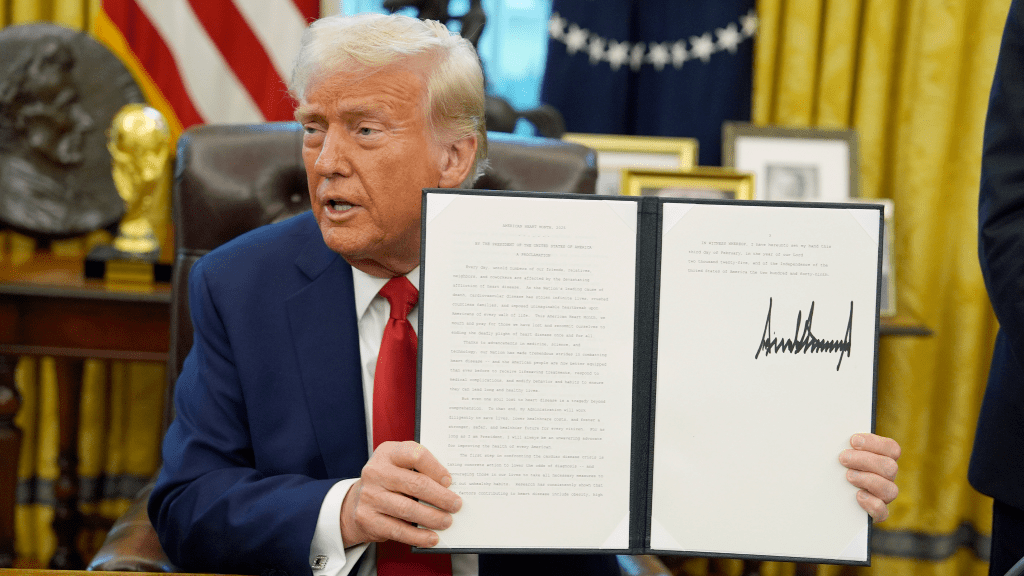
Trump signing the Executive Order 2/3/2023

The fund with the most long term exposure and demonstrated long term practical excellence is Singapore’s Central Provident Fund.

Singapore’s Central Provident Fund (CPF) offers a noteworthy model for the US. In the 1960s, Singapore faced significant economic challenges that necessitated comprehensive reforms. When Singapore became independent the nation faced significant economic challenges. Over 70% of households lived in overcrowded conditions, with a third residing in shanty towns on the city’s outskirts, and more than half of the population was illiterate. The situation was further exacerbated by a heavy influx of immigrants prior to Singapore’s expulsion from the Malaysian political union, leading to an unemployment rate of approximately 15-20%. (Asian Development Bank).

Fast forward 50 years, and Singapore’s transformation is remarkable. The literacy rate has soared to 97.65% as of 2021. The nation consistently ranks at the top globally in educational assessments for math, science, and reading. Unemployment has plummeted to around 2%, significantly lower than the global average of approximately 6%. Additionally, about 90.7% of Singaporeans are homeowners, a stark contrast to the United States, where the homeownership rate is at approximately 50%. This extraordinary progress can be largely attributed to the determination and hard work of Singapore’s populace,  as well as the Central Provident Fund. (Asian Development Bank).

The Central Provident Fund
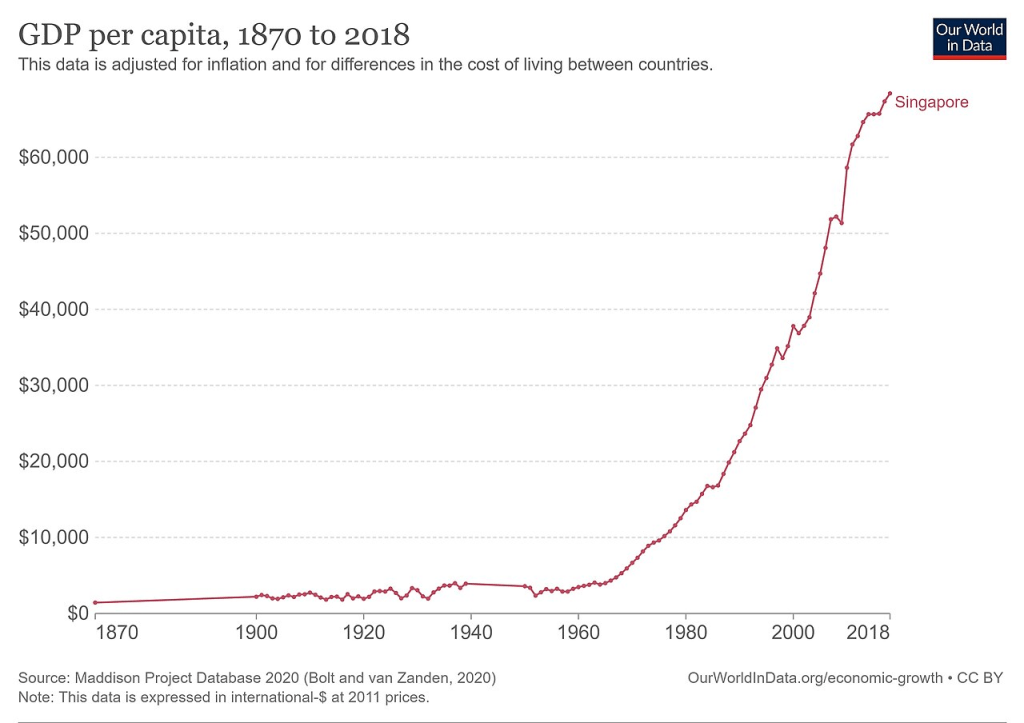
Singapore’s exponential growth after establishment of CPF

Prime Minister Lee Kuan Yew recognized the potential of the existing Central Provident Fund (CPF), established in 1955 during British colonial rule, as a tool to address economic challenges. The Fund was originally designed as a compulsory savings scheme for retirement, the CPF required contributions from both employers and employees. Unlike traditional social security systems funded by taxes, the CPF allowed individuals to own and control their savings, providing flexibility in how funds were utilized. This structure enabled citizens to manage their accounts while also engaging with private banking institutions.

In 1968, the government expanded the CPF’s scope to include housing, permitting withdrawals for the purchase of government flats. This policy not only addressed housing shortages but also fostered social stability and economic growth. Over time, the CPF’s functions further extended to cover healthcare and education, ensuring that citizens’ basic needs were met and allowing them to focus on personal development and community engagement. These strategic expansions of the CPF were instrumental in transforming Singapore’s economy and enhancing the well-being of its population (Asian Development Bank, n.d.).

After the CPF expanded its focus to housing, enabling citizens to use their savings to purchase government built housing units the homeownership rate is now up to 90% in Singapore. For the U.S., a sovereign wealth fund could potentially support housing initiatives, allowing Americans to leverage tax advantaged savings for home purchases, thereby fostering ownership and equity building. (International Monetary Fund).

Beyond housing, the CPF encompasses healthcare and education, allowing citizens to allocate savings toward medical insurance and lifelong learning. This approach reduces financial burdens and enhances productivity by alleviating concerns over essential services. A U.S. sovereign wealth fund could adopt similar strategies, offering dedicated accounts for healthcare and education expenses, possibly with employer matched contributions to accelerate wealth accumulation. (International Monetary Fund).

Implementing such a system in the U.S. presents significant challenges and hurdles . Political resistance to state managed savings programs and the complexities of federalism could impede adoption. Additionally, effective management is crucial to prevent issues like corruption or market volatility. Nevertheless, the potential benefits such as; reduced wealth inequality, increased productivity, and a buffer against economic downturns- are alluring. (PricewaterhouseCoopers).

While the executive order establishing a U.S. sovereign wealth fund is still in its early stages, Singapore’s CPF demonstrates that integrating state oversight with individual agency can transform citizens into stakeholders. For modern Americans burdened by housing costs, medical debt, and student loans, a similar fund could offer substantial relief and innovate on America’s financial institutions in a positive way.

Richard E. Carroll explores the potential for sovereign wealth funds at both the state and federal levels in the United States as a solution to financial challenges. At the state level, 20 U.S. states have established SWFs to manage natural resource revenues and benefit their citizens. For example the Alaska Permanent Fund, established in 1976, is the most well known, currently valued at over $5 billion. Many Alaskans get dividends from this fund, giving them expendable income for education or subsistence needs. New Mexico has done something similar, reducing the tax burden of the average citizen by about $1,000. I for one am a firm advocate for a SWF.

The Fund could be used to invest in infrastructure projects, such as roads, bridges, renewable energy, and broadband, creating jobs and stimulating economic growth. However, generally Americans are skeptical of government run programs, particularly those involving personal savings and investments. Therefore, building public trust would be essential for the fund’s success, perhaps including an opt out for citizens would be beneficial, but after their decision to opt out they should not be eligible to receive any benefits from the program- which is within their right. However, if the fund is managed properly, a steady stream of income from the SWF, the federal government could reduce income, corporate, or sales taxes, which could in theory put money back into the pockets of citizens and businesses. In essence America would be paying you for contributing positively to the American economy.

Having outlined all of that, the key question is whether the U.S. can adapt this model at the Federal level complicated by its diverse landscape. Time will tell.

Sources:

______________________________________________

  • International Monetary Fund. (2020). Sovereign wealth funds and public savings: Lessons from global models.  

The Truth On The H-1B Visa Program: Myths vs. Reality & The Need For Reform.

There’s been a debate raging regarding an immigration program known as the H1b visa program. The H1b program is a program used to source specialized foreign workers into jobs that require specialized skills such as tech or engineering.  Two prominent individuals in the tech and political sphere spurred the debate. Republicans, Vivek Ramasway and Elon Musk, claimed the program was necessary because Americans were ‘too dumb and stupid’ to do the high level work America desperately needs to continue to be the haven of scientific research, innovation, and technical development. I suspect they thought this messaging would go down well with their MAGA base- it did not.  

Instead, countless Americans from backgrounds ranging from CEOs of tech companies, common workers, and Democrats challenged Vivek & Elon’s assertions that Americans were too stupid to work in tech and high skilled labor jobs.

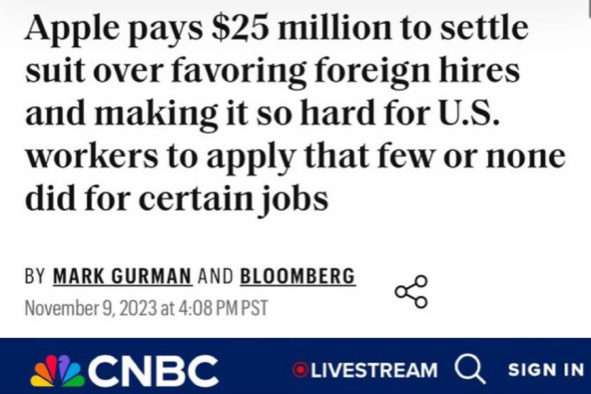
This inspired people to dig into the H1b visa program since a lot of the visas issued are within the public domain. What was revealed was a long list of fraud, discriminatory hiring, and deceptive practices. For example, it was found that several big companies such as Google and Apple settled multi million dollar settlements acknowledging they discriminated against American workers by undercutting them to hire cheaper foreign nationals from countries they preferred, mainly India, a country known for poor working conditions and subservient workers who do not fight labor abuses. Furthermore, it seems over 70% of H1b visas have been allocated to India at a disproportionate rate in comparison to other nations.

Here, we dissect four common misconceptions about the H1B visa, providing a clearer picture of its impact and operation.

Misconception 1: H1B is Necessary Because Americans Are Dumb

This sweeping statement is not only offensive but also a gross oversimplification of the program’s purpose. People claim the H1B visa aims to address specific skill shortages in fields like STEM, where there might be a lack of local talent or where companies need highly specialized skills. But that is not the case, the narrative of a skill shortage is often a facade for wage suppression, rather than an actual need for foreign talent due to intellectual inadequacy of Americans.

Numerous reports from the Economic Policy Institute highlight that the labor market’s dynamics are more complex, involving wage competition rather than a lack of skilled U.S. workers. The truth to the matter is that it is not about intelligence and more about under cutting American workers to hirer cheaper labor abroad. Simply put companies might find it more cost effective or convenient to employ foreign nationals rather than investing in domestic training or offering competitive wages to American workers.

American universities consistently produce graduates in STEM fields who are highly skilled, thanks to top tier education and research opportunities. Moreover, the U.S. has a rich ecosystem of tech education beyond traditional universities, including coding bootcamps, online learning platforms, and community colleges, which are turning out a steady stream of tech professionals equipped with the latest skills. The adaptability of the American workforce is a key factor; many professionals from diverse backgrounds are successfully transitioning into tech roles through reskilling and upskilling programs. The tech industry’s expansion across the U.S., not just in Silicon Valley, further supports the idea that domestic talent is abundant and capable. This diversity in tech roles, from software development to cybersecurity, means there’s a broad spectrum of jobs being filled by American workers. The issue, therefore, isn’t a shortage of American talent ready for tech jobs but rather ensuring that companies invest in this domestic workforce through competitive hiring practices, rather than automatically defaulting to hiring from abroad under the H1B visa program for cost efficiencies.

Misconception 2: H1B Gets the Best and Brightest

While the H1B visa does aim to attract highly skilled workers, the reality on the ground often differs from this ideal. Not every H1B visa holder is necessarily at the pinnacle of their profession. Research from UC Berkeley has shown that a substantial number of these workers are engaged in routine tasks rather than innovative or high level work, challenging the notion that the program solely brings in top tier talent. The Immigration Innovation Act of 2018 sought to refine this by prioritizing education and skills, but implementation has been inconsistent.

Research from UC Berkeley has shown that a substantial number of these workers are engaged in routine tasks rather than innovative or high level work, challenging the notion that the program solely brings in top tier talent. The Immigration Innovation Act of 2018 sought to refine this by prioritizing education and skills, but implementation has been inconsistent.

Further, Indian nationals and companies have been found engaging in widespread fraud, falsifying academic and work records, stealing from h1b salaries. Over the years, several high profile cases have come to light, highlighting a pattern of misuse and potential fraud. Companies like Infosys, TCS (Tata Consultancy Services), and Wipro, all Indian IT giants, have faced legal scrutiny for practices that include falsifying job roles, underpaying workers, and engaging in what’s colloquially known as the “bench and switch” scheme. This involves bringing workers into the country under the pretense of a specific job that does not exist, only to place them with another company or keep them on “bench” (unpaid or underpaid time) until a project becomes available.

One of the most significant cases involved Infosys, which in 2017 agreed to pay $34 million for allegedly misusing B1 visas instead of the more scrutinized H1B visas, thereby circumventing legal processes and wage regulations. Similarly, there have been instances where Indian consultancies were accused of submitting multiple applications for the same candidate to increase their chances in the H1B lottery, a practice that undermines the system’s integrity. This “gaming” of the lottery has been widely discussed on platforms like X, where users like @USTechWorkers have pointed out how these actions make the visa process a nightmare for genuine applicants.

Moreover, individual cases of fraud have been documented, such as the arrest of Ashish Sawhney in 2020, accused of a $21 million H1B visa fraud conspiracy by generating profits through fraudulent visa applications. Another case involved three Indian-origin men who pleaded guilty in 2024 to visa fraud, having operated a tech staffing firm that submitted fake job offers to secure H1B visas. These fraudulent activities not only exploit the visa system but also impact American workers by potentially displacing them with less expensive labor or filling positions with workers who might not meet the actual job requirements.

The broader implications include not just the legal ramifications for those involved but also a tarnished image of the H1B program, which was meant to benefit both the U.S. economy and the global talent pool.

Misconception 3: H1B Is A Fully Fair Practice with No Civil Rights Issues

There’s mounting evidence that the H1B visa could be part of a broader issue of workplace discrimination. Legal actions against companies like Cognizant, where a federal jury found discriminatory practices against non-Indian workers, illustrate this concern.

The U.S. Department of Labor and bodies like the EEOC are tasked with ensuring compliance with anti-discrimination laws, yet there are persistent allegations of preferential treatment for certain nationalities, particularly from India, in tech hiring. This raises significant civil rights questions about fairness and equality in employment opportunities.

The U.S. Department of Labor and the EEOC are tasked with ensuring compliance with anti-discrimination laws, yet there are persistent allegations and court dececiosn proving that preferential treatment for certain

nationalities, particularly from India, in tech hiring exists. This raises significant civil rights questions about fairness and equality in employment opportunities. The misuse of the H1B visa for cost-cutting rather than talent acquisition could lead to systemic discrimination against U.S. workers or workers from other nations, potentially violating civil rights by creating a workforce that does not reflect the diversity or merit of the broader talent pool.

Misconception 4: Indians Are Just Good at IT, Hence More H1B Visas

The dominance of Indian nationals in receiving H1B visas in the tech sector isn’t solely due to their aptitude in IT. Instead, it might reflect discriminatory practices by some firms. Indian IT consultancies have been accused of bias towards hiring from their own country, not just for cultural fit but also to leverage lower labor costs. This practice has led to lawsuits, with companies like Infosys and Wipro facing legal scrutiny for potentially discriminatory hiring practices.

While India has shown growth in its IT sector, its overall ranking in the World Competitiveness Yearbook by the Institute for Management Development (IMD) for IT infrastructure and digital competitiveness has not always placed India at the top. For instance, in the 2022 rankings, India was at 37th place, indicating it lags behind several countries in terms of overall IT competitiveness.  Reports from companies like NASSCOM have pointed out that only a fraction of engineering graduates are employable in industries needing high-level IT skills.

Despite India’s significant strides in adopting and developing technologies such as  machine learning, and blockchain, there’s a stark contrast in the skill readiness of its engineering workforce. Specifically, a report from TeamLease digital, an Indian research firm, indicates that only 2.5% of Indian engineers possess AI skills, and a mere 5.5% have basic programming capabilities. This statistic is alarming considering the technological ambitions of the nation and the USA’s receipt of their technical workers. The implications of this skills gap are profound. For India to maintain its competitive edge in the global tech landscape, it must not only invest in technology but also ensure that its workforce is equipped to leverage these advancements. For the USA we under utlizie the h1b program and undercut Americans who can actually do the job.

Big Tech and H1B Visas: A Closer Look

The involvement of big tech companies in H1B visa hiring practices adds another layer to this discussion. These tech giants are significant employers of H1B workers, with a notable number from India. Allegations of discriminatory hiring practices have surfaced, with lawsuits against companies like Google and Amazon for allegedly favoring foreign nationals, particularly from India, over U.S. workers. These companies have faced criticism for potentially sidelining American talent in favor of visa holders, which could be seen as an economic strategy to reduce labor costs. Despite diversity initiatives, the high reliance on

For example, Google, settled a lawsuit with the U.S. Department of Labor in 2018 for $11 million, accused of favoring H1B visa holders over American workers, indicating a systemic bias in hiring that might prioritize cost over local talent. Similarly, Amazon has faced allegations suggesting a preference for foreign workers through the H1B program, potentially at lower wages, though specific legal outcomes or settlements directly tied to these practices are less publicly documented. While not directly connected to H1B issues, Meta (formerly Facebook) has also been embroiled in allegations of broader discriminatory employment practices, which could indirectly influence perceptions of its visa hiring strategies.

The H1B visa program is not without its merits, offering a pathway for global talent to contribute to American innovation. Further Indian nationals have worked hard and contributed to the American economy in tremendous ways. However, it’s crucial to dispel myths with facts, understand the nuances of discrimination claims, and ensure that the program benefits both the economy and all workers fairly. The ongoing discussions and legal battles are essential in shaping a visa system that truly reflects the values of merit, diversity, and justice.

Overall one thing is certain: H1b reform is necessary if America wants to continue to prosper in the future.


Sources

  1. Economic Policy Institute Reports on Labor Market Dynamics
    • Economic Policy Institute. “H-1B Visa Program: Frequently Asked Questions.” epi.org.
  2. UC Berkeley Research on H-1B Visa
    • Mithas, Sunil, et al. “Skill Requirements in the H-1B Visa Program: Evidence from Job Postings.” UC Berkeley Research Papers, berkeley.edu.
  3. Infosys Legal Case
    • U.S. Department of Justice. “Infosys Agrees to Pay $34 Million to Settle Allegations of Visa Fraud and Abuse.” DOJ Press Release, 2017. justice.gov.
  4. Tata Consultancy Services (TCS) and Discrimination Allegations
    • Gupta, P. “Discrimination Allegations Against TCS.” Legal News, law360.com.
  5. Cognizant Discrimination Case
    • U.S. Equal Employment Opportunity Commission. “Cognizant Discrimination Verdict.” EEOC Case Files, eeoc.gov.
  6. Infosys and Other Companies’ Practices
    • National Association of Software and Service Companies (NASSCOM). “IT Practices and Worker Dynamics.” NASSCOM Reports, nasscom.in.
  7. Bench and Switch Schemes
    • Choudhury, Prithwiraj. “Gaming the H-1B Visa Lottery.” Research Papers, Harvard Business School. hbs.edu.
  8. TeamLease Digital Report on Indian Engineers
    • TeamLease Digital. “State of India’s Engineering Talent: AI and Programming Readiness.” TeamLease Research, teamlease.com.
  9. World Competitiveness Yearbook Rankings
    • Institute for Management Development. “World Competitiveness Yearbook: IT Infrastructure Rankings.” imd.org.
  10. Google Discrimination Settlement
    • U.S. Department of Labor. “Google Settles Allegations of Discrimination with $11 Million Fine.” DOL Press Release, 2018. dol.gov.
  11. Meta/Facebook Broader Employment Discrimination Issues
    • Lev-Ram, Michal. “Facebook Pays $14 Million to Settle Discrimination Allegations.” Fortune, 2021. fortune.com.
  12. Fraud Cases Involving H-1B Visa Holders
    • U.S. Immigration and Customs Enforcement. “Ashish Sawhney Arrested for H-1B Visa Fraud.” ICE Press Release, 2020. ice.gov.
  13. U.S. Tech Workers Advocacy
    • U.S. Tech Workers. “Investigations Into H-1B Fraud and Discrimination.” ustechworkers.com.
  14. Immigration Innovation Act of 2018
    • U.S. Congress. “Immigration Innovation Act (I-Squared).” Congressional Research Service Reports. congress.gov.
  15. Reports on Wage Competition and Visa Abuse
    • Hira, Ron. “The H-1B Program: Changes Needed to Better Protect U.S. and Foreign Workers.” Testimony Before the Senate Judiciary Committee, 2019. judiciary.senate.gov.
  16. National Foundation for American Policy
    • Anderson, Stuart. “H-1B Visas and America’s Global Competitiveness.” NFAP Policy Briefs. nfap.com.
  17. NASSCOM Reports on Employability
    • National Association of Software and Service Companies. “Analysis of STEM Education and Employability.” nasscom.in.
  18. EEOC and Labor Law Compliance
    • Equal Employment Opportunity Commission. “Discrimination Issues and Foreign Labor.” EEOC Reports. eeoc.gov.
  19. Indian IT Industry and Competitiveness

Why’s America Sleeping? A Discussion Regarding The United Healthcare CEO’s Assassination.

“It takes violent shocks to change an entire nations psychology.”

– John F. Kennedy

This quote written in John F. Kennedy’s Magnum Opus ‘Why England Slept’ encapsulates the current collective psychology of the United States after the tragic assassination of Brian Thompson. Some people celebrated the CEO’s death, a symbol of the frustration many Americans have been feeling regarding the nation’s healthcare system. Critiques of the healthcare system are definitely warranted, and Luigi Manginoni’s tragic act has once again put the nations healthcare debate at the forefront a public discourse.  

President Kennedy’s quote is correct, often violent acts can change an entire nations collective psychology, there are plenty of examples in history that agree with that proposition. However, people are wrong assuming that the assassination will trigger meaningful change due to the fear healthcare insurance executives may feel after the assassination of Brian Thompson. People’s idealism can cloud the reality on how institutions operate in the real world. History has proven powerful players rarely relinquish control freely. The healthcare industry could hypothetically double down and refuse to budge, further entrenching an “us vs. them” mentality that pervades many contemporary national debates. Though, admittedly, the act could hypothetically result in meaningful change in the healthcare industry- but not in the way people celebrating the death would imagine. A good case study as to why that is the case would be the Ludlow Massacre.

On April 20, 1914, in Ludlow, Colorado, striking coal miners demanded better pay, safer working conditions, and the right to unionize ( more info on Ludlow here). The strikers were attacked by the Colorado National Guard and company-hired guards, killing the protestors and some of their family members. The Ludlow Massacre lead to the Colorado Coalfield War, where workers formed a militia and started attacking Colorado National Guardsmen and private law enforcement . The workers successfully attacked many of their oppositions positions and had a lower casualty count but when the dust settled the strikers’ demands were not met, the union did not obtain recognition and many striking workers were replaced. Further 408 strikers were arrested, 332 of them were indicted for murder. The institution decided to double down on the crackdowns resulting in none of the strikers work demands being met.

Though the workers themselves did not reach their goals, the tragedy of Ludlow spurred a greater national debate on workers rights in the United States. Slowly the grievances raised by the Ludlow massacre lead to the enactment of federal labor laws that we still use today. American society should turn this tragedy into a positive and reinvigorate the discussion and action that will lead to fundamental changes in the healthcare industry. The Ludlow Massacre forced the nation to confront workers’ rights, and similarly the tragic assassination of Brian Thompson could prompt similar discussions about the systemic failures in healthcare. However, history shows that institutional change is slow and often requires sustained public pressure. Hopefully, this time around the change will come sooner, if not there are indications that matters may get worse rather than better.  Analyzing the economic incentives causing this turmoil will illuminate the problem areas in the sector and hopefully lead to some practical solutions.

Economic Moral Hazards

The problem with the healthcare sector is that it produces bad economic incentives. 1 Often healthy economic incentives encourage behavior that benefits both individuals and society, they are aimed at promoting positive economic action while discouraging negative consequence such as waste or harm. For example good economic incentives would be efficiency standards for cars, they incentivize manufacturers to produce efficient automobiles by offering various government benefits. For example, car companies may get tax breaks,  recognition for meeting higher energy efficiency standards, or might get access to lucrative government contracts. This makes energy utilization effective, lowers bills for consumers, and helps reduce environmental impacts by using wasteful technology.

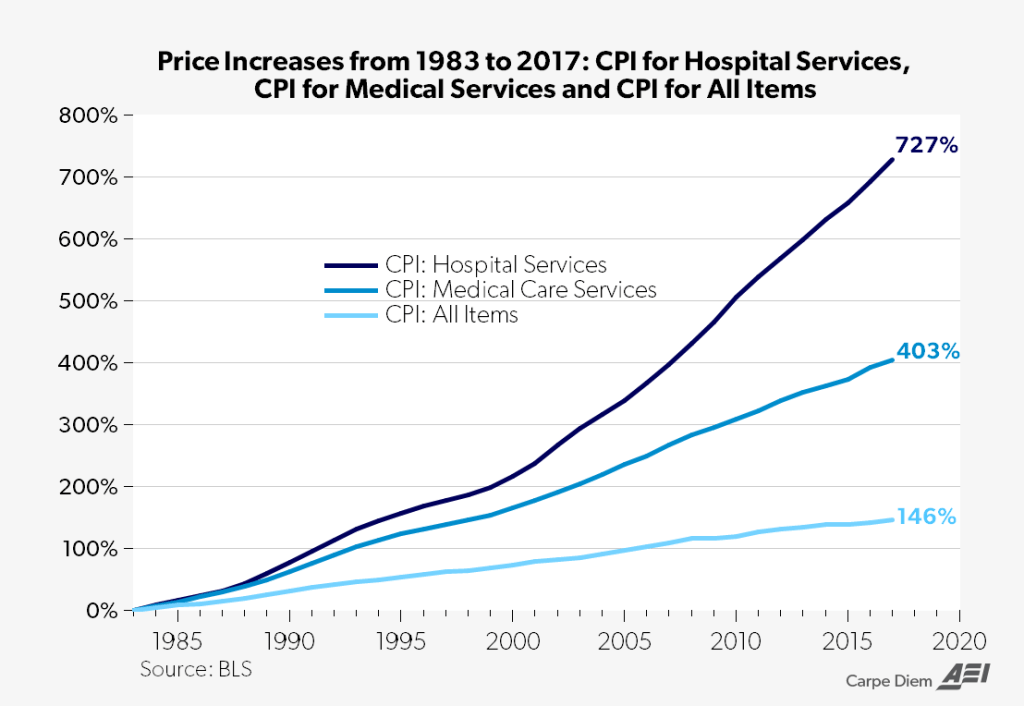
The healthcare industry seems to be running in the opposite direction regarding incentives. Large hospitals commonly increase prices for services and lab technology, knowing that insurers and government programs will foot the bill one way or the other. 2  A big reason hospitals can do this is due to lack of competition within the sector. 3 On average Americans have access to only a few healthcare providers, which incentives monopolistic practices such as price gouging. 4  These practices shift the financial burden onto patients, insurers, and taxpayers, exacerbating the system’s inefficiencies.  Insurance companies also contribute to producing bad economic incentives but in a different way.

Source: American Enterprise Institute

Health care Insurers also contribute to overall inflated healthcare prices. That’s because insurance companies have few incentives to negotiate for better rates or challenge the high prices set by hospitals.  They are well aware that they can pass those costs onto consumers in the form of higher premiums or deductibles in order to fulfill their fiduciary duty to their shareholders. 5 By passing those costs on to their consumers they ensure their shareholders are maximizing profits effectively fulfilling their duty. This leads to a disconnect between the price of healthcare and the actual cost to consumers leading to the  inflated cost of healthcare of the healthcare system.

Additionally, some companies during economic downturns might only focus on the volume of services provided, rather than the quality or necessity of those services. This may encourage doctors to prescribe unnecessary treatments overuse of healthcare and can result in unnecessary tests or procedures, which drive up the overall healthcare costs. If you are fully covered getting extensive tests is beneficial for your health but unnecessary care drives up the price for people who do not have adequate coverage. That is because higher utilization of healthcare services- necessary or not artificially inflates demand, which providers often use to justify price increases. Most insurance companies operate within fee-for-service payment systems, where providers are reimbursed based on the volume of services delivered rather than the value or outcomes. This further incentivizes unnecessary treatments, tests, and procedures, as healthcare providers have a financial interest in maximizing billable services

Further, the administrative complexity of health insurance also adds significant costs to the healthcare system. Insurers maintain vast bureaucracies to process claims, determine coverage, and manage provider networks, which requires substantial resources. Anecdotally, after spending some time in the insurance sector, a lot of the administrative tasks incentivize an incredible amount of waste.  These costs are ultimately passed on to consumers. For example, administrative expenses in the U.S. healthcare system account for nearly 8% of total spending, compared to 2-3% in countries with simpler, more centralized systems. 6

Action is Necessary

The tragic events surrounding Brian Thompson’s assassination have understandably stirred intense emotions and reignited a national conversation about the flaws in our healthcare system. While these tragedies can bring the issue to the forefront, history shows us that meaningful change doesn’t come from fleeting moments of outrage. The shockwaves from Thompson’s death can grab attention temporarily, but true change only happens when we confront the deeper economic incentives that drive the inefficiencies and inequalities in healthcare.

Reform, as we’ve seen in the past, is rarely quick or easy. It faces resistance from entrenched interests that benefit from the status quo. But the time to act is now. The monopolistic pricing, the disconnect between what healthcare actually costs and what patients pay, and the lack of meaningful negotiation from insurers- all of these must be tackled with urgency. It’s time to rethink the economic incentives behind the healthcare system and shift the focus toward transparency, competition, and patient-centered care. The current model is unsustainable, and the responsibility for change lies with all of us; policymakers, healthcare providers, insurers, and the public.

Let us use this tragedy not as a fleeting moment of anger but as a rallying point to demand systemic reform. By ensuring that economic incentives align with the well-being of patients and the long-term sustainability of the system, we can move toward a healthcare system that serves the needs of every American, not just the powerful few. Now is the time for thoughtful, deliberate action to reform the healthcare system in a way that reflects the values of justice, fairness, and efficiency for all.

“The time to repair the roof is when the sun is shining.”

-John F. Kennedy

Right now, I’m sad to say, it seems like we’re attempting to repair a roof in the middle of a tornado. Urgent action is needed.


Sources

  1. According to the Journal of the American Medical Association (JAMA), the U.S. healthcare system is plagued by administrative inefficiencies, price inflation, and overuse of medical services, which are driven by poorly aligned incentives among providers, insurers, and payers.

    Source: JAMA. “Waste in the US Health Care System: Estimated Costs and Potential for Savings.” (2019). ↩︎
  2. Research from the RAND Corporation indicates that hospitals charge private insurers an average of 247% of Medicare rates for the same services. This price disparity exists because private insurers lack the bargaining power to negotiate rates effectively, and hospitals rely on these inflated payments to subsidize their operations.

    Source: RAND Corporation. “Prices Paid to Hospitals by Private Health Plans Are High Relative to Medicare and Vary Widely.” (2020).. ↩︎
  3. Research shows that hospital consolidation reduces competition and leads to higher prices. A study by the National Bureau of Economic Research (NBER) found that hospital mergers result in price increases of 6% to 18%, depending on the level of market concentration.

    Source: NBER. “The Price Effects of Cross-Market Hospital Mergers.” (2018).
     The Health Care Cost Institute (HCCI) reports that the average price for hospital services is significantly higher in concentrated markets than in competitive ones.

    Source: HCCI. “Healthy Marketplace Index.” (2020). ↩︎
  4. The American Medical Association (AMA) found that in 2019, 90% of metropolitan areas in the U.S. were highly concentrated for hospital markets, meaning patients had limited choices among providers. This is also the case in more rural areas as well.

    Source: AMA. “Competition in Health Insurance: A Comprehensive Study of U.S. Markets.” (2019). ↩︎
  5. Premiums and deductibles for employer-sponsored health insurance have been steadily rising, with average family premiums increasing by 55% over the past decade. Insurers often attribute this to rising healthcare costs from hospitals and providers.

    Source: KFF. “2022 Employer Health Benefits Survey.” ↩︎
  6. The Study highlights the disproportionately high administrative costs in the U.S. healthcare system compared to other high-income nations with centralized systems, where administrative spending ranges between 2-3% of total healthcare expenditures             

       Source: Woolhandler, S., & Himmelstein, D. U. “Administrative Work Consumes One-Quarter of U.S. Physicians’ Working Hours and Lowers Their Career Satisfaction.” Health Affairs, 2014. ↩︎