Artificial Intelligence & American Copyright Law: Analyzing the Copyright Office’s AI Report

Copyright Office’s AI Report: The Good, The Bad, and The Controversial

The Copyright Office just dropped Part 3 of its AI report, which aimed at addressing certain copyright law in regards to Artificial Intelligence. The thing that’s got everyone talking is the fact that the report was supposed to tackle infringement issues head on, but instead teased us by saying that answer will come up in “Part 4” that is expected to be released at a later date. Let’s dive into what was actually discussed.

Legal Theory: A Case by Case Basis

The report’s central thesis is a pretty straightforward legal theory. Basically, they recommend that there will be no blanket rule on whether training AI on copyrighted content constitutes infringement or fair use. Everything gets the case by case treatment, which is both realistic and frustrating depending on where you sit. That’s because most lawyers like clear bright line rules backed up by years of precedent, but when attempting to make legal frameworks regarding emerging technologies, the brightline approach is easier said than done.

The report acknowledges that scraping content for training data is different from generating outputs, and those are different from outputs that get used commercially. Each stage implicates different exclusive rights, and each deserves separate analysis. So in essence, what’s  actually useful here is the recognition that AI development involves multiple stages, each with its’ unique copyright implications.

This multi stage approach makes sense, but it also means more complexity for everyone involved. Tech companies can’t just assume that fair use covers everything they’re doing and content creators can’t assume it covers nothing. The devil is in the details.

Transformative Use Gets Complicated

The report reaffirms that various uses of copyrighted works in AI training are “likely to be transformative,” but then immediately complicates things by noting that transformative doesn’t automatically mean fair. The fairness analysis depends on what works were used, where they came from, what purpose they served, and what controls exist on outputs.

This nuanced approach is probably correct legally, but it’s also a nightmare for anyone trying to build AI systems at scale. You can’t just slap a “transformative use” label on everything and call it a day. The source of the material matters, and whether the content was pirated or legally obtained can factor into the analysis. So clearly purpose also matters since commercial use and research use will likely yield different results in the copyright realm. Control and mitigation matter in this context because developing the necessary guardrails is paramount to preventing direct copying or market substitution.

Nothing too revolutionary here, but the emphasis on these factors signals that the Copyright Office is taking a more sophisticated approach than some of the more simplistic takes we’ve seen from various opinions on this matter. This should be reassuring since a one size fits all approach at such an early stage of developing AI could stifle innovation. However if things are left to be too uncontrolled copyrighted works may face infringements to their copyright.

The Fourth Factor Controversy

Here’s where things get interesting and controversial. The report takes an expansive view of the fourth fair use factor: which is the effect on the potential market for the copyrighted work. That is because too many copyrighted works flooding the market brings fears of market dilution, lost licensing opportunities, and broader economic impacts.

The Office’s position is that the statute covers any “effect” on the potential market, which is broad interpretation. But that broad interpretation has a reason, they are worried about the “speed and scale” at which AI systems can generate content, creating what they see as a “serious risk of diluting markets” for similar works. Imagine an artist creates a new masterpiece only to get it copied by an AI model which makes the piece easily recreatble by anyone, diluting the value of the original masterpiece. These types of things are happening on the market today.

This gets particularly thorny when it comes to style. The report acknowledges that copyright doesn’t protect style per se, but then argues that AI models generating “material stylistically similar to works in their training data” could still cause market harm. That’s a fascinating tension, you can’t copyright a style but you might be able to claim market harm from AI systems that replicate it too effectively. It is going to be interesting to see how a court applies these rules in the coming future.

This interpretation could be a game-changer, and not necessarily in a good way for AI developers. If every stylistic similarity becomes a potential market harm argument, the fair use analysis becomes much more restrictive than many in the tech industry have been assuming.

The Guardrails

One of the more practical takeaways from the report is its emphasis on “guardrails” as a way to reduce infringement risk. The message is clear: if you’re building AI systems, you better have robust controls in place to prevent direct copying, attribution failures, and market substitution.

This is where the rubber meets the road for AI companies. Technical safeguards, content filtering, attribution systems, and output controls aren’t just up to the discretion of the engineers anymore they’re becoming essential elements of any defensible fair use argument.

The report doesn’t specify exactly what guardrails are sufficient, which leaves everyone guessing. But the implication is clear: the more you can show you’re taking steps to prevent harmful outputs, the stronger your fair use position becomes. So theoretically if a model has enough guardrails they may be able to mitigate their damages if the model happens to accidently output copyrighted works.

RAG Gets Attention

The report also dives into Retrieval Augmented Generation (RAG), which is significant because RAG systems work differently from traditional training approaches. Instead of baking copyrighted content into model weights, RAG systems retrieve and reference content dynamically.

This creates different copyright implications: potentially more like traditional quotation and citation than wholesale copying. But it also creates new challenges around attribution, licensing, and fair use analysis. The report doesn’t resolve these issues, but it signals that the Copyright Office is paying attention to the technical details that matter.

Licensing

The report endorses voluntary licensing and extended collective licensing as potential solutions, while rejecting compulsory licensing schemes or new legislation “for now.” This is probably the most politically palatable position, but it doesn’t solve the practical problems.

Voluntary licensing sounds great in theory, but the transaction costs are enormous when you’re dealing with millions of works from thousands of rights holders. Extended collective licensing might work for some use cases, but it requires coordination that doesn’t currently exist in most creative industries.

The “for now” qualifier is doing a lot of work here. It suggests that if voluntary solutions don’t emerge, more aggressive interventions might be on the table later.

The Real Stakes

What makes this report particularly significant isn’t just what it says, but what it signals about the broader policy direction. The Copyright Office is clearly trying to thread the needle between protecting creators and enabling innovation, but the emphasis on expansive market harm analysis tilts toward the protection side.

For AI companies, this report is a warning shot. The days of assuming that everything falls under fair use are over. The need for licensing, guardrails, and careful legal analysis is becoming unavoidable.

For content creators, it’s a mixed bag. The report takes their concerns seriously and provides some theoretical protection, but it doesn’t offer the clear-cut prohibitions that some have been seeking.

The real test will come in the courts, where these theoretical frameworks meet practical disputes. But this report will likely influence how those cases get decided, making it required reading for anyone in the AI space.

As we can see AI and copyright law is becoming only more and more complex. The simple answers that everyone wants don’t exist, and this report makes that abundantly clear. The question now is whether the industry can adapt to this new reality or whether we’re heading for a collision that nobody really wants.

Arbitration: A Key Piece To Africa’s Future Economic Success

This article is an excerpt of a larger working paper aimed at policy makers, economists, and investors. This article was aimed to be shorter and less technical than the larger paper.

International commercial arbitration has been touted by many members of the business community and legal profession as a suitable means of settling trade disputes outside of a formal court room. The reasons a person would want to choose to arbitrate a commercial dispute could range from the rapidness of arbitral proceedings in comparison to domestic courts to the ability to keep proceedings confidential. But the benefits of commercial arbitration are not strictly limited to the parties involved in the arbitrational proceedings. There have been numerous studies outlining how commercial arbitration also facilitates economic growth and social well being within nations. The United Nations has acknowledged the many benefits of commercial arbitration fact and has incentivized the use of arbitral institutions. No other continent can benefit more from arbitration than Africa.

The UN has facilitated arbitration by incentivizing a multilateral treaty regime for international commercial transactions. One of the main treaties that attempted to incentivize arbitral proceedings is formally known as United Nations Convention on the Recognition and Enforcement of Foreign Arbitral Awards (also known as the  ‘New York Convention’).  Every signatory to the New York Convention makes two fundamental promises. The first promise is to honor written agreements that call for parties to arbitrate matters that are capable of settlement by the arbitration agreement. And the second fundamental promise is that nations who are signatories to the New York Convention agree that their national domestic courts will recognize and enforce arbitral awards. (New York Convetion).  Out of 193 nations, 162 nations are signatories to the New York Convention. The 162 nations include some of the worlds trading powerhouses most notably China and the United States.

Africa is the continent with the least signatories to the New York Convention.  Further, in comparison to other continents, Africa is the least economically developed. (per the Global Policy Forum).  This is not a correlation that should be overlooked. International commercial arbitration attracts investment and can play a vital role in developing a nation’s overall political economy. At a surface level commercial arbitration facilities trade between nations increasing trade input and output, improving economic activity. However, there is subtle message being sent when a nation has a robust institutional system of commercial arbitration and has domestic courts willing to enforce arbitral awards. That message is simple, “we want to incentivize international trade in a fair and equitable manner”. When a nation does this business are more likely to invest and contract with people/entities within that nation, because they have the confidence that domestic courts will enforce arbitral awards. Continents which are considered to be ‘highly developed’, namely Europe and North America, have robust systems that facilitate international commercial arbitration. (Latham & Watkins).

During the 20th century Africa as a continent relied heavily on aid from other wealthier nations to develop. And foreign aid to this day still plays a major role in Africa, and has it’s benefits. However, research done by Mai Abdulaziz Alghamdi suggests that foreign aid may be doing more harm than good. (Alghamdi). He argues that burdensome amounts of foreign aid can have deleterious effects on aid-recipient countries. (Alghamdi). That is because Africa is the largest recipient of foreign aid. The effect of foreign aid on economic growth is positive however the net benefit of foreign aid is small, suggesting that foreign aid does not result in drastic increases in economic growth.( Alghamdi). Countries need aid to develop but there are negative consequences if a nation heavily relies on aid to fund its government and develop its economy. For example, Bazoumana Ouattara analyzed the effect of aid flow in Senegal. He found that that a large portion of aid flow (around 41%) is used to finance Senegal’s debt and 20% of the government’s resources are devoted to debt servicing. (Ouattara). Secondly, he found that the impact of aid flows on domestic expenditures is statistically insignificant, and that debt servicing has a significant negative effect on domestic expenditure. (Ouattara). In essence, the aid given to Senegal is used to finance the government and not neccesarily used to directly develop the economy as a whole. Several African nations seem to have recognized that in order to sustain meaningful economic development then they must not rely so much on foreign aid. Many nations have attempted to stimulate business activity within their jurisdiction via various economic initiatives. But Africa’s economic powerhouses seem to have one thing in common when it comes to economic/ legal development in the 21st century. They all are utilizing the tools of international commercial arbitration to stimulate economic growth.  One significant nation

Four years after Kenyan independence, that Kenya would enact its first sovereign arbitration legislation, The Arbitration Act of 1968. It was largely influenced by the Arbitration Ordinance of 1914 which was legislation used in colonial Kenya. However, for some unexplained reason, the act adopted outdated arbitral protocol when instead they ideally should have used the New York Convention as a model for Kenya’s arbitral legislation. So, in essence what occurred is that Kenya kept Britain’s colonial arbitral law intact. Unfortunately, the act allowed the court to retain their oversight over all arbitral proceedings in Kenya, meaning that parties could manipulate the court system to frustrate and delay the arbitral process. (Mbithi). In contrast to Kenya’s pre-colonial arbitral past. For example, in East African Power & Lightning Co. Ltd v Kilimanjaro Construction ltd, the Court of Appeals, declined to stay proceedings in favor of arbitration in spite of the fact of the existence of an arbitration agreement.

However a  comprehensive piece of arbitral legislation would come in to effect in 1995. After Kenya aggressively pursued policies that successfully attracted foreign direct investment, it quickly became apparent that the Arbitration Act of 1968 needed reform in order to keep foreign investment within Kenya high. (Mbithi). Kenya had some of its worst economic performances between the years of 1991-92. Growth stagnated. Inflation reached a historic level. Further the government’s budget deficit was over 10% of GDP. In effect, due to treaty requirements, bilateral and multilateral donors suspended their aid programs in Kenya in 1991, resulting in economic uncertainty. One of the ways Kenyan legislature attempted to remedy the dire economic situation was by repealing the old arbitration act and creating a new framework. (Mbithi).  The legislature enacted the Arbitration Act, No. 4 of 1995. The new piece of legislation adopted the UNCITRAL model law, a more modern framework arbitral framework. It also was expanded to include both domestic and international arbitration. (Mbithi).  But despite these major improvements, there was a profound change to the new piece legislation.  Section X of the Arbitration Act stipulated “except as provided in this Act, no court shall intervene in matters governed by this Act”. This not only had ramifications in international commercial arbitration, but it also was a check on the judiciary by the legislature, prior to this act the courts had absolute oversight over all adjudicative functions in the country.

In 2006, Kenya’s government drafted a new developmental program that would make sure that by 2030 Kenya is “newly industrialized, middle income country that provides a high quality of life to all it’s citizens”. (Vision 2030).  The plan is called Kenya Vision 2030.  As of 2020, the initiative has proven fruitful. (World Bank). Kenya far at performs its neighbors economically, mainly due to the influx of foreign investment and their well developed social and physical infrastructure. (World Bank). Further, in 2020 Kenya ranked number 56 in the Ease of Doing Business Index. This is a significant jump in rankings when compared to Kenya’s position in 2010 which was 95. This improvement can be partly explained by changes made within Kenya’s Constitution. In order to facilitate the Kenya Vision 2030 plan, the constitution was changed to include this provision: “alternative forms of dispute resolution including reconciliation, mediation, arbitration and traditional dispute resolution mechanisms shall be promoted, subject to clause”. (Muigua). Arbitration was now backed via statute and Kenya’s constitution. This signaled to foreign investors and businesses that commercial arbitration is being incentivized within the nation. After the constitution was changed, Kenya made exponential improvements economically, and their rankings in the Ease of Doing business index would continue to rise. (Muigua) Kenya will likely fulfill the goals set out in the Kenya Vision 2030 plan.

Robert Moses: The Unelected Master Planner

Robert Moses is a figure that’s relatively obscure to the general public. However his influence has had a lasting impact throughout the United States. He would be paramount in engineering how cities in the States were structured, effectively influencing how and where Americans would spend their money.

Who was Robert Moses? Well, to start, he was unelected public official who held about 12 positions in the Greater New York city area. His stints in public office span from 1924-66. The positions he held had tremendous influence over urban planning. Urban planners aren’t often thought of as being political behemoths but Robert Moses’s tenure in these positions forces us to reconsider the influence unelected politicians may have over society.

Mr. Moses was a relentless, effective, and a calculated worker. His ability to start and finish public projects is arguably unmatched within the scope of American history. Furthermore, his ability to manipulate power goes far beyond the scope of anything Machiavelli could have imagined within a democratic republic. Robert Moses wasn’t fully understood or recognized outside of New York until the publication of Rob Caro’s Pulitzer winning book The Power Broker. The book gives us a grandiose look into the Moses. Robert Caro spent years researching for his book which spans roughly 1,300 pages. His scholarship, alongside with years of historical developments since the initial publication, are what guide my analysis on Robert Moses. Through our investigation of Robert Moses we will come to understand how a lot of cities in the United States mirror each other in terms of structure and societal development. And, albeit indirectly, an analysis of Moses forces us to consider a few philosophical questions when it comes to ideal local governance in the United States. But before we attempt to get understand why these two inquires are relevant , we have to investigate the rise of Robert Moses.

 Robert Moses assent spanned various societal backgrounds. His tenure in public office spans three major historical events in the United States. Moses held positions during the economic boom of the 1920s, a crippling Depression in the 1930’s, World War II, and the subsequent post war economic boom.

The 1920’s: The Rise to Power

After finishing up his PhD at Columbia University, Moses decides to enter New York politics as a political idealist motivated to make change. A story familiar to many young professionals who aim to change the “old guard” within political systems. Moses had plenty of issues he wanted to grapple over. The society he was living in was corrupt, had little to no consumer protection, and certain industries were dominated by monopolies. He briefly worked for the Bureau of Municipal Research and with the U.S. Food Commission. But soon he realized that philosophical theories and logic, no matter how beneficial, wouldn’t take you far when it came to political advancement. His initial propositions were brushed under the rug by the seasoned veterans of government. Though his theoretical understanding of politics would come in handy from time to time, his practical education of political power would be where he was able to hone the craft of political power.

After a series of fortunate events  Moses found himself appointed as the chief of staff to a woman named Belle Moskowitz. She was the leader of a commission tasked with organizing New Yorks administrative structure. A responsibility which came with significant power. It’s worthy to note Belle Moskowitz wasn’t elected by anyone. Rather, Moskowitz was appointed by Alfred Smith the Governor of New York. Smith was of course elected. I include these details not to be redundantly informative but rather to highlight the opaque nature of local government when it comes to transparency. People who you may assume are in control are passing that responsibility to an “advisor”, meaning there are various puppeteers pulling the strings. Moses’s time with Moskowitz is where he would learn the “tricks of the trade” in terms local governance. After managing to impress Alfred Smith through the early 1920’s, Moses found himself appointed to his first positions of power. The appointments would lead him to a notorious political squabble with an eventual US president, Mr. Franklin Delano Roosevelt.

The Appointed One & The Fight with Roosevelt.

In 1924 Moses was appointed as the leader of both the Long Island State Park Commission and State Council of Parks. Moses actually drafted the legislation that created the power of these commission earlier in his career. Personally, when I read the names of these positions I didn’t immediately think POWER.  But let’s remember that Moses was calculated.  He strategically used the power that he did have to gain even more power. Being head of these political bodies allowed him unprecedented control over land-use and highway construction. Behind the scenes he usurped control over certain political entities from elected officials. Moses would lobby constituents, politicians, and special interest groups into allowing him to have independent control over land-use and highway development commissions. Overtime he began to resemble a mini dictator. However, his power wouldn’t go unchallenged.

LC645-600Border
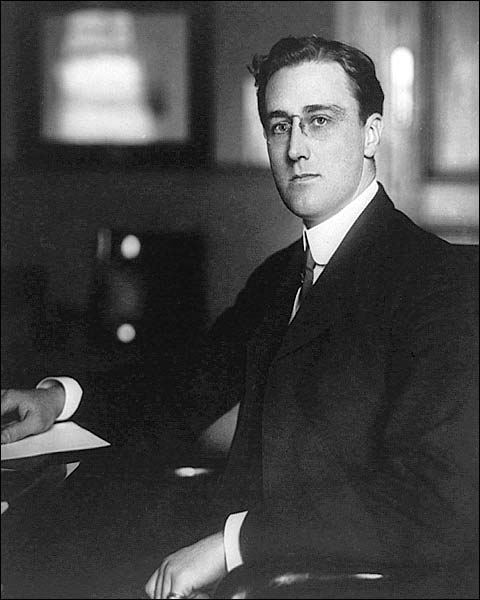
Young Roosevelt.

Franklin Roosevelt, at the time leader of the Taconic State Parkway Commission, had a political spat with Moses. It all started when Roosevelt had a plan to build a parkway through a region of New York City called the Hudson Valley. Moses had different plans. He managed to funnel all the funds from Roosevelt’s project to his own project. Moses was able to keep the funding to Roosevelt’s project so low that it could barely even maintain operations. Roosevelt complained to the governor that Moses was “skinning” Smith’s administration alive. But nothing happened. Eventually, Roosevelt became governor and eventually his parkway project was completed. Roosevelt had another goal in mind, and that was to remove Moses from power. But the removal of Moses was almost impossible by the time Roosevelt became governor. Robert Moses had set up a powerful base of political independence by using legislation, public funding, the press, and young political reformers to support his positions. He would later spearhead a commission which aimed to consolidate 187 separate agencies into eighteen departments. In just 10 year’s Moses was able to absorb power from potential opponents and build a powerful network to get his projects done. But this was just the start there was much more to come from Robert Moses.

The Depression & Beyond

During the 1930’s the United States suffered an economic depression. During this economic catastrophe Robert Moses would blossom. Ironically, his former rival actually enabled this via New Deal legislation lead by President Roosevelt. Moses was granted even more executive and monetary incentive to solidify his power by the Federal Government. Roosevelt, not forgetting his political tenure in New York, attempted to get Moses ousted by making federal funds available only if Moses was removed from office. Moses wasn’t threatened. He told the press of Roosevelts demands. Subsequently, the Federal Government had to stop after increasing public pressure. But as World War II was being waged, Robert Moses’s influence on New York City began to take shape.  The Master Builder started to work on his vision. One unnamed federal official commented on Moses during this era saying:

“Because Robert Moses was so far ahead of anyone else in the country, he had greater influence on urban renewal in the United States – on how the program developed and on how it was received by the public – than any other single person.”

That quote gives us an insight on the magnitude of power Moses had. He was responsible for many projects ranging from the United Nations Headquarters, Shea Stadium, and the Pratt Institute. But he also led initiatives to spur more highway developments, suburban housing developments, strip malls, and other public amenities. Moses got even better at getting projects done. A common strategy involved starting projects knowing that financially they couldn’t be accomplished , but he would leverage political clout in order to manipulate political officials to complete his projects anyway. While in the depression his projects employed a largely jobless populous during the Great Depression. During this era, he held numerous public positions at the same time. None of the positions required him to be publicly elected.

WWII & The New America

The world dramatically changed after World War II. The United States emerged as an economic and political powerhouse within the International community.  Moses understood this and he wanted to further influence the new world around him. His goal for NYC was one that attempted to integrate an urban center to suburban areas which would all be interconnected via parkways. The bureaucrat’s vision would influence America for the years to come.

After World War II America’s social community began to change. Women entered the work force in droves, the nation was in better economic shape than a lot of nations in the world, and the ideal of “Americanness” began to solidify. What do I mean by Americanness? I mean white picket fences, increased home & automobile ownership, and the development of mass consumerism. After WWII plenty of soldiers came home to start anew. They were incentivized to start “nuclear” families, to buy homes, develop their market skills, and most importantly to spend money in order to expand the American economy. Robert Moses was fully aware of this societal shift. He saw the traditional layout of American cities as archaic and counter intuitive to the world’s economic demands. Small retail owners were dismissed in favor of shopping behemoths

download (1)
Robert Moses and NYC Mayor Jimmy Walker.

such as Macy’s, Sears, and the advent of the shopping mall. Local restaurants were forgotten as Dairy Queen and McDonalds slowly became staples in the American diet. Automobiles slowly eliminated the reliance on public transport, allowing people to buy suburban properties further away from NYC.  Moses preferred a sprawl model over concentrated urban communities. And he developed plenty of projects to incentivize the sprawl model. New Yorkers, such as Robert Caro, criticize Moses for destroying New York neighborhoods in favor of vast highways that connected the suburbs to the City. When developing these projects Moses displaced hundreds of thousands of people, destroyed economic centers, and arguably community identity. This led critics to surmise that Moses perhaps preferred automobiles and shopping centers over people. Furthermore, Moses played a part in depleting New York’s resources to develop his projects.  But despite that, the Moses model was in demand in post war America. Plenty of public officials from around the country demanded Robert Moses’s expertise in developing their city plans. This may explain why many American cities, especially in the Midwest, mirror each other in a plethora of ways.

In hindsight Moses’s city planning was a perfect model for a globalized economy. It was predictable; generally people would work a similar hourly schedule, consistently consume products from publicly traded corporations, and, by driving, consumers would

download
Robert Moses

support the gas, oil, and automobile industry. This model has its merits. It’s predicable, safe, and allows people to consume their preferred products. However, a community too reliant on the Moses model is more susceptible to global economic crises. This isn’t just a theoretical proposition, practical examples are evident when we look at Detroit and Las Vegas during the 2008 financial crisis. But it’d be remiss to not mention how many new and innovative developments Moses was responsible for. He was able to engineer and execute massive urban plans that did help a considerable amount of people. But at the expense of displacing many people out of their communities. But one of the most disturbing things about Robert Moses is his ability to become an immensely influential political figure without having to get elected into political office.

Moses’s story forces us to think about the type of local (& perhaps national) governments people would prefer. Do we prefer governments that can be taken over by “Mosesesque” figures in order to get long term, and perhaps beneficial, projects done? Or do we want a system that is a bit more decentralized which doesn’t allow any one sole “political will” to dominate? Whatever you prefer, each has its positive and negative implication.

Which begs a peripheral question: How much do YOU know about the unelected officials in your local government? A question to consider.

Sources:

Power Broker by Robert Caro

ROBERT MOSES AND THE RISE OF NEW YORK THE POWER BROKER IN PERSPECTIVE by KENNETH T. JACKSON

A Consumer’s Republic: The Politics of Mass Consumption in Postwar America by Lizabeth Cohen

https://www.pbs.org/wnet/need-to-know/environment/the-legacy-of-robert-moses/16018/

http://fordhampoliticalreview.org/the-legacy-of-robert-moses/

America’s Forgotten Civil War: Colorado’s Coalfield War

     The first article of the new five part Forgotten American History series! The Forgotten American History series aims to introduce readers to the less commonly known aspects of American history. The first edition takes us to Colorado! Hope you enjoy. 


Colorado’s Coalfield War is one of the most violent yet obscure events in American history. Which is a bit puzzling since The Coalfield War has all the allure of the quintessential American story. It has divisiveness, the quest for the American dream, violence, and an underdog. The Coalfield War took place after a rapid economic boom in the United States. The early 20th century saw the development of notable business magnates. Some you are most likely familiar with such as Andrew Carnegie, John D. Rockefeller, and Henry Ford. During their time they were commonly referred to as ‘industrialist”. That’s mainly due to the economic supremacy they had on industries such as fossil fuel, manufacturing, and transportation. The business strategies commonly used by these magnates were monopolistic. Common techniques used to monopolize included unilateral corporate acquisitions, price controls, and wage suppression. However, a new social development would attempt to countervail the monopolistic tendencies of these business tycoons.  The development being worker’s unions.

Laborers in the early 20th century worked in abhorrent conditions. An unnamed worker who grew up in one of Pennsylvania’s mining communities provides an account on what life was like for a miner:

Our daily life is not a pleasant one. When we put on our oil soaked suit in the morning we can’t guess all the dangers which threaten our lives. We walk sometimes miles to the place- to the man way or traveling way, or to the mouth of the shaft on top of the slope. Add then we enter the darkened chambers of the mines. On our right and on our left we see the logs that keep up the top and support the sides which may crush us into shapeless masses, as they have done to many of our comrades. We get old quickly. Powder, smoke, after-damp, bad air- all combine to bring furrows to our faces and asthma to our lungs.”

Wages were often not paid in US dollars. Rather, workers were paid with metallic strips which were redeemable in company stores. A stark contrast to how modern wage payment is facilitated. Furthermore, workers often lived at their work sites. Worker’s would often build their own dwellings which ranged from tents to shacks. This led to the development of work specific settlements.  In addition, workers often lacked representation in terms of corporate boardrooms. However, workers unions began to spring up providing an opportunity for representation. Exploited laborers could finally voice their frustration en masse.

Colorado’s Coalfield War gives us a perfect opportunity to examine the early relationship between industrialists and workers unions. The stereotypical relationship is often framed idealistically. The cliché often goes like this; workers are in discontent due to their impoverished work situation.  They then begin to band together and organize. Managers are often against organizing but after some convincing they slowly join the workers’ cause. And in one harmonious swoop the workers walk over to administrative offices and demand that the industrialist improve conditions. The industrialist, understanding the gravity of the situation, then succumbs to their demands. And after both parties reach an agreement. But realistically it was never that straightforward.  Colorado’s Coalfield War will give us a realistic glimpse of how a lot of early labor disputes panned out in the United States.

The story of Colorado’s Coalfield War begins in the coal mines of southern Colorado during the 1910’s. Colorado’s coal industry at the time was booming. So much so that roughly 10 percent of the state’s population was employed by the coal sector. At the time coal was highly profitable due to the demand of America’s expanding railroad system which needed coal to fuel their engines. One of the nation’s richest people were involved

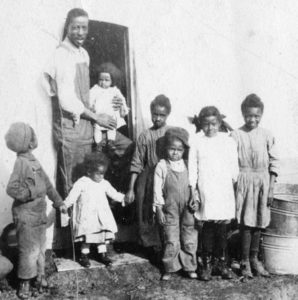
Apr20family-298x300
One of Colorado’s mining families that was living in a tent community

in the coal industry. For example, John D. Rockefeller Jr (heir to John D. Rockefeller) recognized an opportunity to capitalize and acquired ownership of the Colorado Fuel and Iron company (CFI).

Coal mining for the CFI was physically arduous and hazardous work. CFI’s coal miners were under a considerable amount of fatal risk compared to other American coal miners. Statistically, miners in Colorado were twice as likely to die on the job compared to their peers in other states. That’s not to say that the other states were a pleasant place work. But Colorado’s coal mines were considerably risky. The fear of explosion, suffocation and collapsing mines was the reality for many coal miners . Ironically, Colorado had some of the best mining laws in the country. But Colorado’s mining laws were rarely enforced. The United States House Committee on Mines once declared:

Colorado has good mining laws and such that ought to afford protection to the miners as to safety in the mine if they were enforced, yet in this State the percentage of fatalities is larger than any other, showing there is undoubtedly something wrong in reference to the management of its coal mines

Furthermore, mining labor in Colorado was egregiously exploited. Worker’s were paid for the tonnage of coal produced. However, their “dead work” (maintenance, supply runs, and infrastructure repairs) were unpaid.

By 1913, 10,000 of Colorado’s miners had enough with their work environment and decided to strike. The strikers attempted to unionize via the United Mine Workers of America. They demanded improved work conditions, better wages, strict enforcement of Colorado’s mining laws, and union recognition. The CFI responded by rejecting all of the union’s demands.


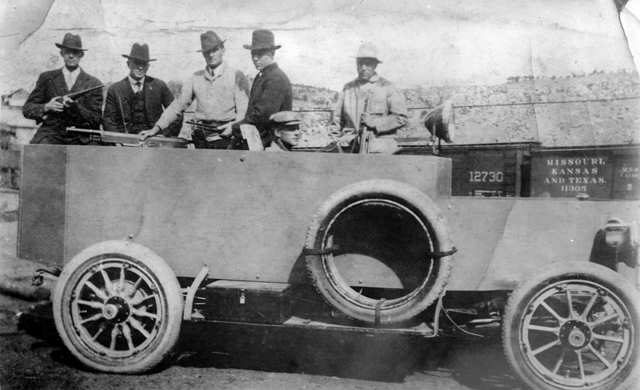
Ludlow_Death_Car
Baldwin- Felts employees with an armored car.

There were considerable measures taken to countervail unionization. The CFI employed strikebreakers to keep the company running. The company evicted strikers from their company homes forcing the striker to build tents for their families nearby. Under Rockefellers orders, the CFI hired Baldwin- Felts Detective Agency (a private detective agency) to harass the strikers.  The agency would shine spotlight on tents, fire live ammunition at strikers’ tents, and patrolled the tent communities with an armored vehicle that had a machine gun mounted unto it. Clearly these were terror tactics. The strikers were unphased. Strikers responded to the terror tactics by taking up arms and defending their tents. Eventually, the skirmishes were acknowledged by the governor of Colorado and he responded by sending the National Guard to the tent community in Ludlow. The strikers were under the impression that the National Guard was there to protect them. But several hundred strikers were arrested by them and often beat the strikers. The National Guard would add more fuel to the fire when they discovered that a strikebreaker had been murdered. The National Guard had been financed by the CFI to cover the expenses of deployment, so they had an implicit obligation to make sure the CFI’s interests were met. One day while the tent dwellers were at funerals commemorating two infants, the National Guard began to dismantle the tent community. However, the community members rebuilt the tents and they continued the strike, persevering through the winter. However, things would come to a boiling point on April of 1914.

The Ludlow Massacre

On April 20th 1914, two national guard posts were deployed on top of a hill, encircling the Ludlow tent community. They deployed an armed post with a machine gun overlooking the strikers. No one is exactly sure what instigated the violence. Some historical records suggest that the National Guard was demanding the release of a

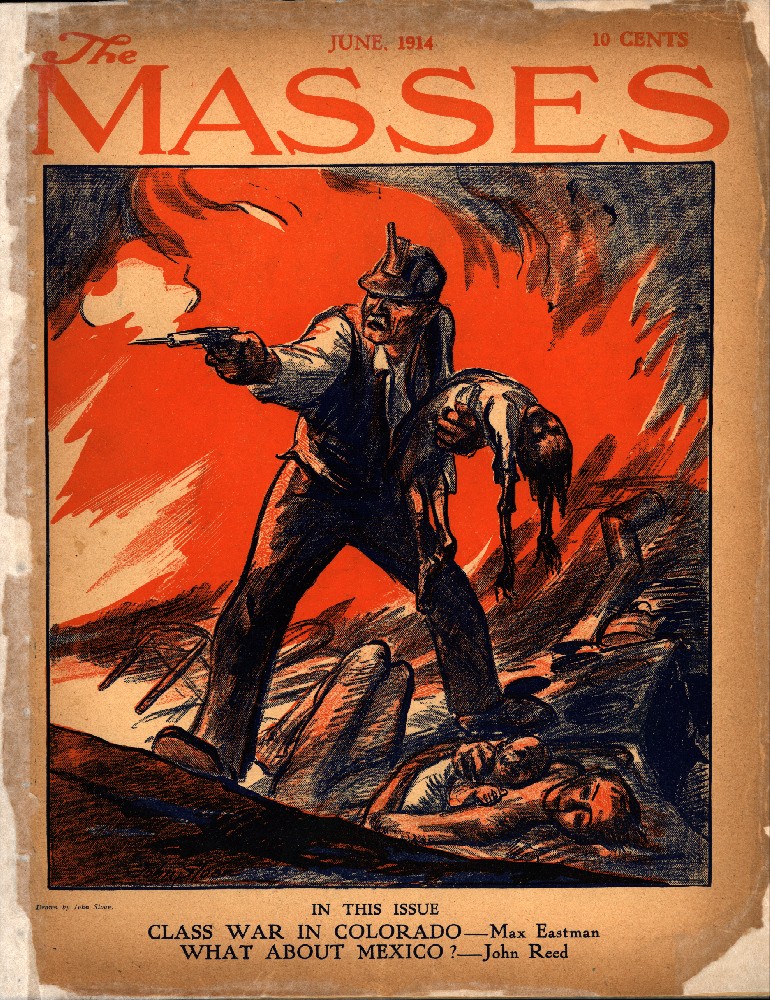
Masses_1914_John_Sloan
The Masses cover art depicting the Ludlow Massacre

hostage, but the strikers refused to give the hostage up. One of the sides then opened fire (it’s unclear who fired the first shot). Nevertheless, a battle would ensue which lasted the whole day. The casualties included high ranking union members such as Louis Tikas. Innocent bystanders (mainly women and children) hid in their tents to avoid the gunfire. The strikers retreated. The National guard then went to the tents, doused them with kerosene, and set them on fire. One of the tents that were set on fire housed 11 children and 2 women. The women and children all died, they were either burned or suffocated to death. These casualties were deemed a massacre by several periodicals in Colorado. The news of the National Guard’s atrocities would then spread across the nation like wild fire.

   Height of The Coalfield War

In Denver, the United Mine Workers declared “A Call to Arms”. They suggested that all union members should gather all “arms and ammunition legally available.” . Subsequently an insurgency would take place in Colorado. Three hundred armed strikers marched from all over Colorado to the Ludlow area. When they made it, the insurgents cut telephone and telegraph wires. And they prepared for battle. The New York Times described the event as such:

“With the deadliest weapons of civilization in the hands of savage-mined men, there can be no telling to what lengths the war in Colorado will go unless it is quelled by force … The President should turn his attention from Mexico long enough to take stern measures in Colorado

Furthermore, in an act of solidarity railroad workers refused to transport National Guard soldiers from Trinidad to Ludlow via railway. Up north in Colorado Springs, union

CC-X-60543
Colorado National Guardsman at an Outpost in Southern Colorado.

miners walked off their jobs and set off to Trinidad. They carried revolvers, rifles, and shotguns. Support was even shown on the East Coast. In New York City, picketers marched in front of the Rockefeller office located on 26 Broadway, New York City. However, these demonstrations were quickly quashed by local law enforcement.

When all the miners met in southern Colorado violence naturally ensued. They attacked antiunion town officials, supervisors/guards, and strikebreakers. Sporadic violence was rampant in southern Colorado as the miners carried out targeted killings, the statistical figures on fatalities vary considerably. So, a precise number can’t be drawn on how many people died. The insurgents also damaged a considerable amount of mining infrastructure.  The Associated Press estimated the financial losses at $18 million (which is about $450,239,203 in 2019).  The CFI alone lost $1.6 million. They were also able to strategically take control of an area that was roughly 50 miles long and 5 miles wide. However, this control didn’t last long. President Woodrow Wilson dispatched federal troops to Colorado, and the miners subsequently surrendered.

         Aftermath

After the Coalfield Wars, Congress held hearings with John D. Rockefeller Jr, union leaders, and several high-ranking members of the National Guard. Though atrocities were recognized by both sides during the hearing, no one was ever formally indicted for their crimes. Unfortunately, a lot of the tangible benefits the strikers were fighting didn’t materialize.  But all wasn’t lost. Rockefeller, feeling political pressure, lead an initiative so workers could have internal representation in the CFI. A measure akin to modern internal corporate arbitration. He also created an internal company union. And encouraged internal social services such as creating a YMCA for the Mining department. During this era, the YMCA played a substantial role in influencing morality and promoting athletic activity within American communities. But it’s important to remember these measures are a far cry from what the original demands the UMWA fought for. It can be argued that these measures were a bit of strategic marketing from Rockefeller. Think about internal company unions will always have corporate interest in mind. So full workers representation isn’t fulfilled. But there is a silver lining, the UMWA gained 4,000 new  members.

In all the Coalfield War gives us an interesting look into the dynamic relationship between industrialists, the government, and workers. Namely, that when disenfranchised workers sought better work conditions that undermined corporate interests, considerable measures were taken to curtail workers goals. Measures which would disgusts modern American sentiments.  Hiring private companies to terrorize workers, bringing in government officials to suppress workers, and massacring innocent bystanders would likely surprise many American households in the 21st century. We also get a key insight on what happens when “the people” get pushed too far in terms of getting their grievances acknowledged. Violent civil disobedience.


I’ll leave readers with song lyrics about the Ludlow massacre by Woody Guthrie:

It was early springtime when the strike was on,

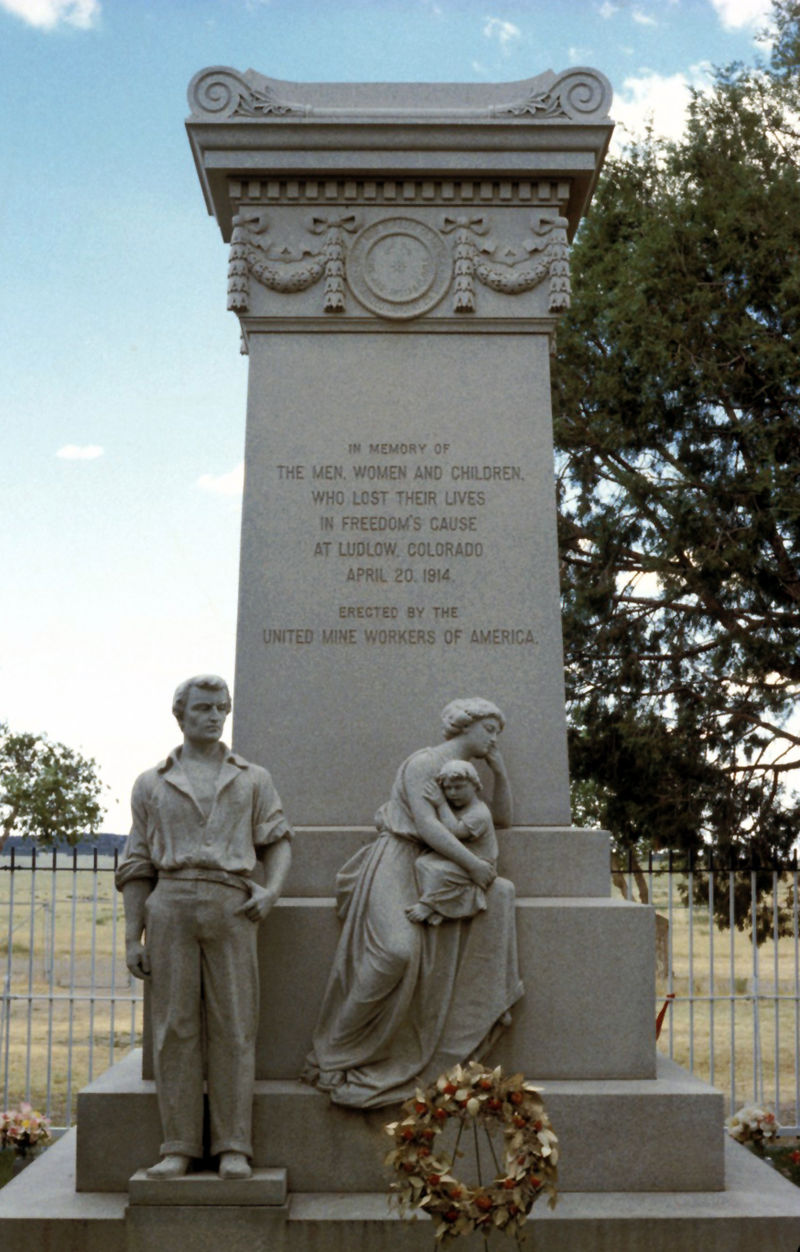
800px-Ludlow_Monument_Cropped
Ludlow Memorial

They drove us miners out of doors,

Out from the houses that the Company owned,

We moved into tents up at old Ludlow.


I was worried bad about my children,

Soldiers guarding the railroad bridge,

Every once in a while a bullet would fly,

Kick up gravel under my feet.


We were so afraid you would kill our children,

We dug us a cave that was seven foot deep,

Carried our young ones and pregnant women

Down inside the cave to sleep.


That very night your soldiers waited,

Until all us miners were asleep,

You snuck around our little tent town,

Soaked our tents with your kerosene


Works Cited:

https://coloradoencyclopedia.org/article/ludlow-massacre

https://www.zinnedproject.org/news/tdih/ludlow-massacre/

https://www.pbs.org/wgbh/americanexperience/features/rockefellers-ludlow/

https://upcolorado.com/university-press-of-colorado/item/download/301_0c3ef02f967b1fa4d978737d608bc159

The Ludlow Massacre: Class, Warfare, and Historical Memory in Southern Colorado by Mark Walker (Historical Archaeology Vol. 37, No. 3, Remembering Landscapes of Conflict (2003), pp. 66-80)

A Miner’s Story The Independent, LIV (June 12, 1902), 1407-10. (http://www.digitalhistory.uh.edu/voices/social_history/14miner.cfm)

Singapore’s Economic Rise: A Synthesis of Economic Principals

Full Disclosure: I am not advocating Marxism, Neoliberal capitalism, or Communism. I disagree with Marxist ideology but it has been influential on the political scene. 
My understanding of Marxism was influenced by lectures taken by me at Rutgers by Professor Sam Carter, an analytic philosopher with  degrees from Oxford &Edinburgh. His research at Rutgers is conducted in linguistics and higher order logic. His work can be found here: https://www.samjbcarter.com/

This article will discuss how one of the founding fathers of Singapore, Lee Kuan Yew, was influenced by Marxist notions of the relations of production have helped Singapore’s economy since the 1950’s. Pioneering leaders, such as Lee Kuan Yew have pushed towards reform specifically targeting the relations of production in order to create economic prosperity in the nation. Arguably, it’s Yew’s Marxist influence which allowed him to actualize a form of state capitalism never before seen in Singapore.

Yew was not an ardent communist as leader of Singapore but may have been influenced by his early encounters with the ideology as a youth.  Lee was influenced by a Marxist organization called the Fabian Society in his youth. He asserted that “cooperation and competition between people” which he believed was a compromise between communism which relied too much on collectivism, and capitalism which he considered to rely too much on competition. This lead his focus on the plights of poor people in Singapore, allowing him to create favorably economic conditions for his constituents. This form of capitalism has allowed Singapore to outperform the USA in terms of  Neoliberal economics used and popularized by the USA. This is the case because it’s clear that Singapore’s economic rise can be directly correlated to the enfranchisement of its working class and the use of various financial instruments popularized by Wall Street. And that was only possible via reforms that looked to reorganize certain relations of production. Specifically, reorganization was possible via the establishment of the Central Provident Fund. The reason why the Central Provident Fund was so important in changing the relations of production was that it enfranchised Singapore’s citizens in terms of healthcare, housing, and other financial means- enabling Singapore’s economy to grow at an exponential rate.  But this enfranchisement didn’t come in the form of a “hand out”, rather it incentivized productivity and entrepreneurship.

IMG_0998.jpg
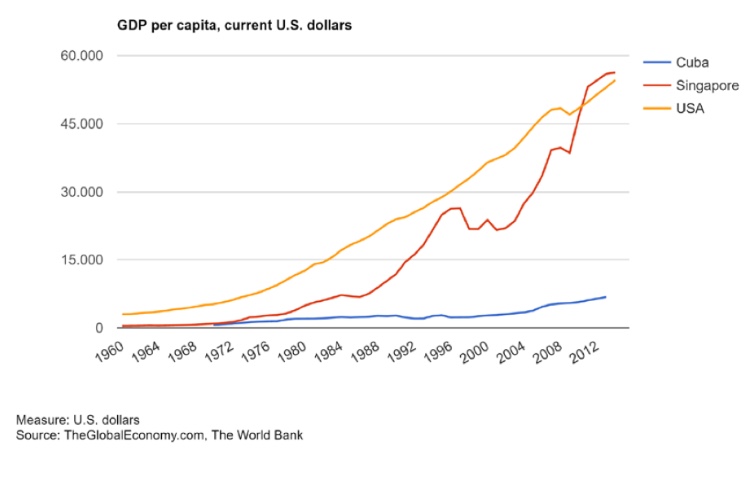
This graph shows Singapore’s economic rise in terms of GDP over time compared to Cuba & The USA. Worthy to note Singapore achieved this growth with a lot less debt than the USA.

In order to understand Singapore’s exponential economic rise under a Marxist framework, a few Marxist terms Lee was likely familiar with must defined. These definitions will act as reference points which allow for a clear understanding on how Lee’s early exposure to Marxist ideology may have played a role in Singapore’s state capitalism. One of the fundamental Marxist notions that needs to be analyzed is the phrase “subsistence needs”. Arguably, it is nearly impossible to understand Karl Marx’s writings without defining this core phrase. Mainly, because Marx believes that without understanding that phrase, accurately conceptualizing how humans organize their material lives would be difficult. Marx emphasizes this point by saying that humans:

 “…begin to distinguish themselves from animals as soon as they begin to produce their means of subsistence, a step which is conditioned by their physical organization. By producing their means of subsistence men are indirectly producing their actual material life.” (Marx German Ideology sec: A. Idealism and Materialism).

So clearly it’s an important definition because defining what a societies subsistence needs exactly are  will give valuable insight on the physical organization of that society. Naturally, the next question ought to be: what are human subsistence needs? One could reason that human subsistence needs are reflective of natural human impulses. And it’s these impulses which drive humans to organize themselves the way they do. Furthermore, Marx seems to give insight on what these “human impulses” are, claiming that humans meet their subsistence needs via biological means (eating, drinking, delaying death etc) and cultivating individual gifts, and that is all done because humans have a natural tendency to do things for the community ( Marx German Ideology sec: D. Proletarians and Communism). This is important to the discussion regarding Singapore’s economic development because the way Singapore’s government institutions decided to improve their society was to make sure certain subsistence’s needs were facilitated and guaranteed to their citizenry. Under a Marxist framework, one can observe how Singapore addressed these subsistence needs of its populous by observing the societies relations of production.

The second and final term that needs to be properly analyzed is the phrase relations of production. For Marx, the relations of production seemed to serve as an important part of analysis in terms of understanding a particular society. The reason he thought this can be best explained by Marx:

“The totality of these relations of production constitutes the economic structure of society, the real foundation, on which arises a legal and political superstructure and to which correspond definite forms of social consciousness.” (Marx A Contribution to the Critique of Political Economy sec Preface).

So in essence the relations of productions for Marx are a reflection of a number of things such as: the economy, law, and political climate. The reason that Marx thinks the relation of production can provide an adequate description of society is due to the fact that it describes individuals’ relationship with productive forces. Mainly, he seems to pay close attention to who exactly owns these productive forces, because for Marx that determines how a particular society is organized. A brief excerpt from Marx’s magnus opus, Das Kapital allows for a more thorough explanation on the topic of relations of production:

The latter is as much a production process of material conditions of human life as a process taking place under specific historical and economic production relations, producing and reproducing these production relations themselves, and thereby also the bearers of this process, their material conditions of existence and their mutual relations…their particular socio-economic form. For the aggregate of these relations, in which the agents of this production stand with respect to Nature and to one another, and in which they produce, is precisely society…”

The prose used by Marx gives insight on the importance of the relations of production if one is to fully grasp society via a Marxist framework. So, in order to understand Singapore’s economic rise under Marxist terms, we need to look at Singapore’s relations of production. But in order to do that a brief history of Singapore’s economic development must be discussed.

 Singapore: A Brief Economic History.

sagostreet3.jpg
Sago Street in the 1960’s

Though Singapore has a rich history stretching back to antiquity, this work will focus on modern developments. Specifically, the scope will be limited to Singapore’s development from the mid-20th century to our present day. The two main reasons for that are: the data from this period is extensive, and this is the period Singapore’s contemporary national identity comes to fruition. Singapore’s story beings in 1965, after Malaysia expelled them from their political union via parliamentary resolution, due to growing racial tension that was perceived as directly undermining the Malaysian economy. (US Library of Congress). After this forced independence, Singapore immediately found itself in a fiscally disadvantaged situation. The situation for the citizenry was dismal. Over 70 percent of households lived in overcrowded communities, a third squatted in shanty towns outside of the urban center, and over half the population was illiterate. (World Bank). Additionally, Singapore faced a heavy influx of immigration before they were kicked out of the Malay political union, further exacerbating the situation. This wave contributed to a high level of unemployment (roughly 15-20%) (World Bank). A visitor living in Singapore during this tumultuous time provides a firsthand account on what this society looked like to him:

“The undercover walkways are usually taken over by hawker stalls and junk. Laundry hangs from poles thrust out of windows above—just like in old Shanghai. This is Singapore, in the early 1970s. We were all devastated at the time—we who didn’t live here. From 1871 to 1931 the city’s Chinese population rose from 100,000 to 500,000. By 1960 it is estimated that more than 500,000 Chinese were living in slum-like conditions—indoors. Equipped with only one kitchen and one bathroom, the shophouses were designed for two extended families at most. After extensive partitioning many of them housed up to 50 individuals.” (Yeo)

It’s worthy to note this person wasn’t in the outskirts where the shanty towns were prevalent. But rather close to the Urban center highlighting the destitute situation a majority of Singaporeans faced. Now this was all going on in the 1960’s-70’s. But now let’s fast forward 50 years, and look at the state of Singapore now.

Contemporary Singapore is far removed from its impoverished past. Their progress is reminiscent and analogous to the Rocky Balboa series. Once a land where

sago-street.jpg
Sago Street in the 21st century

over half the population was illiterate, Singapore now boasts a literacy rate of 96.8% (Knoema). Furthermore, Singapore can take pride in being number one worldwide in terms of educational prowess in math, science and reading (OECD.)Additionally, the unemployment rate has drastically fallen to a staggering 2%. Now comapare that to the world average which falls roughly around 6% (World Bank). And not only that, but roughly 90.7 % of Singaporeans are home owners (Singapore State Government). Comparatively the USA, which is perceived to have a reputable standard in terms of homeownership, has about a 64% rate (US Census). How has the populous of Singapore improved so exponentially? A lot of credit should be given to the population itself.  The large majority of the people who immigrated to Singapore in the early days were impoverished and looked to work hard in order to change their circumstances. However, it would be remiss not to mention the contribution of an individual who started at the grassroots level and would end up at the highest office in Singapore’s government, Lee Kuan Yew.

Lee Kuan Yew

It would be disingenuous to talk about Singapore’s meteoric rise without mentioning the contributions of its first prime minister Lee Kuan Yew.  He grew up during the Japanese colonial occupation of Singapore which would influence his politics in the coming future. But a specific event would have profound effect on Yew. On his way home from work Yew was randomly ordered by a Japanese guard to join a group of Chinese people who were being round up for a “routine” inspection. Luckily for Yew, he spoke Japanese and was able to convince an Imperial soldier to let him go get a better pair of cloths from home. That “routine” inspection group ended up being the victims of the Sook Ching Massacre, a Japanese atrocity that would cause the deaths of roughly 50,000- 100,000 ethnic Chinese. Yew’s close encounter with Japanese oppression inspired him to say “My colleagues and I are of that generation of young men who went through… the Japanese Occupation and emerged determined that no one…had the right to push and kick us around”(Yeo 87). That sentiment inspired him to enter politics, joining the Communist Party of Malaya, where one can assume he was exposed to terms such as the relations of production and subsistence needs. After a complicated series of events Yew would find himself at the helm of Singapore’s newly independent state, inheriting an economic and humanitarian crisis few would ever want to deal with. But his early Marxist influence may have given him an idea on where to start. That can be argued by analyzing some of the reforms he introduced which set up a solid economic base for Singapore’s population to prosper in the future. But it is worthy to note that Singapore is NOT a Marxist state but rather a state influenced by Marxism.

The Central Provident Fund

In order to tackle the economic crisis that plagued Singapore in the 1960’s sweeping reforms that addressed these economic woes needed to be established. Luckily for Yew he inherited the Central Provident Fund which was created under the old Malay regime in 1955. The CPF was the social security system used by the previous regime as a retirement plan, which was funded via taxes. This fund is owned and controlled by individuals but it allows for a bit more autonomy in terms of where the money from the fund is spent, in comparison to other social security systems. Essentially, it creates a bank account for all of it’s citizens. But at the same time allows citizens to use private banks in conjunction with the CPF. Additionally, the CPF can be seen as a government voucher which allows users to save or spend the capital within it whenever they want. Another difference in social security lies in who is qualified for social security services. That’s because all that’s needed to be eligible for the CPF is Singaporean citizenship (CPF).But when Yew came to power the CPF’s power was limited in scope. However, he must’ve realized the potential of the social security system because his regime greatly expanded it over the years, and in hindsight it paid dividends. That’s because the CPF covers 3 layers of subsistence needs which arguably allow Singapore’s population to focus on other things such as: self-fulfillment, community engagement, or social leisure. The 3 layers that allow that are: Shelter, Health, and Education. Each of these would be addressed via the CPF, but the first expansion of the CPF occurred in 1968 and it aimed to address one of the biggest problems challenging Singapore’s prosperity.

Public Housing Scheme

            In 1968 Lee Kuan Yews government was tasked with handling an economic crisis, and one of the first things they decided to address was the housing problem. They did this by expanding the CPF social security apparatus in order to foster viable living conditions, the government also mass produced housing units, which eased the burden felt by the populous during this tumultuous time. (CPF History of CPF). In addition to this, the government made it it’s priority to insure that citizen’s private wages didn’t go into buying houses but rather housing was paid via the CPF (CPF History of CPF). Having said that, this isn’t traditional public housing where the state owns the houses, but rather it insures citizens with an opportunity to become homeowners. That’s possible because the CPF essentially was expanded to act as a state sponsored investment account and as a social security system. When taxes are taken out the funds, they are immediately redistributed to everyone’s CPF account. In addition to that, individuals can choose to contribute more funds to this account via private wages, and if that’s done the private employer is expected to match that amount, similar to 401k schemes in the USA except more full in scope. Moreover, citizens have the option to use their CPF funds as resources to invest in global markets, individuals can invest in low risk accounts or high risk accounts at their discretion. All of these benefits of the CPF enfranchise individuals to become homeowners. These developments explain the aforementioned high percentage of homeowners in Singapore.

Under Marxist terms we can argue that the productive forces in terms of housing were aimed to eventually belong to the people of Singapore. Because when the development first started the government owned the productive forces since they built everything, but over time that debt was paid and individuals owned their houses. Furthermore, they could later sell them to other individuals. In essence, ownership of a house is predicated mainly on citizenship and partly on labor power. The reason it’s partly labor power is because individuals can contribute their private wages to the fund, increasing its value compared to someone who didn’t want to. Reducing the anxiety of shelter must’ve been a much needed relief for the citizenry, allowing them to focus on their own personal endeavors. But that’s not all, the healthcare sector would also be targeted by the CPF leading to further reform in their society.

Medisave

After an economic expansion in the face of the recessions of the early 1980’s, Singapore was able to further improve upon the CPF, guaranteeing yet another subsistence need. They addressed one of the essential parts of subsistence- healthcare. In 1984, the Singaporean government passed legislation which would expand the CPF’s role in its citizens lives. The expansion would be called Medisave. The financial mechanisms used by the CPF to guarantee housing are also used to finance the healthcare sector. At first the funds could only be used for public hospitals but after ample amounts of private economic expansion Medisave was combined with a new model Medishield which allowed CPF funds to be used at private hospitals. Arguably, this new expansion further diminished the worries of the populous. That’s because once subsistence needs are taken care of, people can free up their resources towards other societal endeavors. And certain societal endeavors taken by individuals can also have tremendous effect on the overall economy. More minds can focus on developments in medicine rather than survival. Singapore’s government seems like it incentivizes these private endeavors, and the data can back it up. It ranks number 2 in the index of economic freedom which measure what countries best protect the liberty of individuals to pursue their own economic interests allowing for greater prosperity for  society at large (Heritage Foundation). Compare that to the USA, often perceived as the ideal in terms individual economic freedom, who currently ranks 18th . So in Marxist terms it seems as if the government of Singapore wants workers to make and own the productive forces in Singapore. In nontechnical language they want to develop as many entrepreneurs as possible.

In the end,  Singapore’s development was exponential. Arguably, one could reason this was influenced by addressing Marxist concepts to improve their economy. Specifically, by addressing subsistence needs Singapore could improve the nations relations of production, effecting greater economic society. They were able to do that with a government financial instrument called the Central Provident Fund, which enabled and incentivized home ownership, entrepreneurship, and other personal endeavors. Though not a communist state, Singapore seems to have tried to help their citizens realize their potential. Capitalism and Marxist techniques have been used hand in hand to increase efficiency in a Neoliberal capitalist system.


Works used:

“Adult Literacy Rate by Countries, 2017.” Knoema, Knoema, knoema.com/atlas/topics/Education/Literacy/Adult-literacy-rate?baseRegion=SG.

“Country Rankings.” The Heritage Foundation, http://www.heritage.org/index/ranking.

“Households – Latest Data.” Singapore Department of Statistics (DOS), http://www.singstat.gov.sg/find-data/search-by-theme/households/households/latest-data.

Huff, W.g. “The Developmental State, Government, and Singapore’s Economic Development since 1960.” World Development, vol. 23, no. 8, 1995, pp. 1421–1438., doi:10.1016/0305-750x(95)00043-c.

“OECD Data.” The OECD, data.oecd.org/.

Yeo, Kim Wah. Political Development in Singapore, 1945-1955. U.P., 1973.

“Das Kapital” “A Contribution to the Critique of Political Economy” & German Ideology” by Karl Marx


Sago images:  Lam Chun See http://goodmorningyesterday.blogspot.com/2005/11/my-memories-of-chinatown-part-1-chu.html

http://www.focussingapore.com/photo-gallery/streets-malls/sago-street/


Catalonia: Spain’s Savage Hypocrisy

Catalonia, a region in Northeastern Spain with a unique culture, language, and identity. A culture and history you can argue that is distinctly not “Spanish”.

Catalonia has seemed to have it’s identity trapped within the walls of Spain throughout it’s history. Before the kingdoms of Castille and Aragon combined their lands in the 15th century (this would later become modern day Spain), Catalonia was largely independent. It wasn’t until later centuries of Spanish conquest that Catalonia found itself on the losing side of a series of wars, which led to it’s absorption into Spain. But despite this, the Catalan culture and economy remained vibrant and vehemently independent.

EP603
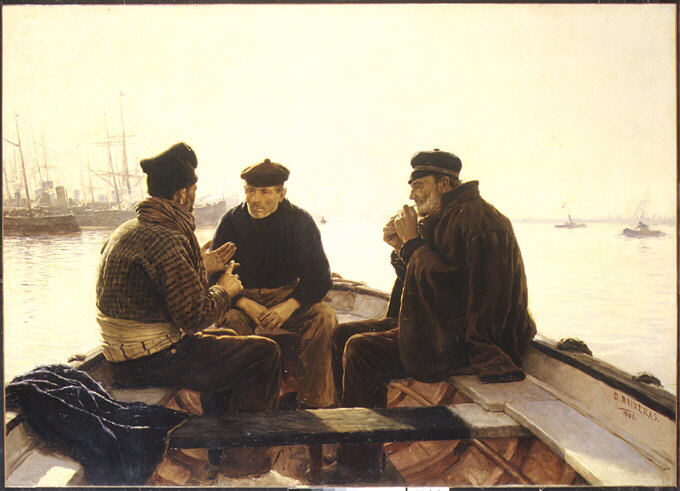
“The Boatman Of Barcelona” by Dionisio Baixeras y Verdaguer (Spanish, Barcelona 1862–1943 Barcelona)

Fast forward to the 1930’s in Catalonia. Nationalism is running high and the Spanish Civil War is in full effect in the region. The Catalans recognized the void and decided to fight for their independence.However, despite their efforts the separatist would lose. That resulted in a win for Francisco Franco, a dictator backed by Nazi Germany. He went on to suppress civil liberties by banning the Catalan language, books, and other cultural events. He imprisoned and killed many Catalan leaders and activists in the process. This suppression would last until 1975 when Franco died.

Now the argument for the separation of Spanish and Catalan culture in it’s essence could be chalked up as subjective. People perhaps might say that they are different yet synonymous, along the lines of a symbiotic relationship. But one thing that isn’t subjective (or symbiotic) is Catalonia’s huge economic contributions to Spain’s overall GDP (Catalonia’s nominal GDP in 2014 was €200 billion the highest in Spain). Which is excellent for Spain’s tax revenue, but undermines a majority of Catalans who feel as if they’re being ‘robbed’ by the central government in Madrid. Because often, the way the tax revenue is used neglects Catalonia’s regional interests. Giving way for feelings of neglect and exploitation. Symbiotic relationships require two parties to benefit, but by definition when only one party benefits it becomes a PARASITIC relationship. It’s these idiosyncratic differences (both cultural and economic) that have put the region at odds with the Spain’s central government throughout history, and even more so in our modern political sphere.

The modern Catalan sentiment is that the region does more for Spain in terms of the economy than what it gets in return from Spain. That frustration, mixed with the Catalan historical identity has been fuel for recent separatist movements. Recently the regional Catalan parliament passed a law on Sept. 6th 2017 to hold a referendum on independence, Spain’s national government said it was illegal and filed a complaint to the National Constitutional Court. Spain ruled that the referendum was unconstitutional. Nevertheless the Catalans went on with referendum process. Spain responded by shutting down the referendums website, sending the police to stop any polls that had been set up for the referendum, and they confiscated about 10 million ballot papers/ millions of advertising posters. Successfully suppressing the democratic process. Additionally, around 700 of Catalonia’s about 900 mayors are being held under investigation for their role for preparing the referendum. Many of them could possibly face bans on holding democratically elected public office. Despite this many of them will continue to represent their constituents in Catalonia.

At the moment it’s unclear what’s going to happen in Spain amidst this democratic and political crisis. Things seem to be a bit rocky in terms of institutional implementation. Regardless, the world is watching.


Sources: AP

https://www.britannica.com/place/Catalonia

My Junior Year Research Paper

and Wikipedia for dates


A Case For Free Speech: Abrams v United States

Background

On August 23rd 1918, four political anarchist were arrested in New York City for handing out ‘anti war leaflets’ in the streets. Among the people arrested for passing out the leaflets were Jacob Abrams, a Russian immigrant and anarchist, along with his other ‘comrades’; Molly Steitmer, Samuel Lipman, and Hyman Lachowsky. The leaflets were written/printed in two languages, one version was written in Yiddish and another in English. They were distributed throughout the city, and condemned Woodrow Wilson’s involvement in World War I (The Yiddish leaflet called for a general strike to protest against government intervention). The group of protesters were indicted under the Sedition Act of 16 May 1918 which made it a crime to “willfully utter, print, write,or publish any disloyal, profane, scurrilous, or abusive language” about the United States government, additionally it was against the law to  “willfully urge, incite or advocate any curtailment of production” of things “necessary or essential to the prosecution of the war… with intent by such curtailment to cripple or hinder the United States in the prosecution of the war.”. The group of protesters were found guilty before federal district court judge Henry DeLamar Clayton, Jr., they were sentenced to serve between 15- 20 years in federal prison. The defendants appealed their conviction on the grounds of free speech and it went all the way up to the Supreme Court. Their case arguments began on the 21st of October 1919 and a final decision was made in November of that same year.

Majority opinion (with a vote of 7 to 2 Written by Justice John Hessien Clarke) 

In the middle of the appeals process the Supreme Court upheld the convictions of antiwar socialist under the Espionage Act of 1917 (Schneck v United States) and under the Sedition Act of 1918 (Debs v United States). Both cases would be influential in the reasoning behind the Abram’s case. Additionally, both decisions were unanimous and were written by Justice Oliver Wendell Holmes who reasoned in the Schneck case that “[t]he question in every case is whether the words used are used in such a circumstance and are of such a nature as to create a clear and present danger that they will bring substantive evils that congress has a right to prevent”. A similar line of reasoning would be used in the Abrams case by the majority opinion written by Justice Clarke. The leaflets were indeed a ‘clear and present danger’, Clarke rationalized that because they had been handed out “at the supreme crisis of the war” and could be simplified as “an attempt to defeat the war plans of the Government”. Any form of speech that impeded (or could impeded) the American war effort was now deemed the law of the land.


Dissenting Opinion (Written by  Justice Oliver Wendell Holmes )


Ironically, the dissenting opinion would come from the man who had written the opinions which set the precedent for the reasoning behind the argument for Abrams conviction. His dissent went against his previous definition of ” clear and present danger”. Justice Holmes had drastically modified his point of view by the time he’d have to see the Abrams case. Having been personally disturbed by the oppression resulting from the anti radical hysteria of the time, and being influenced by lawyers with libertarian interpretation of the law, Holmes began to lean towards a more libertarian point of view on the “clear and present” danger precedent.

Holmes now reasoned, “(congress) constitutionally may punish speech that produces or is intended to produce a clear and imminent danger that will bring about forthwith certain substantive evils that the United States constitutionally may seek to prevent” Furthermore, Holmes denied that ” the surreptitious publishing of a silly leaflet by an unknown man” created an imminent threat to the government. For Holmes the First Amendment protected the expression of all opinions ” unless they imminently threaten immediate interference with the lawful and pressing purposes of the law that an immediate check is required to save the country”.

The Supreme Courts would continue to battle with the definition of “clear and imminent” danger when it came to free speech, and the Abrams case is an important case for this fight for free speech. What stands out the most in this case is the eloquent and well articulated dissent of Justice Holmes. He opens up the discussion for future generations of the connection between freedom of speech, the search for the truth, and the importance of worldly experimentation:holmes-and-supreme-court

” But when men have realized that time has upset many fighting faiths, they may come to believe even more than they believe the very foundations of their own conduct that the ultimate good desired is better reached by free trade in ideas — that the best test of truth is the power of the thought to get itself accepted in the competition of the market, and that truth is the only ground upon which their wishes safely can be carried out. That at any rate is the theory of our Constitution. It is an experiment, as all life is an experiment”


Wise words from a decent man.


Sources: https://scholar.google.com/scholar_case?case=14321466231676186426&hl=en&as_sdt=6&as_vis=1&oi=scholarr


Imprisonment & Economics: The Art of Legislation

You are who you imprison. Well, that’s what Plato would’ve said if he would’ve written The Republic in the modern era. Actually maybe not, but he would’ve been able to see the connection between modern economics, legislation and imprisonment. Being the genius that he was he’d probably devise a theory about this correlation, it’d be lofty, and well articulated. But since he’s no longer with us you’ll have to settle for my condensed version.

The first aggressive and transparent instances of this correlation emerge around the age of Mercantilism. They would debut in the form of legislative mandates all across Europe, particularly the Anglo-sphere. Michele Foucault (Historian and author of Madness and Civlisation) argues and points out that during this period:

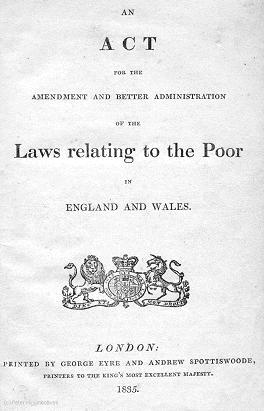
“The first houses of corrections were opened in England during a full economic recession. The act of 1610 recommended only certain mills and weaving & carding shops to all houses of correction in order to occupy the pensioners. But what had been a moral requirement became an economic tactic when commerce and industry recovered after 1651, the economic situation having been re-established by the Navigation act and the lowering of the discount rate. All able-bodied manpower was to be used to the best advantage, that is, as cheaply as possible. When John Carey established his workhouse project in Bristol he ranked the need for work first: “the poor of both sexes…. May be employed in beating hemp,dressing and spinning flax, or in carding wool and cotton”…Sometimes there were even arrangements which permitted private entrepreneurs to utilize the manpower of the asylums for their own profit” (Madness and Civilisation 52-53) 1834titlepage5.jpg

In a nutshell, Foucault emphasizes the interdependence between economics/legislation, and the effect they had on the development of correctional facilities in the age of Mercantilism. In this case an economic recession has hit England and in response the government passed legislation in order to regulate the economy. A fairly normal measure for governments trying to lessen the effects of an economic catastrophe. But it’s the methods that are deployed which raise cause for alarm.

In a desperate attempt to save the economy England outlawed abject poverty, homelessness, and “loose, idle  and disordley behavior(the latter was never given a clear legal definition) . They sent all “offenders” to correctional facilities, where they were locked in a cell and forced to work . The proper terminology for this systemic means of punishment is called Poor Relief. It was a way for the government to absorb the “non productive” members of society into a system of regulated labor. That newly established labor pool was then used by the big businesses of the time to make a profit during the economic recession.  These organizations would come into these ‘houses of correction’ and use the free prison labor enabling them to turn a profit during a recession. Basically they exploited the new source slave labor.

Additionally, Poor Relief should be looked at as a form of societal control in the face of economic hardship. By rounding up the impoverished of society, England was able to mask how catastrophic things were by forcing everyone to be economically productive. This enables a suppression of any societal/political agitation. After all people without jobs can’t protest the state of the economic climate if they’ve already been arrested for not having a job.  That allowed England to ‘kill two birds with one stone’:( 1) because more of the population is able contribute to the economy (increasing economic efficiency) and (2 )the threat of civil unrest is suppressed. The first instances of modern mass incarceration have begun to take shape.

(in hindsight England was able to fully recover from their economic catastrophe)

Fast forward to the latter part of the 20th century. A time of extreme ideological tension across the globe. Perpetrated by an ongoing Cold War between two world superpowers, the USSR and the USA. During the Reagan administration the goal was clear; the Soviets had to be stopped. The administration would spend their time conducting extensive research to determine the Soviet’s systemic weaknesses. One of the weaknesses identified was an economic one. The administration figured out that by strangling the USSR with economic sanctions and making sure the US economy expanded at an exponential rate, the USA could win the Cold War. Rendering the Soviet economist Leonid Kantorovich’s  Nobel prize winning work on optimal resource allocation useless. In hindsight, Reagan’s supply side economics (Reaganomics)  would prove to be an effective strategy in the aim to stimulate and grow the American financial sector, albeit artificially. By stripping away and adding new red tape, laissez-faire economics dominated and took American capitalism to places it had never been before. Despite all that, some sectors of the American economy needed artificial legislative means to achieve that record growth.

In the 1980’s the number of arrests of drug offenses rose by 126% (National Council on Crime and Delinguency 1989). Mainly due to legislative acts such as the Comprehensive Crime Control Act of 1984. It was a mandate which radically revised the American criminal code system;It gave the government more power in civil forfeiture, reinstated the federal death penalty, and increased federal penalties for cultivation, possession, or sale of Marijuana. This was an indirect effect of Reagan’s supply driven economic stimulus. Because in order for the USA to beat out the Soviets, the US market needed to be operating at near full capacity. That meant everyone was needed to contribute to the system. No matter who you were. What followed these mandates was the rapid development of the ‘for profit privatized prison industrial complex’ . In these new prisons a new criminal was cultivated to populate them, the non-violent drug offender.  As the prison industry grew so did the abundance of this newly cultivated criminal. This in effect meant more free labor for the American economic system as prisons became a new place for corporations to use “outsourced” prison labor.  Leading to even more diverse growth in the corporate structure. For example, if Walmart uses prison labor to create an assembly line for a product (which it does) , then that product is cheaper for consumers, which incentivizes them to shop at Walmart.

But a lot of the economic growth in this era was feigned under complicated laws which inflated economic statistics. An example of this would be corporate share buy back schemes. This financial technique is used by corporations to inflate numbers by buying shares of the company back from individuals who’ve bought them. Share prices are inflated because less shares are out in the public’s hands. But this alone doesn’t necessitate growth.  The reason why the profit margins grow is because investors are ignorant of the fact that the company is buying back it’s own shares. Generally, if people were aware of that corporate behavior confidence in that corporation would diminish. Ideally you’ll want the company to invest it’s money on the product/service it’s providing in order to turn a profit. When a company starts buying back shares that shows a lack of focus in terms of direct capital accumulation from the business. Instead buying back shares shows that a firm is more focused on marketing the fact they are still profitable. A desperate attempt to save their reputation. In principal nothing is wrong with this. But it’s wrong when the US legislation allows corporations to mask the fact they are buying back shares. This allows corporations to lie and potentially defraud investors. But ever since the 1980’s share buybacks have been allowed to remain nontransparent.  Practices such as these can result in big economic bubbles. This is especially concerning when considering the fact that Goldman Sachs has recently bought back $780 billion worth of it’s own shares to avoid public scrutiny, giving us insight that this behavior is alive and well in the 21st century. Subtly, there’s an implication that the  prison system may not have even played a significant part in the economic war waged by the USSR and USA. If it did generate growth then it must’ve been minimal. What seemingly played a significant role is the non transparency of certain economic strategies, one of them being corporate buy back schemes. But the creation of the non violent drug offender allowed the US private prison system a new source of labor, and therefore created growth within that industry. Nevertheless, Reaganomics resulted in a exponential growth for the American economy, one of the key factors that resulted in the collapse of the Soviet Union. Just another concrete example of the relationship shared between legislation, economics, and imprisonment.

In all, when economic instability is on the horizon, one should expect a response from those controlling the resources within a given society. This response will often translate into laws and it’s effect can be easily mapped overtime.

(Sources)

Madness and Civilisation By Michelle Foucault

The 1989 NCCD Prison Population Forecast: The Impact of the War on Drugs By James Austin Aaron David McVey