An American Sovereign Wealth Fund: The Key to American Prosperity?

President Donald Trump has officially signed into law the creation of a U.S. sovereign wealth fund. This is one of the few of his controversial executive orders that have been signed that may have a bit of merit when it comes to addressing the affordability crisis the United States is facing.

A sovereign wealth fund is a government investment fund that pools and manages a nation’s revenues, often derived from natural resources, trade surpluses, or foreign exchange reserves, to generate long term wealth and stabilize the economy. Several economic powerhouses have a wealth fund: Norway,  Singapore, Saudi Arabia, and the United Arab Emirates (Dubai Fund) have used SWFs to diversify their economies, invest in global assets, and provide financial security for the youth. These funds have enabled these nations to achieve high levels of economic stability, global influence, & sustained growth, even during periods of global economic uncertainty, all while empowering their citizenry.
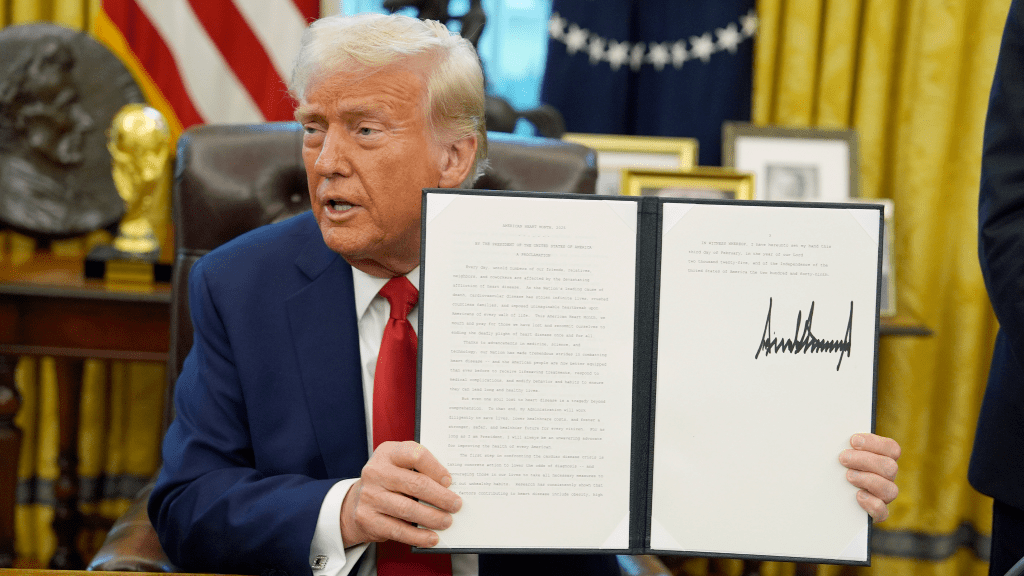
Trump signing the Executive Order 2/3/2023

The fund with the most long term exposure and demonstrated long term practical excellence is Singapore’s Central Provident Fund.

Singapore’s Central Provident Fund (CPF) offers a noteworthy model for the US. In the 1960s, Singapore faced significant economic challenges that necessitated comprehensive reforms. When Singapore became independent the nation faced significant economic challenges. Over 70% of households lived in overcrowded conditions, with a third residing in shanty towns on the city’s outskirts, and more than half of the population was illiterate. The situation was further exacerbated by a heavy influx of immigrants prior to Singapore’s expulsion from the Malaysian political union, leading to an unemployment rate of approximately 15-20%. (Asian Development Bank).

Fast forward 50 years, and Singapore’s transformation is remarkable. The literacy rate has soared to 97.65% as of 2021. The nation consistently ranks at the top globally in educational assessments for math, science, and reading. Unemployment has plummeted to around 2%, significantly lower than the global average of approximately 6%. Additionally, about 90.7% of Singaporeans are homeowners, a stark contrast to the United States, where the homeownership rate is at approximately 50%. This extraordinary progress can be largely attributed to the determination and hard work of Singapore’s populace,  as well as the Central Provident Fund. (Asian Development Bank).

The Central Provident Fund
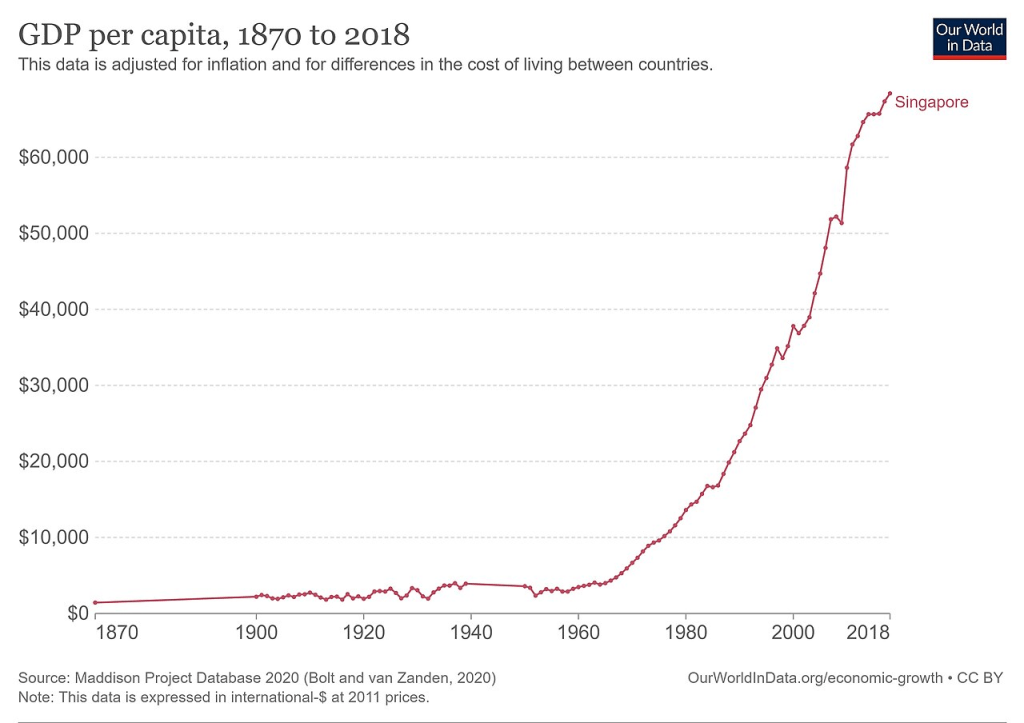
Singapore’s exponential growth after establishment of CPF

Prime Minister Lee Kuan Yew recognized the potential of the existing Central Provident Fund (CPF), established in 1955 during British colonial rule, as a tool to address economic challenges. The Fund was originally designed as a compulsory savings scheme for retirement, the CPF required contributions from both employers and employees. Unlike traditional social security systems funded by taxes, the CPF allowed individuals to own and control their savings, providing flexibility in how funds were utilized. This structure enabled citizens to manage their accounts while also engaging with private banking institutions.

In 1968, the government expanded the CPF’s scope to include housing, permitting withdrawals for the purchase of government flats. This policy not only addressed housing shortages but also fostered social stability and economic growth. Over time, the CPF’s functions further extended to cover healthcare and education, ensuring that citizens’ basic needs were met and allowing them to focus on personal development and community engagement. These strategic expansions of the CPF were instrumental in transforming Singapore’s economy and enhancing the well-being of its population (Asian Development Bank, n.d.).

After the CPF expanded its focus to housing, enabling citizens to use their savings to purchase government built housing units the homeownership rate is now up to 90% in Singapore. For the U.S., a sovereign wealth fund could potentially support housing initiatives, allowing Americans to leverage tax advantaged savings for home purchases, thereby fostering ownership and equity building. (International Monetary Fund).

Beyond housing, the CPF encompasses healthcare and education, allowing citizens to allocate savings toward medical insurance and lifelong learning. This approach reduces financial burdens and enhances productivity by alleviating concerns over essential services. A U.S. sovereign wealth fund could adopt similar strategies, offering dedicated accounts for healthcare and education expenses, possibly with employer matched contributions to accelerate wealth accumulation. (International Monetary Fund).

Implementing such a system in the U.S. presents significant challenges and hurdles . Political resistance to state managed savings programs and the complexities of federalism could impede adoption. Additionally, effective management is crucial to prevent issues like corruption or market volatility. Nevertheless, the potential benefits such as; reduced wealth inequality, increased productivity, and a buffer against economic downturns- are alluring. (PricewaterhouseCoopers).

While the executive order establishing a U.S. sovereign wealth fund is still in its early stages, Singapore’s CPF demonstrates that integrating state oversight with individual agency can transform citizens into stakeholders. For modern Americans burdened by housing costs, medical debt, and student loans, a similar fund could offer substantial relief and innovate on America’s financial institutions in a positive way.

Richard E. Carroll explores the potential for sovereign wealth funds at both the state and federal levels in the United States as a solution to financial challenges. At the state level, 20 U.S. states have established SWFs to manage natural resource revenues and benefit their citizens. For example the Alaska Permanent Fund, established in 1976, is the most well known, currently valued at over $5 billion. Many Alaskans get dividends from this fund, giving them expendable income for education or subsistence needs. New Mexico has done something similar, reducing the tax burden of the average citizen by about $1,000. I for one am a firm advocate for a SWF.

The Fund could be used to invest in infrastructure projects, such as roads, bridges, renewable energy, and broadband, creating jobs and stimulating economic growth. However, generally Americans are skeptical of government run programs, particularly those involving personal savings and investments. Therefore, building public trust would be essential for the fund’s success, perhaps including an opt out for citizens would be beneficial, but after their decision to opt out they should not be eligible to receive any benefits from the program- which is within their right. However, if the fund is managed properly, a steady stream of income from the SWF, the federal government could reduce income, corporate, or sales taxes, which could in theory put money back into the pockets of citizens and businesses. In essence America would be paying you for contributing positively to the American economy.

Having outlined all of that, the key question is whether the U.S. can adapt this model at the Federal level complicated by its diverse landscape. Time will tell.

Sources:

______________________________________________

  • International Monetary Fund. (2020). Sovereign wealth funds and public savings: Lessons from global models.  

Wage Theft in Iowa: Abuse of America’s Honest Worker.

Iowa, the heartland of America, often called the bread basket of the world due to the amount of food they export internationally. In Iowa the fields stretch endlessly and communities thrive on their hard work. Iowa’s residents are proud of their work ethic. Despite the beautiful green pastures and salt of the Earth people, an insidious problem lurks beneath the surface: wage theft.

Iowa, is renowned for its agricultural prowess and strong work ethic, but that does not mean Iowans are  immune to wage theft from employers, this is in spite of the State’s robust economy and reputation for fairness. Unfortunately, countless workers fall victim to wage theft each year, their rightful earnings siphoned away by unscrupulous employers. A new report from Common Good Iowa finds that employers are stealing over $900 million a year from an estimated 300,000 Iowa workers — about 1 in 7 workers and their families.

Wage theft encompasses a variety of illicit practices, including unpaid overtime, minimum wage violations, illegal deductions, and outright non-payment for hours worked. The effects are felt by various  workers from various industries. From farm laborers to restaurant staff, construction workers to healthcare professionals the problem seems to be systemic. In 2021 Tyler Technologies, a software company, settled claims for $3 million for not paying overtime wages to its employees in Iowa. The lawsuit was filed by a group of employees who alleged they were not properly compensated for overtime work. Roughly a year later, an employee at Short’s Burger & Shine in Iowa City realized she hadn’t been paid overtime for over 13 years. With the help of the Center for Worker Justice of Eastern Iowa, she was able to recover her the wages she was owed. However, recovering wages is not a guaranteed remedy. On average over 600 unpaid wage claims are filed with Iowa Workforce Development, and only a fraction of wages were recovered. Often, those most vulnerable to exploitation are immigrants, low-wage workers, and individuals with limited English proficiency, who may lack awareness of their rights or fear retaliation for speaking out. This is extremely alarming considering Iowa’s recent uptick in immigration.

Recently, Western Iowa Tech Community College’s settled for $3 million in a federal lawsuit filed by 13 Chilean students who accused the school of deceiving them about an internship program. The students compared the program to forced labor and human trafficking, claiming they were compelled to work up to 50 hours weekly, leaving minimal time for attending classes, studying, or resting. The students were promised to be enrolled in a 2 year culinary program, when in reality they worked 50 hours a week in meat packing factories. A far cry from the culinary arts. This is just one of the cases that was caught by the system due to the savviness of some of the international students. However, there are plenty of similar cases that fly low below the radar of any authorities or news outlets.

In Iowa, the consequences of wage theft ripple through communities, undermining economic stability and perpetuating cycles of poverty. When workers are denied their rightful pay, they struggle to make ends meet, facing difficulties in paying rent, buying groceries, and providing for their families. This not only harms individuals but has ramifications on the local economy, since decreased purchasing power leads to reduced consumer spending and stunted economic growth for the community as a whole.

On paper, Iowa has a robust labor law system. But despite existing labor laws designed to protect workers, enforcement mechanisms in Iowa remain inadequate, leaving many victims without recourse. The State’s Department of Labor, charged with investigating wage theft claims, is understaffed and underfunded, unable to keep pace with the scale of the problem. Further, Iowa’s Courts do not do a good job in upholding labor rights, where a majority of cases are decided on behalf of employers and corporations rather than an employee. Realistically the case split should be relatively even given the nature of labor cases. A 2012 study by the Iowa Policy Project estimated that dishonest employers defraud Iowa workers out of about $600 million annually in wages. This figure reflects the scale of wage theft before the recent escalation to $900 million. Further, Courts often tip toeing around issues in fear of reversal from a higher court.  Additionally, the complexity of the legal processes and fear of employer retaliation often deter workers from pursuing complaints, further perpetuating a culture of impunity.

To combat wage theft effectively, a multi-faceted approach is necessary, addressing both systemic flaws and individual grievances. Firstly, enhancing enforcement efforts through increased funding and staffing is essential to ensure that perpetrators are held accountable for their actions. This includes proactive investigations, targeted audits, and swift penalties for violators. These actions are paramount since too often than not Iowa’s executive branches refuse to exercise their ability to impose penalties.  Additionally, empowering workers with knowledge of their rights and avenues for redress is crucial, through outreach programs, legal assistance, and community organizing. Community organizing would do have a great deal of benefit since workers would be aware of their rights and have a strong support system to help enforce their rights when they are infringed. This includes partnerships between government agencies, advocacy groups, employers, and workers themselves to identify systemic issues, share best practices, and develop innovative strategies for prevention and enforcement. By harnessing the collective expertise and resources of diverse stakeholders, Iowa can forge a unified front against wage theft, ensuring that every worker is treated with dignity and respect.

Fostering a culture of compliance among employers is paramount, emphasizing the importance of fair labor practices and ethical conduct. This entails providing resources and incentives for businesses to uphold labor standards, such as certification programs, tax incentives, and public recognition for compliance. By incentivizing good behavior and penalizing violations, Iowa can create a more level playing field where honest businesses thrive and exploitative practices are marginalized.

Beyond regulatory measures, fostering collaboration between stakeholders is vital to address the root causes of wage theft and promote sustainable solutions. This includes partnerships between government agencies, advocacy groups, employers, and workers themselves to identify systemic issues, share best practices, and develop innovative strategies for prevention and enforcement. By harnessing the collective expertise and resources of diverse stakeholders, Iowa can forge a unified front against wage theft, ensuring that every worker is treated with dignity and respect. Recognizing the intersectionality of wage theft with other social issues is essential to achieve meaningful change. Problems like wage theft  require a multifaceted, especially when the issue disproportionately impacts marginalized communities. Efforts to combat wage theft must also address underlying disparities related to socioeconomic background, race, gender, and immigration status, By adopting an intersectional approach that centers the experiences of the most vulnerable, Iowa can advance equity and justice for all its residents.

From farms to factories, Main Street to the Capitol, the time has come to shine a light on the shadows where exploitation thrives, and to reclaim the promise of fair treatment and economic opportunity for every worker.  Meaning Iowa must confront wage theft head-on, the state has the opportunity to continue to uphold its values of integrity and fairness, ensuring that the heartland remains a place where hard work is rewarded and justice prevails. Or else Iowa risks being seen as a state that only exploits the workers that have built it up through generations.

Sources:

_____________________________________________

Common Good Iowa Report
Common Good Iowa. “Wage Theft in Iowa: An Analysis of Underpayment and Nonpayment of Wages,” 2024.

Tyler Technologies Overtime Pay Dispute
U.S. Department of Labor. “Tyler Technologies Settles Overtime Claims for $3 Million in Iowa,” 2021.

Short’s Burger & Shine Case
Center for Worker Justice of Eastern Iowa. “Employee Recovers 13 Years of Unpaid Overtime from Short’s Burger & Shine,” 2022.

Iowa Workforce Development Claims
Iowa Workforce Development. “Annual Report on Wage Claims and Recovery,” 2023.

Western Iowa Tech Community College Case
Radio Iowa, “Western Iowa Tech to Pay Millions to Students to Settle Lawsuit,” 2024. (https://www.radioiowa.com/2024/04/25/western-iowa-tech-to-pay-millions-to-students-to-settle-lawsuit/)

Iowa Policy Project Study
Iowa Policy Project. “The Cost of Wage Theft in Iowa,” 2012