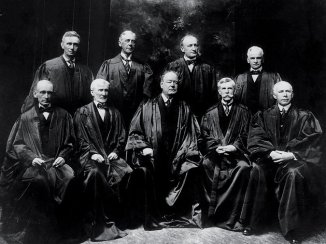
How The Supreme Court Justified Eugenics: The Curious Case Of ‘Buck V Bell’

It’s no secret that the U.S. Supreme Court has a tumultuous past with certain rulings. A few examples being the infamous Dred Scott case which erroneously reasoned that certain set of humans were deemed property, Hammer v Dager which justified child labor, or Plessy v Ferguson the case that set the precedent for Jim Crow. People who’ve taken an American History course will more or less be familiar with the aforementioned cases. However, there’s an ambiguous case titled ‘Buck v Bell’ that deals with the controversial topic of eugenics. If you aren’t familiar with eugenics it’s basically a method of social engineering used to create the “best” race of humans. The method being notoriously implemented by Nazi Germany. Interestingly enough, it wasn’t just Nazis trying to make these plans come to fruition. The U.S. legal system had to deal with the topic of eugenics. Here’s how they addressed it.

Historical Context

In order to get a full understanding of the case some historical context on eugenics is necessary.  The theory of eugenics begins in the late 19th century, sometime after Charles Darwin publishes his magnum opus On the Origin of Species. During that time people rush to apply the theory of natural selection to human society. This movement gains traction throughout the western world. Peaking around the 1920’s. Universities in the USA begin to offer courses on eugenics. Increasing its popularity among academics. Despite the popularity of eugenics, academics begin to debate which humans were the superior ones. Some said the Anglos were & others argued that the Germans, Italians, Frenchs etc, were. Obviously in hindsight advancements in biology & genetics debunk all those aforementioned statements. But for the time this was the scientific truth. That lead the politicians of that era to make it their “moral” duty to prevent the degeneration of their race. This is similar to when the American Psychiatric Association classified homosexuality as a mental disorder in DSM III (published 1980), which falsely influenced societies perception on homosexuality. The same happened to eugenics in America. False research was given, debate ensued, and  legislation was implemented which leads us to the curious case of ‘Buck v Bell’.

The Case

The case begins with Carrie Buck. A resident of The State Colony for Epileptics and Feeble Minded at Lynchburg, Virginia which is headed by Albert Priddy. Carrie Buck finds herself at this institution after a series of unfortunate events in 1924.  Buck, a victim of rape, became pregnant and her adopted family had her committed to the SCEFM due to the “immorality” of having a child out of wedlock ( turns out they falsified she was raped). While at the institution they discover she has the “mental age of a 9 year old”, Priddy is a staunch supporter of eugenical sterilization, and suggests sterilization of Ms Buck due to her “moral delinquency”. Reasoning that it was probably passed down from her mother who was also known to be promiscuous and “feeble minded”.

Priddy was warned by a court in 1918 of his personal liability in sterilization operations and stopped for some time. However, realizing an opportunity to legally validate his operations, he takes the Buck case to the board of SCEFM. At the hearing Priddy argued his case to the board and it’s approved. It is then taken to local circuit court where evidence provided by an “expert”  detailed Buck’s “clear” lineage of moral delinquency. It also helped that Bucks consul (Irving Whitehead a founder of SCEFM) brought forth no arguments against Bell . The reason being was Whitehead sought the same end as Priddy; legal eugenical sterilization. The case would end up at the Supreme Court.


During the appeals process Mr. Priddy dies and the case is taken up by John H Bell. Who argues to the Court that due process was given to Buck and state police powers allowed them to protect and decide for persons such as Buck. Whitehead argued that institutions such as SCEFM could easily become havens where

” (The) worst forms of tyranny practiced…inaugurated in the name of science.” Furthermore, Bucks legal guardian argued that her right to procreate infringed on the due process clause of the constitution. Buck would lose the case 8-1. Supreme Court Justice Holmes writing for the court rejected Bucks arguments. The equal protection argument was shot down by Holmes because the policy applied to all within the institution. Furthermore, he adds that if the nation can call upon its “best citizens” in times of war, a lesser sacrifice can be made by those “lesser” that “sap the strength of society”.

The prevention of procreation is justified because “(t)hree generations of imbeciles are enough”. Strong words, iffy ruling.

Conclusion

After all was said and done Carrie Buck was sterilized in the name of eugenics. That ruling set the precedent for other states to enact similar laws. On the bright side after the Nazi’s were defeated and advancements in science, eugenics laws slowly began to fade. Despite this ‘Buck v Bell’ stands as the law of the land. The case has yet to be overturned.


Sources: The Oxford Guide to United States Supreme Court Decisions

Sapiens A Brief History of Human Kind by Yuval Noah Harari
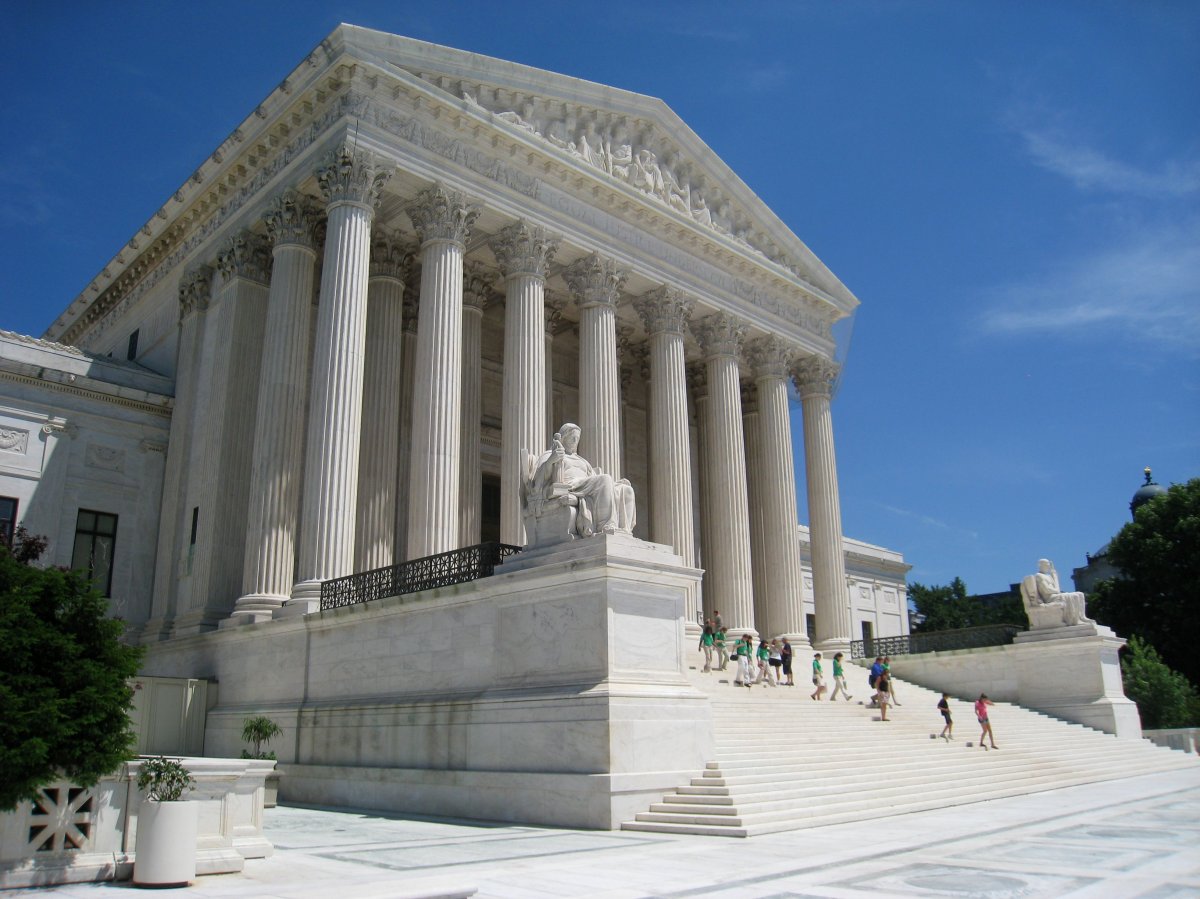
Gerrymandering & Redistricting; A Supreme Court Affair

Gerrymandering, a technique that has helped fuel various political machines, is a topic of great debate within the Untied States. Gerrymandering on the surface is undemocratic. Allowing a political party that’s in power to redraw voting lines will naturally lead them to misuse their power. Partly because parties have used the technique to maintain political power by redrawing districts in their favor by diluting voting power. As was the case in 2011 in Wisconsin, where Republicans received a majority of house seats (60%) with only 49% of the state wide vote. How is this possible? Simple; Gerrymandering. It’s this overt case of the corrupt technique that has brought the debate to the Supreme Court. The Court plans to issue it’s ruling on Gill v. Whitford (The Wisconsin casein June 2018. Whatever side the court rules on, one thing is for sure: it will set a monumental precedent in terms of governing in the USA. (I’ve included a video explaining gerrymandering further down below.)

However, gerrymandering has two sides. Interestingly enough it’s been used to empower disenfranchised voices that have been diluted (usually by gerrymandering). Though the Court didn’t directly state it, racial redistricting was deemed somewhat constitutional. Here’s how they justified it.

The case involved in the debate was called United Jewish Organization of Williamsburg v Carey. In short, Kings County administrators followed the District Attorneys of New York’s plan of redistricting (In conjunction with the Civil Rights Act). Part of the provision called for certain districts to reach a nonwhite majority of 65 percent. Coincidentally, a Hasidic Jewish community was located in one of these districts. The effect of the provision was that the community was split in half, and was reassigned to an adjoining district. The Jewish community would then bring a suit for injunctive and declaratory relief, alleging that the 1974 plan violated their rights under the Fourteenth and Fifteenth Amendments, arguing that the plan diluted their franchise. The case would soon make it’s self up the ladder to the eyes of the Supreme Court.

The Court tip toed on it reasoning of the case. For the sake of simplicity and to save you time on the legal jargon here are the main points of the Courts justification of  New York’s redistricting plan:


  1. The Court mentions that racial discriminatory redistricting is unconstitutional.
  2.  Since the redistricting follows the provisions in the Civil Rights Act it isn’t discriminatory but rather hopes to reverse discrimination.
  3. So the use of racial criteria in drawing district lines may be required per Civil Rights Act (Specifically Voting Act)
  4. Additionally, the use of racial criteria is not limited to remedies of explicit prior discrimination.
  5. The use of numerical racial quotas in establishing certain black majority districts does not automatically violate the Fourteenth and Fifteenth Amendments
  6. The Court also says the constitution doesn’t recognize the Jewish Communities right to reapportionment as a separate entity.

Clearly the court relied heavily on the Civil Rights Act legislation and rightly so, in terms of the specific justification for enfranchisement of persecuted communities. But also seems to undermine the Jewish community. American history shows that those people haven’t necessarily been treated fairly either. Furthermore, gerrymandering is totally ignored in the Courts argument. Perhaps trying to devout their attention to the pressing societal challenges plaguing the era at the time. Racial tensions were high and The Court justified the means to combat racial injustice. However, in that pursuit the Court  may have indirectly set a precedent for justifying gerrymandering.

In all, gerrymandering is a complicated and nuanced subject; making it justified in multiple idiosyncratic realms. But the core of the issue is undemocratic. It gives room for manipulation by people seeking to fulfill their own sinister interests. If those sinister acts are possible then shouldn’t it be abolished? We’ll see what the Supreme Court has to say when confronted with the core issue in June.


LINK


Sources: http://caselaw.findlaw.com/us-supreme-court/430/144.html


A Case For Free Speech: Abrams v United States

Background

On August 23rd 1918, four political anarchist were arrested in New York City for handing out ‘anti war leaflets’ in the streets. Among the people arrested for passing out the leaflets were Jacob Abrams, a Russian immigrant and anarchist, along with his other ‘comrades’; Molly Steitmer, Samuel Lipman, and Hyman Lachowsky. The leaflets were written/printed in two languages, one version was written in Yiddish and another in English. They were distributed throughout the city, and condemned Woodrow Wilson’s involvement in World War I (The Yiddish leaflet called for a general strike to protest against government intervention). The group of protesters were indicted under the Sedition Act of 16 May 1918 which made it a crime to “willfully utter, print, write,or publish any disloyal, profane, scurrilous, or abusive language” about the United States government, additionally it was against the law to  “willfully urge, incite or advocate any curtailment of production” of things “necessary or essential to the prosecution of the war… with intent by such curtailment to cripple or hinder the United States in the prosecution of the war.”. The group of protesters were found guilty before federal district court judge Henry DeLamar Clayton, Jr., they were sentenced to serve between 15- 20 years in federal prison. The defendants appealed their conviction on the grounds of free speech and it went all the way up to the Supreme Court. Their case arguments began on the 21st of October 1919 and a final decision was made in November of that same year.

Majority opinion (with a vote of 7 to 2 Written by Justice John Hessien Clarke) 

In the middle of the appeals process the Supreme Court upheld the convictions of antiwar socialist under the Espionage Act of 1917 (Schneck v United States) and under the Sedition Act of 1918 (Debs v United States). Both cases would be influential in the reasoning behind the Abram’s case. Additionally, both decisions were unanimous and were written by Justice Oliver Wendell Holmes who reasoned in the Schneck case that “[t]he question in every case is whether the words used are used in such a circumstance and are of such a nature as to create a clear and present danger that they will bring substantive evils that congress has a right to prevent”. A similar line of reasoning would be used in the Abrams case by the majority opinion written by Justice Clarke. The leaflets were indeed a ‘clear and present danger’, Clarke rationalized that because they had been handed out “at the supreme crisis of the war” and could be simplified as “an attempt to defeat the war plans of the Government”. Any form of speech that impeded (or could impeded) the American war effort was now deemed the law of the land.


Dissenting Opinion (Written by  Justice Oliver Wendell Holmes )


Ironically, the dissenting opinion would come from the man who had written the opinions which set the precedent for the reasoning behind the argument for Abrams conviction. His dissent went against his previous definition of ” clear and present danger”. Justice Holmes had drastically modified his point of view by the time he’d have to see the Abrams case. Having been personally disturbed by the oppression resulting from the anti radical hysteria of the time, and being influenced by lawyers with libertarian interpretation of the law, Holmes began to lean towards a more libertarian point of view on the “clear and present” danger precedent.

Holmes now reasoned, “(congress) constitutionally may punish speech that produces or is intended to produce a clear and imminent danger that will bring about forthwith certain substantive evils that the United States constitutionally may seek to prevent” Furthermore, Holmes denied that ” the surreptitious publishing of a silly leaflet by an unknown man” created an imminent threat to the government. For Holmes the First Amendment protected the expression of all opinions ” unless they imminently threaten immediate interference with the lawful and pressing purposes of the law that an immediate check is required to save the country”.

The Supreme Courts would continue to battle with the definition of “clear and imminent” danger when it came to free speech, and the Abrams case is an important case for this fight for free speech. What stands out the most in this case is the eloquent and well articulated dissent of Justice Holmes. He opens up the discussion for future generations of the connection between freedom of speech, the search for the truth, and the importance of worldly experimentation:holmes-and-supreme-court

” But when men have realized that time has upset many fighting faiths, they may come to believe even more than they believe the very foundations of their own conduct that the ultimate good desired is better reached by free trade in ideas — that the best test of truth is the power of the thought to get itself accepted in the competition of the market, and that truth is the only ground upon which their wishes safely can be carried out. That at any rate is the theory of our Constitution. It is an experiment, as all life is an experiment”


Wise words from a decent man.


Sources: https://scholar.google.com/scholar_case?case=14321466231676186426&hl=en&as_sdt=6&as_vis=1&oi=scholarr