Robert Moses: The Unelected Master Planner

Robert Moses is a figure that’s relatively obscure to the general public. However his influence has had a lasting impact throughout the United States. He would be paramount in engineering how cities in the States were structured, effectively influencing how and where Americans would spend their money.

Who was Robert Moses? Well, to start, he was unelected public official who held about 12 positions in the Greater New York city area. His stints in public office span from 1924-66. The positions he held had tremendous influence over urban planning. Urban planners aren’t often thought of as being political behemoths but Robert Moses’s tenure in these positions forces us to reconsider the influence unelected politicians may have over society.

Mr. Moses was a relentless, effective, and a calculated worker. His ability to start and finish public projects is arguably unmatched within the scope of American history. Furthermore, his ability to manipulate power goes far beyond the scope of anything Machiavelli could have imagined within a democratic republic. Robert Moses wasn’t fully understood or recognized outside of New York until the publication of Rob Caro’s Pulitzer winning book The Power Broker. The book gives us a grandiose look into the Moses. Robert Caro spent years researching for his book which spans roughly 1,300 pages. His scholarship, alongside with years of historical developments since the initial publication, are what guide my analysis on Robert Moses. Through our investigation of Robert Moses we will come to understand how a lot of cities in the United States mirror each other in terms of structure and societal development. And, albeit indirectly, an analysis of Moses forces us to consider a few philosophical questions when it comes to ideal local governance in the United States. But before we attempt to get understand why these two inquires are relevant , we have to investigate the rise of Robert Moses.

 Robert Moses assent spanned various societal backgrounds. His tenure in public office spans three major historical events in the United States. Moses held positions during the economic boom of the 1920s, a crippling Depression in the 1930’s, World War II, and the subsequent post war economic boom.

The 1920’s: The Rise to Power

After finishing up his PhD at Columbia University, Moses decides to enter New York politics as a political idealist motivated to make change. A story familiar to many young professionals who aim to change the “old guard” within political systems. Moses had plenty of issues he wanted to grapple over. The society he was living in was corrupt, had little to no consumer protection, and certain industries were dominated by monopolies. He briefly worked for the Bureau of Municipal Research and with the U.S. Food Commission. But soon he realized that philosophical theories and logic, no matter how beneficial, wouldn’t take you far when it came to political advancement. His initial propositions were brushed under the rug by the seasoned veterans of government. Though his theoretical understanding of politics would come in handy from time to time, his practical education of political power would be where he was able to hone the craft of political power.

After a series of fortunate events  Moses found himself appointed as the chief of staff to a woman named Belle Moskowitz. She was the leader of a commission tasked with organizing New Yorks administrative structure. A responsibility which came with significant power. It’s worthy to note Belle Moskowitz wasn’t elected by anyone. Rather, Moskowitz was appointed by Alfred Smith the Governor of New York. Smith was of course elected. I include these details not to be redundantly informative but rather to highlight the opaque nature of local government when it comes to transparency. People who you may assume are in control are passing that responsibility to an “advisor”, meaning there are various puppeteers pulling the strings. Moses’s time with Moskowitz is where he would learn the “tricks of the trade” in terms local governance. After managing to impress Alfred Smith through the early 1920’s, Moses found himself appointed to his first positions of power. The appointments would lead him to a notorious political squabble with an eventual US president, Mr. Franklin Delano Roosevelt.

The Appointed One & The Fight with Roosevelt.

In 1924 Moses was appointed as the leader of both the Long Island State Park Commission and State Council of Parks. Moses actually drafted the legislation that created the power of these commission earlier in his career. Personally, when I read the names of these positions I didn’t immediately think POWER.  But let’s remember that Moses was calculated.  He strategically used the power that he did have to gain even more power. Being head of these political bodies allowed him unprecedented control over land-use and highway construction. Behind the scenes he usurped control over certain political entities from elected officials. Moses would lobby constituents, politicians, and special interest groups into allowing him to have independent control over land-use and highway development commissions. Overtime he began to resemble a mini dictator. However, his power wouldn’t go unchallenged.
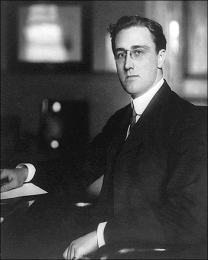
LC645-600Border
Young Roosevelt.

Franklin Roosevelt, at the time leader of the Taconic State Parkway Commission, had a political spat with Moses. It all started when Roosevelt had a plan to build a parkway through a region of New York City called the Hudson Valley. Moses had different plans. He managed to funnel all the funds from Roosevelt’s project to his own project. Moses was able to keep the funding to Roosevelt’s project so low that it could barely even maintain operations. Roosevelt complained to the governor that Moses was “skinning” Smith’s administration alive. But nothing happened. Eventually, Roosevelt became governor and eventually his parkway project was completed. Roosevelt had another goal in mind, and that was to remove Moses from power. But the removal of Moses was almost impossible by the time Roosevelt became governor. Robert Moses had set up a powerful base of political independence by using legislation, public funding, the press, and young political reformers to support his positions. He would later spearhead a commission which aimed to consolidate 187 separate agencies into eighteen departments. In just 10 year’s Moses was able to absorb power from potential opponents and build a powerful network to get his projects done. But this was just the start there was much more to come from Robert Moses.

The Depression & Beyond

During the 1930’s the United States suffered an economic depression. During this economic catastrophe Robert Moses would blossom. Ironically, his former rival actually enabled this via New Deal legislation lead by President Roosevelt. Moses was granted even more executive and monetary incentive to solidify his power by the Federal Government. Roosevelt, not forgetting his political tenure in New York, attempted to get Moses ousted by making federal funds available only if Moses was removed from office. Moses wasn’t threatened. He told the press of Roosevelts demands. Subsequently, the Federal Government had to stop after increasing public pressure. But as World War II was being waged, Robert Moses’s influence on New York City began to take shape.  The Master Builder started to work on his vision. One unnamed federal official commented on Moses during this era saying:

“Because Robert Moses was so far ahead of anyone else in the country, he had greater influence on urban renewal in the United States – on how the program developed and on how it was received by the public – than any other single person.”

That quote gives us an insight on the magnitude of power Moses had. He was responsible for many projects ranging from the United Nations Headquarters, Shea Stadium, and the Pratt Institute. But he also led initiatives to spur more highway developments, suburban housing developments, strip malls, and other public amenities. Moses got even better at getting projects done. A common strategy involved starting projects knowing that financially they couldn’t be accomplished , but he would leverage political clout in order to manipulate political officials to complete his projects anyway. While in the depression his projects employed a largely jobless populous during the Great Depression. During this era, he held numerous public positions at the same time. None of the positions required him to be publicly elected.

WWII & The New America

The world dramatically changed after World War II. The United States emerged as an economic and political powerhouse within the International community.  Moses understood this and he wanted to further influence the new world around him. His goal for NYC was one that attempted to integrate an urban center to suburban areas which would all be interconnected via parkways. The bureaucrat’s vision would influence America for the years to come.

After World War II America’s social community began to change. Women entered the work force in droves, the nation was in better economic shape than a lot of nations in the world, and the ideal of “Americanness” began to solidify. What do I mean by Americanness? I mean white picket fences, increased home & automobile ownership, and the development of mass consumerism. After WWII plenty of soldiers came home to start anew. They were incentivized to start “nuclear” families, to buy homes, develop their market skills, and most importantly to spend money in order to expand the American economy. Robert Moses was fully aware of this societal shift. He saw the traditional layout of American cities as archaic and counter intuitive to the world’s economic demands. Small retail owners were dismissed in favor of shopping behemoths
download (1)
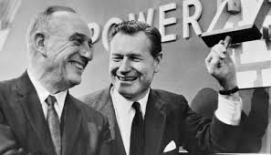
Robert Moses and NYC Mayor Jimmy Walker.

such as Macy’s, Sears, and the advent of the shopping mall. Local restaurants were forgotten as Dairy Queen and McDonalds slowly became staples in the American diet. Automobiles slowly eliminated the reliance on public transport, allowing people to buy suburban properties further away from NYC.  Moses preferred a sprawl model over concentrated urban communities. And he developed plenty of projects to incentivize the sprawl model. New Yorkers, such as Robert Caro, criticize Moses for destroying New York neighborhoods in favor of vast highways that connected the suburbs to the City. When developing these projects Moses displaced hundreds of thousands of people, destroyed economic centers, and arguably community identity. This led critics to surmise that Moses perhaps preferred automobiles and shopping centers over people. Furthermore, Moses played a part in depleting New York’s resources to develop his projects.  But despite that, the Moses model was in demand in post war America. Plenty of public officials from around the country demanded Robert Moses’s expertise in developing their city plans. This may explain why many American cities, especially in the Midwest, mirror each other in a plethora of ways.

In hindsight Moses’s city planning was a perfect model for a globalized economy. It was predictable; generally people would work a similar hourly schedule, consistently consume products from publicly traded corporations, and, by driving, consumers would
download
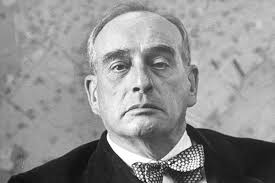
Robert Moses

support the gas, oil, and automobile industry. This model has its merits. It’s predicable, safe, and allows people to consume their preferred products. However, a community too reliant on the Moses model is more susceptible to global economic crises. This isn’t just a theoretical proposition, practical examples are evident when we look at Detroit and Las Vegas during the 2008 financial crisis. But it’d be remiss to not mention how many new and innovative developments Moses was responsible for. He was able to engineer and execute massive urban plans that did help a considerable amount of people. But at the expense of displacing many people out of their communities. But one of the most disturbing things about Robert Moses is his ability to become an immensely influential political figure without having to get elected into political office.

Moses’s story forces us to think about the type of local (& perhaps national) governments people would prefer. Do we prefer governments that can be taken over by “Mosesesque” figures in order to get long term, and perhaps beneficial, projects done? Or do we want a system that is a bit more decentralized which doesn’t allow any one sole “political will” to dominate? Whatever you prefer, each has its positive and negative implication.

Which begs a peripheral question: How much do YOU know about the unelected officials in your local government? A question to consider.

Sources:

Power Broker by Robert Caro

ROBERT MOSES AND THE RISE OF NEW YORK THE POWER BROKER IN PERSPECTIVE by KENNETH T. JACKSON

A Consumer’s Republic: The Politics of Mass Consumption in Postwar America by Lizabeth Cohen

https://www.pbs.org/wnet/need-to-know/environment/the-legacy-of-robert-moses/16018/

http://fordhampoliticalreview.org/the-legacy-of-robert-moses/
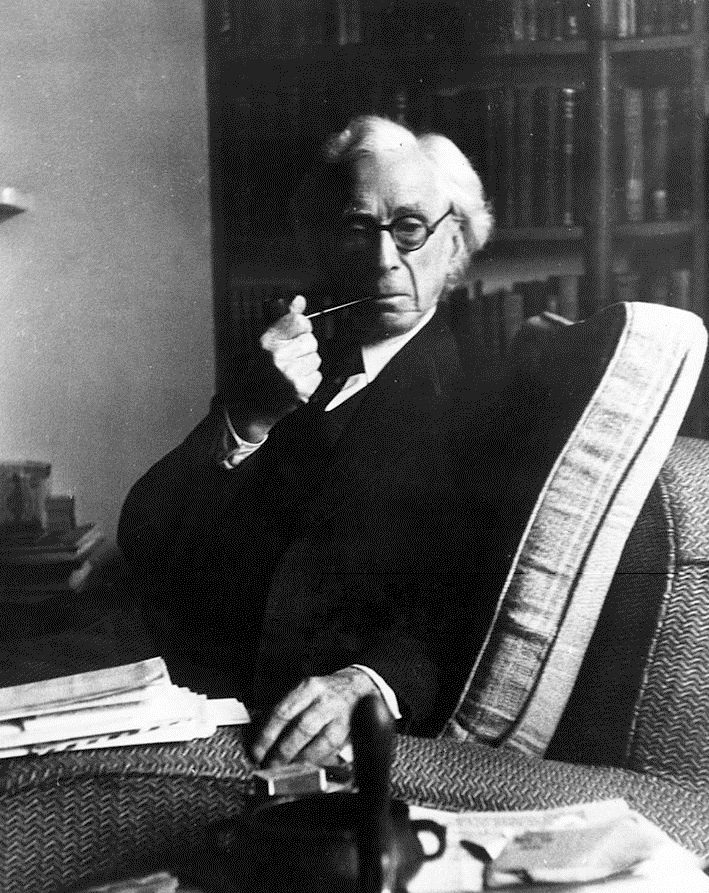
Thales & Heraclitus: What Russell Got Wrong.

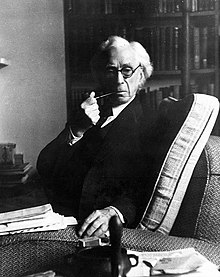
Bertrand Russell Chiefing A Pipe.

    Often Bertrand Russell is revered in the mainstream philosophical community. And rightly so, the work he’s done in the fields of logic, linguistics, and mathematics have had a profound impact on the world. His influence has led him to be credited as the founder of analytic philosophy. But people often forget that Russell was also interested in history, so much so that he penned a lengthy history of Western Philosophy, which he called A History of Western Philosophy. This article will discuss Bertrand Russell’s account of Heraclitus and Thales. Two philosophers who came before Plato and Aristotle. The reason such a discussion is necessary is due to the fact that Russell may not be giving an accurate portrayal of either philosopher in his book. The reason being is that Russel relies on problematic sources to back his claims. This piece will attempt to outline the thoughts Russell had on these thinkers, and then we will criticize certain elements of his arguments. But in order to conduct a proper analysis we must understand the overal goal of Russel book.

    In the History of Western Philosophy  Bertrand Russell attempts to provide a coherent timeline for western philosophical thought. He claims that in order to successfully attempt such a project a specific method of analysis must be used. A method which is “philosophical”. By “philosophical” Russell means that he’ll attempt to synthesize the historical development of two different styles of inquiry, those being scientific and theological traditions (Russell Xiii). Both have different functions, but yet throughout history they’ve reinforced one another in various ways. For Russel, theology is useful because it allows us to make “speculation on matters as to which definite knowledge has, so far, been unascertainable.”(Russell Xiii). In other words, theology allows human reason to explore the unknowable. Now on the other hand, science allows human reason to explore the knowable (Russell Xiv). According to Russell, both have limitations; theology induces dogmatic belief (which he disapproves of), while science tells us what we can in fact know but “what we can know is little” (Russell xiv). Having acknowledged their flaws, Russell proceeds to argue that the development of human intellectual history has been shaped by those two methods of inquiry interacting with one another over time. Theology picks up the methodological flaw inherent in science, and vice versa. It’s this symmetric relationship which allows Russell to put various thinkers in dialogue with one another. Giving readers a coherent narrative to follow in terms of the development of western philosophical thought. But Russell’s methods have drawn scrutiny amongst critics. Frederick Copleston, a contemporary of Russel, acknowledged that “[Russell] treatment of a number of important philosophers is both inadequate and misleading.”. The inadequacy and misleading nature of Russell’s work is evident in his description of two philosophers who came before Socrates, Thales and Heraclitus.  


Bertrand’s Thales

Image result for thales
Thales the “scientist”

    In order to understand and identify the “inadequate and misleading” elements of Russel’s work we must analyze his descriptions of certain philosophers. Some of the problematic elements of his descriptions can be found when he describes Thales, a thinker who was active in the 6th century BCE. To be frank, little is known about Thales specific work, as none of his writing survived. But despite that fact, society can get a general idea about Thales by reading some second hand accounts about his teachings.  Russell provides an introduction to Thales, writing: 

“There is…ample reason to feel respect for Thales, though perhaps rather as a man of science than as a philosopher in the modern sense of the word.” (Russell 24)

This sentence should warrant our attention because we can analyze and infer a few things from Russell’s statement. One, that Bertrand holds Thales in high regard compared to the other philosopher of that particular era. And secondly, we should hold a favorable opinion on him because compared to these philosophers Thales is a “man of science”. Why does Russell feel this way? Well, it all stems from a theory attributed to Thales which professes that everything is made of water. A problematic theory to credit onto Thales in the first place, but the reason for that will be addressed in a different section in this paper. Russell explains that Thales’s theory of water shouldn’t be taken as some “foolish” hypothesis but rather as a scientific hypothesis (Russell 26). 

Now the reason he feels like Thales warrants such high praise is due to some scientific discoveries made while he wrote his book. While Russell was writing his book in the 20th century, the scientific consensus seemed to match well with Thales water theory. The consensus was largely contingent on the fact that the theoretical work done by the scientist Willaim Prout on atoms was true. Prout hypothesized that the hydrogen atom was the only fundamental element of the universe. Furthermore, he said that the atoms of other elements were actually just collection of different hydrogen atoms (Rosenfeld). This is similar to Thales’s theory since hydrogen is a pretty important component when it comes to water, but is different since Prout specifies the element hydrogen.  So this background information helps explain why Russell felt so confident in Thales. And explains assertions such as this: 

The statement that everything is made of water is to be regarded as a scientific hypothesis… Twenty years ago, the received view was that everything is made of hydrogen, which is two thirds water…. His [Thales] science and his philosophy were both crude, but they were such as to stimulate both thought and observation.” (Russell 26)

Now the last part of that sentence describes how his science and philosophy were “crude” but are acceptable since they aimed to stimulate both thought and observation. So, one can infer that theoretical frameworks which stimulate thought and observation, are ones which Russell approves of. But Russell also lets readers know what kind of frameworks he doesn’t appreciate. That leads us to Russell’s description of Heraclitus. 

Bertrand’s Heraclitus

Related image
Heraclitus the “mystic”

    The way Heraclitus is portrayed in Russell’s book plays on the theme of science and theology interacting with each other overtime. Russell generally views Heraclitus in a negative light, but acknowledges the difficulty science has had in refuting Heraclitus’s theory of perpetual flux. Additionally, Heraclitus is strangely categorized as “mystical” rather than “scientific”. Russell describes the nature of Heraclitus thought as such: 

Heraclitus, though an Ionian, was not in the scientific tradition of the Milesians. He was a mystic, but of a peculiar kind. He regarded fire as the fundamental substance, everything… is born by the death of something else “ (Russell 41)

Russell doesn’t give us a clear reason why Heraclitus shouldn’t be considered scientific, but we can imply that it’s due to his heavy reliance on intuition and speculation. Heraclitus brand of mysticism is categorized as reforming the religion of his day (Russell 42). Additionally, elements of Heraclitus doctrine are criticized by Russell. Specifically he attacks Heraclitus views on war, contempt for mankind, and his disapproval of democracy. 

Now having outlined what Russell says about these thinkers. It’s time to shift focus on what Russell may have gotten wrong when discussing these philosophers.  For instance we can use the reasoning Bertrand used to praise Thales to talk about Heraclitus as a “scientific thinker”. Additionally, we can also conceive as Thales as a “mystic”. Furthermore, we can learn to understand how Russell came to these conceptions when investigating the sources he decided to use. 


Analysis of Russell’s claims 

  Our criticism of Russell should begin with looking at what kind of information Russell based his critiques on. He’s pretty transparent in letting the readers know where he got his information from, writing: 

“According to Aristotle, he thought that water is the original substance out of which all others are formed; and he maintained that the earth rests on water”(Russell 26)

But there’s an issue with Russell’s apparent transparency. In the next paragraph he goes on to take Aristotle’s account as pure fact, and basis his entire scientific description of Thales on it. Never once does the problematic nature of Aristotle’s account of Thales get mentioned. But thankfully, recent scholarship done by Frede tells us why Aristotle’s writings on Thales aren’t to be taken as absolute fact. Frede explains that:

it is not Aristotle’s aim to provide an account of his origin of philosophy and its evolution for its own sake, to satisfy his and his readers own historical interests “(Frede 503)

Basically, Frede notes that Aristotle wasn’t entirely fair when it came down to providing accurate descriptions of certain thinkers, but rather was using their doctrines to validate his work (Frede). Now having considered that fact Thales can be seen as a mystic because not a lot of his doctrine was written down, and getting an accurate description of his work is difficult. But the school of thought he was a part of (the Milesian school) had mystical tendencies that Bertrand speaks of.  Additionally, Aryeh Finkelberg notes that: 

“Heraclitus, and other early Greek thinkers, did not set out to found philosophy and science, or pave the way for Aristotle—who has long been criticized “for reading his philosophical concerns into the early thinkers (Finkelberg, Heraclitus and Thales’ Conceptual Scheme). “So the method Bertrand uses to put them in dialogue together is problematic since none of these thinkers thought of themselves as either scientists, philosophers or mystics.

    Now having mentioned the problematic nature of the sources, I will provide  sources which allow us to think of Thales as a “mystic” and Heraclitus as a “scientist”. To begin I will refer to a source used by Russell himself- Aristotle. As noted previously Russell relies on Aristotle’s account of Thales to prove that the thinker was indeed scientific. But he conveniently leaves out an account that could hint at him being less “scientific”. In Aristotle’s work On the Soul  Thales is framed as a thinker who’s influenced by “mysticism” and attempts to explain the world via religious terms.  The account goes as such: 

“Thales too (as far as we can judge from people’s memoirs) apparently took the soul to be a principle of movement…Some say that the universe is shot through with soul, which is perhaps why Thales too though that all things were full of Gods”( Aristotle, On the Soul 405a)

There’s a lot to unpack from this phrase. Firstly, Aristotle is relying on testimonials from various people to get Thales’s account on souls. So we can infer that Thales Soul/Movement Theory was one that was known and discussed among contemporaries that were familiar with Thales. Secondly, we can see that Thales theory is based on metaphysical concepts (soul), and that these concepts have at least some effect on our material world (movement). And lastly, we can surmise that Thales’s world view largely consists of things having Gods within them. Arguably, this is a pretty “mystical” way to perceive reality. But from this phrase it’s unclear if Gods and Soul are in the same realm in terms of metaphysics. From the quote, soul is something metaphysical since it’s “principal of movement” and not movement itself. But Gods can be seen as both physical and metaphysical, since the universe being “shot with Soul” would have impact if whether things were filled with Gods or not. But it’s unclear from this reading if Gods are physical, metaphysical, or both. What we can clearly analyze is that Thales does have some mystical element in his analysis. Rendering Russell’s description as inadequate and a bit misleading. 

    Furthermore, Thales theory of water as the fundamental source of everything isn’t necessarily true. He may have never postulated that. Aristotle explains that he did indeed say that water is the fundamental source, but he also claims that he may not have seen it that way after all. Explaining that the earth and water could be reinforcing each other as elements ( Aristotle,On the Heavens, 292-294b). Thales could’ve easily believed that there didn’t need to be one principal element that’s responsible for everything. For all we know Thales could’ve theorized that several elements contributed to the forces of the world. But because Aristotle is using Thales to justify his own theories, conceptualizing him as a philosopher who believes that one fundamental source is responsible for everything is necessary in order to legitimize Aristotle’s views . 

    Let’s transition over to Heraclitus, aka the “mystical” thinker. Firstly, I’d like to mention that Russell dismissal of the claim that “everything is fire” and approval of “everything is water” is absurd. The way he justifies his reasoning, though understandable, is equally as silly. He uses Prout’s work on atoms to back up that claim but you could do the same for Heraclitus. After all everything in the universe emits heat, and if we understand fire to mean “element that emits heat”, then (considering 21st century physics) Heraclitus theory shouldn’t be taken as foolish either. Further, he can been seen as scientific due to observations such as these: 

Sea: water most pure and most tainted, drinkable and wholesome for fish, but undrinkable and poisonous for people”( Hippolytus, Refutation of All Heresies,)

&

Corpses should be disposed of more readily than dung” (Strabo, Geography).

The first quote is an empirical observation on how one element can nourish one animal but yet be dangerous to another. While the second can be interpreted as a public service announcement that corpses are as unsanitary as dung. Though not completely “scientific” in our modern use of the term, these statements are observations on the general nature of the world, and are valid. Thales allegedly made similar observations but Russell holds him in higher esteem compared to Heraclitus. 

    In all we can see that Bertrand Russell’s claims in the  History of Western Philosophy are problematic. Mainly because the notion that these thinkers were either scientific or mystical are inaccurate conceptions in the first place,since the thinkers didn’t even see themselves as such. And since we can conceptualize each thinker as both a “mystic” and “scientist” Russel’s analysis is misleading. Furthermore, the evidence used by Russell isn’t the best since the source itself, Aristotle, is biased.


Source(s):

Frede, Michael. “Aristotle’s Account of the Origins of Philosophy – Oxford Handbooks.” Oxford Handbooks – Scholarly Research Reviews, 27 Apr. 2018, http://www.oxfordhandbooks.com/view/10.1093/oxfordhb/9780195146875.001.0001/oxfordhb-9780195146875-e-20.

“Heraclitus and Thales’ Conceptual Scheme.” Heraclitus and Thales’ Conceptual Scheme | Reading Religion, 31 May 2017, readingreligion.org/books/heraclitus-and-thales-conceptual-scheme.

Rosenfeld, Louis. “William Prout: Early 19th Century Physician-Chemist.” Clinical Chemistry, Clinical Chemistry, 1 Apr. 2003, clinchem.aaccjnls.org/content/49/4/699.

Russell, Bertrand. History of Western Philosophy. Routledge, 2015.


Aristotle: On the Soul and On the Heavens


Hippolytus: Refutation of All Heresies,


Strabo: Geography


Frege’s Challenging Questions

  1. Gottlob Frege was a German logician, mathematician, and philosopher who played a crucial role in the emergence of modern logic and analytic philosophy. His work has influenced computer programming and mathematical set theory. He had some interesting things to say about language, and noticed some inconsistencies in way people thought about language and logic.

In Ueber Sinn Und Bedeututng Frege makes this assertion:

  “Equality gives rise to challenging questions which are not altogether easy to answer.”

In order to understand what he means by this phrase we must flesh out two things. Firstly, we must understand what he means by “equality”, and secondly investigate the kinds of challenging questions which are not easy to answer.

When Frege uses the term “equality” the reader must understand that he is referring to certain ways people use language. Specifically, “equality” refers to the relationship that different words have in reference to the same object. For example, Frege brings up two different phrases which refer to the same object. He points out that the phrases “morning star” and “evening star” are two separate phrases that refer to the same object in the sky commonly called Venus. And in terms of equality they share a relationship since “morning star and “evening star” both equal the object Venus. It’s understandable how one can infer that “morning star and “evening star” share a relationship of equality since they both point to the same object. After all since they point to the same object, logically one would think that the phrases are identical (or to use Frege’s term equal). But Frege notices a complication in this reasoning.

Frege makes a keen observation in terms of people equating two separate phrases to one another. They aren’t necessarily saying that these phrases are actually the same. To use Frege’s Venus example, “the morning star” and “the evening star” do refer to the same object. But the phrases themselves are different when considering humanities relationship to the object and other contextual factors. In order to flesh this idea out further I will use an example of my own to convey the complication Frege is addressing.

Let’s say two people are looking at a person with a hat. One person is to the left and another person is on the right of the hat wearer. Now let’s say that this hat has two colors on it (red and blue ). The person on the left can only see the blue and the person on the right only sees the red.  When these two people attempt to refer to the hat they could say something to the effect of  “look at the “red” or “blue” hat”. If they were to go back to people who’d never seen the hat they’d use the colors they saw as ways to refer to the hat. So if one was given the description “blue” and they saw the red side of the hat they wouldn’t realize that the hat was the object being referred to. The only way the person would realize that is if they knew that the hat was BOTH red and blue. But the person is given a particular phrase to describe the object so we can’t fault them for not realizing that “blue hat” and “red hat” are equal in terms of referring to the hat. After all “blue hat” and “red hat” without the context of the duality of the hat wearer are to be understood differently. Complications like this are what Frege intends to point out.

Now the aforementioned example may seem highly unlikely. But you’d be surprised in the ways this complication pops up in the real world. Let’s take a case from the 21st century. On February 26th 2015 a picture began to circulate on the internet creating quite a stir on social media. The photo in question is known commonly as “the dress”, and it drew strong reactions. The reason being is that the object in question (the dress) appeared to convey two separate colors to observers. One set of individuals claimed it was “yellow” and another set said it was “blue”. But how could this be? To be

“The Dress”

frank, there is no large consensus in terms of an explanation. But logically the object in question possess 2 color impressions at the same time. That would mean you could see both the blue and the yellow, but human cognition only allows for one. So logically it’s either yellow,  blue, or neither. But despite the logical inconsistency people could talk and point to the dress while at the same time holding their own interpretation of “the dress”. So in this weird case “yellow dress” and “blue dress” mean the same thing when referring to “the dress”. But when they are alone and not referring to anything they absolutely can’t mean the same thing.  Frege recognized this phenomena over a hundred years ago, and perhaps forces us to investigate human cognition itself when it comes to conundrums such as this.

A Brief Critique of Locke: Deconstruction and Reconstruction

words in their primary or immediate signification stand for nothing but the ideas in the mind of him that uses them (p. 146).”

The quote above is taken out of the work called An Essay Concerning Human Understanding by John Locke. Specifically, the quote is from Book III which talks about how humans come to understand words and communicate ideas to one another. From the quote above the reader can get a general idea of John Locke’s theory on words. We can reason that Locke thinks words are equal to ideas when he says “Words in the their primary…. signification stand for nothing BUT ideas in the mind…”. Additionally, he goes on to explain that humans are endowed with various thoughts that are supposed to benefit other people. But there’s a catch, these thoughts are all locked up within the individual. Despite this dilemma, words allow these ideas to become unlocked from the individual. According to Locke the unlocking process is what allows society to flourish (Chapter ii sec1. Pg 146 Locke). From that readers are compelled to conceptualize language as a phenomenon which instructs and provides knowledge in order for society to flourish. Furthermore, sharing ideas would be living in accordance with human nature, since he also believes that humans are inherently designed to be sociable (Chap I sec 1 pg 145). Since for Locke ideas are used to be sociable, that means words have utility as well. He argues there are two use values when it comes to recording words: 1. it aids memory 2. It brings ideas out in the open where others can see them (Chapter ii sec 2 pg 146). But words would become too idiosyncratic if people conceived of their own “markings” to translate their ideas. So words that flourish are a “mark” which are universally recognized. Locke explains this notion by saying:

nobody can apply a word, as a mark, immediately to anything else. For that would involve making the word be a sign of his own conceptions, …applying the word as a mark of a thing involves applying it intending it to stand for that thing, which means applying it with an accompanying thought about the word’s significance.”

So if you want an idea to universally stand for a certain mark that means one must find a mark within the world which can generally signify the idea you are trying to convey. This process is what facilitates proper communication with others. So, for example,  if “x” signified the idea “car” in a certain society, then another mark such as “y” (y= not car) would be inappropriate to use for car since “y” isn’t generally understood to mean car. Though Locke has interesting reasons to justify his views on words and ideas, that doesn’t exempt his arguments from criticism.

One objection to Locke’s reasoning would be one that challenges the claim that recording words aid personal memory. While yes, generally this may seem true, readers should analyze the full extent of this claim. Let’s consider a brief example. Imagine an individual who has trouble with long term memory but is proficient at remembering locations. Now let’s say this person is attending a speech and wants to remember the way the orator was talking, and so writes down “Remember the address”. Later on in the week the person finds the paper and reads what he had written. According to Locke the words written down on the paper should aid our forgetful person in remembering the infliction of the orator. But problems arise considering the fact the person is proficient at remembering locations. So he reads it and thinks “Right, it was 5th street”. On the surface this seems like it aided his memory but his initial intention was to remember the infliction of the orators voice, and not the location. After all the person is already good at remembering locations and didn’t necessarily need the words to remind him where the speech was. This could be mitigated by recording his voice (since address (location) and address (speech style) can have different pronunciations). But this would be problematic if the person voice recorded words like “councilor/counselor” or “bank”. Because these words sound the same, the forgetful individual might still find trouble in remembering what they meant.

Another detail we must pay attention to in Locke’s reasoning is the concept that when we write symbols to denote ideas we are doing this to share ideas with others. This once again is generally true. And we get a qualifier on why sometimes it may not be true, since popular symbols must be used to signify ideas (“x”= car example above). So Locke successfully explains why sometimes people don’t understand words that explain ideas. The symbols are too idiosyncratic. But he fails to go deeper on what makes these symbols generally understood in the first place. It’s not as if when human’s with linguistic capacity look at objects they immediately have word impressions of that object. Quite plainly, when you look at a dog in the real world, the brains initial impression doesn’t initially stimulate the cognitive impression of “dog!”. And if you were to pan over to a chair your brain doesn’t exclaim “chair!”. It just understands these objects as such. The word and the object here don’t seem to be directly linked to one another in terms of recognizing objects in our consciousness. But nonetheless these names exist and we have formulated them, so in that sense Locke is correct in saying words are ideas. But it’s wrong to say the inverse, that ideas are words. Mainly because objects in themselves don’t contain the property “word”. But rather, this cognitive property assignment comes from humans. He acknowledges the arbitrary nature of word denotation but still believes that the impressions of objects warrant an automatic denotation. But this isn’t an accurate conceptions of human cognitive thinking. We don’t get impressions from objects in the world and immediately think “this object is that”, rather the brain seems to conduct a process of pattern recognition. The brain’s process seems to fall under reasoning like this “this object is this object, which generally falls under this set of symbols/sound in the world”. This distinction, though small, opens up the scope of Locke’s inquiry into the human mind. Here, we can begin to understand the creatures we are. We aren’t creatures who cognitively just process objects and translate them to ideas, but rather we do that and then inquire about its relationship in the world. This process happens quickly, and most humans master this skill by around the age of 3. That’s how we are able to come closer to understanding each others intentions. Animals are generally good at understanding intentions. Humans obviously fall in that category too, but we are different in that we are able to connect patterns with certain sounds and symbols. Let’s imagine, I invite you over for dinner but I don’t speak your language. Now, I could be standing at a table with some spaghetti on a plate and I can point to it and say “fleeblah” and then have another family member come to it and say “fleeblah”, and a person who has never even heard “fleeblah” uttered can reason the sound “fleeblah” has something to do with that spaghetti. Now if I go even further and open up my phone and google many pictures of spaghetti. And then point and say “fleeblah” that person is inclined to understand that when I utter “fleeblah” I am intending to put the idea spaghetti into their head. This recognition of intention should warrant our attention when we speak about human cognition and language. It seems as if when humans utter/ write words we are intending to put ideas into other people’s cognition. This turns Locke’s assertion that words are used to bring ideas out in the social world, into a question of “what do humans intend with words when they try to bring ideas out in the social world?”. A question which may be tackled in a future post.