The Development of Cyber Law: Past and Future

The Development of Cyber Law: Past and Future

Cyber law is often seen as a developing field in terms of international law. And rightly so, considering that the internet is a relatively new development in human history. However, that’s not to say that there isn’t development within the field of cyber law. The field encompasses a broad range of topics such as Intellectual property, data privacy, censorship etc, and some laws regarding cyber law are clearly defined. But despite that, this paper will narrow the scope in terms of where cyber law is the least developed, arguably that is within the context of data privacy and unauthorized access. These laws are often the least developed because they used to be enforced by legislation that covered traditional communication networks, such as mail and phone networks. But since data and unauthorized access is  the least developed that means they are often the most abused by agents committing cybercrimes. Feasibly, this is mainly due to the fact that these sectors lack enforcement and detection methods. However, in regions where cyber law is most enforceable have decided to back enforcement and detection mechanisms that allow their  cyber law to be practically enforced. But in order to understand how that’s possible a bit of background information on cybercrime and cyber law is necessary.


Background

Cybercrime has existed since the 1970’s in the form of network attacks on phone companies. Hackers would infiltrate telephone networks enabling them to create connection, reroute calls, and use payphones for free (The History of Phone Phreaking).  This early era of hacking was a problem due to the lack of legislation that could act as a guide for law enforcement to accurately charge criminals. Arguably, it was the lack of legislation on hacking which allowed computer hackers to hone their techniques of network infiltration and data theft. The reason why that’s so can be observed in the late 1980s, where the intensity of large system attacks became more abundant and destructive. One of these major system hacks was perpetuated by a group known as 414. It may come as a surprise that this group wasn’t a group of hardened criminals, but rather 6 teenagers from Milwaukee, Wisconsin. These teenagers managed to hack high profile systems ranging from a nuclear power to banks (Stor). The intentions of the hackers didn’t seem maligned, since they didn’t steal any info from these systems. But the 414 hacks weren’t harmless either since they cost a research company $1,500 after the hackers deleted some billing records. But other major hacks weren’t as harmless. The notorious Morris worm is a prime example of the harmful effects of unwarranted network infiltration. The reason that’s the case is that it the Morris Worm was one of the first hacks that was distributed to the public internet (Sack). The worm was created by Robert Morris a Graduate student at Cornell in order to showcase the security problems of the internet, the worm would go on to cause in-between $100,000- $10,000,000 in damage by infiltrating networks and causing them to become non-operational (Newman). Clifford Stoll, one of the people responsible for purging the worm, described the Morris worm as such:

“I surveyed the network, and found that two thousand computers were infected within fifteen hours. These machines were dead in the water—useless until disinfected. And removing the virus often took two days.” (Sack)

Additionally, one of Stoll’s colleagues says that 6,000 computers were infected, which may not seem like much but only 60,000 computers were connected  to the internet at that time. Meaning 10% of the internet was infected (Sack). Such attacks would force legislators to address the problems of cybercrime, specifically network infiltration. One of the first pieces of comprehensive cyber law to address these issues was the Computer Fraud and Abuse Act enacted by the United States congress.

Computer Fraud and Abuse Act

After a lieu of cyber-attacks plagued the world, the U.S Congress decided to specifically address cybercrime. Prior to the Computer Fraud and Abuse Act (CFAA) cybercrime was prosecuted under mail and fraud, however that proved uncomprehensive. The CFAA’s framework defined what cybercrime entailed. One of the pioneering things the legislation did was define what kinds of computers were off limits to data infiltration. According United States code, In Title 18, Section 1030 of CFAA a computer is unlawful to hack if that computer is:

“(A) exclusively for the use of a financial institution or the United States Government, or, in the case of a computer not exclusively for such use, used by or for a financial institution or the United States Government and the conduct constituting the offense affects that use by or for the financial institution or the Government; or

(B) which is used in interstate or foreign commerce or communication, including a computer located outside the United States that is used in a manner that affects interstate or foreign commerce or communication of the United States.” -18 U.S. Code § 1030 – Fraud and related activity in connection with computers (Cornell)

Basically, stealing information from a computer that effects the United States via interstate or foreign commerce/communication is forbidden. These specifications were enough to convict various individuals who committed cybercrimes in the late 1980s. Interestingly enough, Robert Morris was the first person to be convicted for violating the Computer Fraud and Abuse Act. Specifically, because he intended to infiltrate several computers without authorization which negatively affected economics and communication within the US (Newman). Arguably, the enforcement power of the CPAA may have been the essential precedent needed for the international community in terms of creating sufficient cyber laws.

Budapest Convention on Cybercrime

In November 2001, the first international convention on cybercrime took place. The scope of the Budapest Convention on Cyber Crime (BCC), unlike the CPA, had a wide range because it addressed: IP law, fraud, and child pornography. However, the convention also found it important to address what unlawful access to a computer constituted, defining it as:

“..A Party may require that the offence be committed by infringing security measures, with the intent of obtaining computer data or other dishonest intent, or in relation to a computer system that is connected to another computer system.” -Article 2 of BCC (Council Of Europe)

Here, arguably, the BCC is more specific then the CPAA in terms of defining unlawful access. The reason being is that it ignores the economic/ social effects and directly addresses what unlawful access is which would be:

“..the intent of obtaining computer data or other dishonest intent…to a computer system that is connected to another computer system”.

The BCC ignores the economic/ social effects because some hacks may not influence the economy or society, by keeping the CPAA definition, the scope of data infiltration would’ve been limited to social and economic consequences on specific nations.  Furthermore, the BCC’s unlawful access clause has been a topic of discussion for legal entities and private corporations.

Modern Developments

     EU v Facebook

The precedent set by the BCC on data infiltration remains relevant in contemporary times. Especially when considering the role private corporations have in data security.  This is evident when taking Facebook’s recent big data breach into consideration. In order to understand why Facebook could potentially be an important catalyst to cybercrime we need to understand Facebook’s role on the internet. Simply put, Facebook is a social media website which connects private users via a public platform, but despite it being a public platform users’ can share data privately.  However, controversy emerged after users’ data was allegedly being misdirected and sold to third parties without user’s complete consent(Guzenko). This is a clear violation of the BCC’s definition of unlawful system infiltration. The reason that could be so is that since Facebook is in charge of maintaining data security for their users, that would mean Facebook selling data without user’s consent would constitute unlawful data infiltration according to article 2 of the BCC. Additionally, Facebook was hacked by a third party and millions of users’ data was exposed without user consent. After this particular hack the European Union decided to step in and reprimand Facebook via a 1 billion euro fine (Schnechner). The EU argues Facebook didn’t do enough to protect users’ data from infiltration, but such accusations do little for cyberlaw. The reason for that is that the EU could always argue that an entity “didn’t do enough” to protect user data, and supplement that reasoning with a fine. Rather, since cyberlaw is a relatively new field, legal entities ought to cooperate with influential players within the cyber world in order to create viable solutions to cybercrimes. The EU accusations assume that Facebook is the entity which allows 3rd parties to access user’s data, but actually it’s the users themselves who allow it. Restricting one’s data is an option if a user changes their privacy settings. Additionally, It’s unrealistic to expect Facebook to curtail the behavior of its one billion users, some users may be more susceptible to data hackers due to their ignorance on data security. The reasoning the EU expels on to Facebook would be similar to this: If an EU citizen were to steal property from another citizen then the EU itself would be held accountable for allowing that to occur, and thus deserves to be fined. This is so because Facebook is similar to the EU, in that it’s a microcosm of different sets of people behaving in ways they can’t totally predict. So instead of focusing on how specific internet services operate, focus should be shifted to network self-enforcement. A prime example of that shift of focus would be China’s comprehensive self-regulating internet network.

China’s Internet Network

Modern cybercrime has evolved in terms of the magnitude of attacks. However, in the 21st century cyber attacks, particularly on infrastructure, are not only possible but prevalent (Schmitt). An example of such an attack is explained by Tomas Ball, a contributor to the Computer Business Review

in December 2015 a massive power outage hit the Ukraine, and it was found to be the result of a supervisory control and data acquisition (SCADA) cyber-attack. This instance left around 230,000 people in the West of the country without power for hours…chaos was sewn using spear phishing emails, a low tech approach to launch such an attack; this trend is relevant today, with phishing still being used against critical infrastructure.” (Ball).

That’s only one case, but hacks on critical infrastructure can range from manipulating data which changes the chemical composition of drugs being manufactured, or to infiltrating a dam and redirecting electricity (Schmitt). Countries have implemented measures to mitigate and respond to this risk on critical infrastructure. A notable response to this problem has been from the Chinese government. China has been able to mitigate the risk of data infiltration by regulating its domestic network via legislation and technology. This may seem like a normal approach, but China is unique in the sense that it’s network is reinforced by technology which actively implements its cyber legislation. It’s difficult to understand the full scope of how China is able to do this (since the government isn’t transparent on how the network fully operates) but there are things that are clearly observable in terms of how data transfer is controlled. Firstly, data transfer in China is purposefully slowed. This is important because it allows the Chinese network to detect potential disturbances before they fully manifest, so infiltration could be detected much easier (Chew). Secondly, as mentioned before, the system self regulates. The Chinese government implements its own filters by creating comprehensive state tech that enforces Chinese law. However, China also puts heavy pressure on Chinese firms to self-regulate content, meaning that a firm that deals within the cyber world must follow the cyber laws or face a shutdown of business or a hefty fine. This is similar to how the EU went about dealing with Facebook, the only key difference being that the EU lacks its own data enforcement technology (Chew).   And lastly, China’s network will respond to infringements of their cyber law by quickly “poisoning” unlawful data connections. An example of this would be if a hacker wanted to infiltrate some data network the connection would immediately be detected as a “poisonous connection” and thereby the hacker would be cut off from that connection (Chew). Arguably this is what sets China’s cyber network apart from everyone else, the ability to actively regulate data under their legal framework. Though it’s worthy to note that China’s network indeed does well in terms of enforcing its cyber law by regulating data, but that doesn’t mean the network is exempt from criticism.

China’s cyber network is rather effective in terms of enforcing its cyber law, however it has been used to disenfranchise its own civilian population. Qiang Xiao an internet researcher at UC Berkeley describes China’s internet network as such

…it has consistently and tirelessly worked to improve and expand its ability to control online speech and to silence voices that are considered too provocative or challenging to the status quo.”(Xiao). But such things, unfortunately, should be expected. After all it makes sense for illiberal governments to manifest illiberal computer networks. But such realities shouldn’t deter liberal government from trying to conceptualize and develop internet networks which enforce cyber law. This is a lot easier said than done because it’s easier to enforce authoritarian cyber law than more liberal law (Schmitt).”

Mainly, due to the fact that the amount of computing power needed to create a liberal network would be immense. In conjunction with it being so massive, economic factors come into play when determining how effective cyber law is enforced in a region, leaving poorer liberal nations behind. Despite that, developments in quantum computing can allow for massive amounts of data to be processed and it’s getting cheaper as it develops (IBM). Not only that but quantum computing opens up the door for the network to self-learn, enabling better self-enforcement (IBM). Such features may intrigue governments who want to enforce a Common Law internet network since it can self-learn off of old legal precedents. So in the future enforceable cyber for liberal governments is definitely a possibility, and perhaps a necessity if strong cyber law is to be properly enforced.

In conclusion, since there are problems with enforcement and efficiency of cyber law, internet networks which actively enforce cyber law using the internet network itself are necessary to achieve practical cyber data enforcement. Different legal jurisdictions would naturally have different laws concerning their respective internet networks, therefore various network legal structures would need to exist to facilitate their cyber laws. Developments in quantum computing may pave the way for networks to regulate themselves.

Works Cited

“18 U.S. Code § 1030 – Fraud and Related Activity in Connection with Computers.” LII / Legal Information Institute, Legal Information Institute, http://www.law.cornell.edu/uscode/text/18/1030.

Ball, Tom. “Top 5 Critical Infrastructure Cyber Attacks.” Computer Business Review, Computer Business Review, 18 Jan. 2018, http://www.cbronline.com/cybersecurity/top-5-infrastructure-hacks/.

“Budapest Convention on Cybercrime.” Council of Europe, Council of Europe, http://www.coe.int/en/web/conventions/full-list/-/conventions/rms/0900001680081561.

Chew, Wei Chun. “How It Works: Great Firewall of China – Wei Chun Chew – Medium.” Medium.com, Medium, 1 May 2018, medium.com/@chewweichun/how-it-works-great-firewall-of-china-c0ef16454475.

Guzenko, Ivan. “The Third-Party Data Crisis: How the Facebook Data Breach Affects the Ad Tech.” MarTechSeries, 5 July 2018, martechseries.com/mts-insights/guest-authors/the-third-party-data-crisis-how-the-facebook-data-breach-affects-the-ad-tech/.

“The History Of Phone Phreaking.” The History of Phone Phreaking — FAQ, http://www.historyofphonephreaking.org/faq.php.

Newman, Jon O. “UNITED STATES of America, Appellee, v. Robert Tappan MORRIS, Defendant–Appellant.” Stanford Law, stanford.edu/~jmayer/law696/week1/Unites%20States%20v.%20Morris.pdf.

Sack, Harald. “The Story of the Morris Worm – First Malware Hits the Internet.” SciHi Blog, 3 Nov. 2018, scihi.org/internet-morris-worm/.

Schechner, Sam. “Facebook Faces Potential $1.63 Billion Fine in Europe Over Data Breach.” The Wall Street Journal, Dow Jones & Company, 30 Sept. 2018, http://www.wsj.com/articles/facebook-faces-potential-1-63-billion-fine-in-europe-over-data-breach-1538330906.

Schmitt , Michael N. “Cyberspace and International Law: The Penumbral Mist of Uncertainty.” Harvard Law Review, harvardlawreview.org/2013/04/cyberspace-and-international-law-the-penumbral-mist-of-uncertainty/.

Stor, Will. “The Kid Hackers Who Starred in a Real-Life WarGames.” The Telegraph, Telegraph Media Group, 16 Sept. 2015, http://www.telegraph.co.uk/film/the-414s/hackers-wargames-true-story/.

“What Is Quantum Computing?” What Is Quantum Computing? , IBM, http://www.research.ibm.com/ibm-q/learn/what-is-quantum-computing/.

Xiao, Qiang. “Recent Mechanisms of State Control over the Chinese Internet – Xiao Qiang.” China Digital Times CDT, chinadigitaltimes.net/2007/07/recent-mechanisms-of-state-control-over-the-chinese-internet-xiao-qiang/.
John Deere & The Right To Fix.

Farming has been quintessential to America’s economy ever since 1776. Throughout history the American government has legitimized the aforementioned sentiment via different forms of legislation. For example, when the Great Depression hit Franklin Roosevelt decided that full economic recovery depended on enfranchising the agricultural sector. His New Deal through the Agricultural Adjustment Act created the AAA ( Agricultural Adjustment Administration) which is still active to this day. These measures not only helped local farmers, but also farming manufactures who would’ve surely gone under. An example being John Deere. However, thanks to some help John Deere & small farmers were able to recover, & develop a symbiotic relationship. Farmers could farm with the best equipment because John Deere (due to government assistance) decided not to repossess any tractors that weren’t paid off . An admirable gesture in trying times. However, despite John Deere’s role in making farmers lives easier via new farming technology & charitable business practices, a new trend seems to negate their storied history.

Farmers in the modern era are facing trying times. The reason for that is farmers can no longer independently fix their tractors that have malfunctioned. That’s because in order to fix modern tractors you need diagnostic software to figure out the problem. You might be asking yourself “Why don’t farmers just get the software”? Well, it turns out John Deere doesn’t allow the software to be purchased in the first place. That fact forces farmers to either pay a John Deere dealer to fix it (often times they are really far away & it’s expensive), or buy totally new equipment from John Deere, effectively wasting the farmers precious time & resources. Prior to this new trend you could purchase a diagnostic manual & fix tractors with little to no ease. Which is what most farmers did. Yet, if the farmer for some reason couldn’t, they’d take it to a tractor mechanic & he’d figure it out. This is now impossible due to John Deere’s reluctance to provide that software. A small percentage of farmers have even gone to great extents to purchase hacked software from Eastern European nations to curtail this dilemma. But farmers shouldn’t be forced to do shady black market deals to fix their property. Thankfully, some motivated people are fighting for the rights of farmers to access the diagnostics of their tractors. But there are still huge road blocks in their way.

The Library of Congress has granted an exemption for farmers from the DMCA Act (which protects corporations from online piracy) in order to shield them from legal repercussion if they were caught. However, immediately after that was implemented John Deere adjusted their terms of service to negate that ruling. A move you’d expect from El Chapo or Pablo Escobar. Despite that hurdle, motivated activists like Guy Mills & Lydia Brasch advocate for the freedom to purchase diagnostic tools. Lydia Brasch, a senator form Nebraska, has proposed the Fair Repair Act in order to help Farmers obtain the tools for repair. At that hearing in Lincoln, Nebraska lobbyists from Apple, Microsoft, & AT&T convened to violently oppose the Act. A rare thing in Nebraskan politics. Why would they show up? Simple, that legislation would set a precedent in the tech field because it would limit the tech firm monopoly over diagnostic info. Nebraska isn’t alone in trying to combat this problem. 12 states have recently proposed similar legislation.

In conclusion, information about fixing your property should be open to the public. That’s because this issue is similar to this scenario. Hypothetically lets say a specific hospital owned the rights to open heart surgery, & refused to give it out to other doctors. People would run riot. There’s no difference from that hypothetical scenario to the things John Deere is doing now.

Is John Deere a bad company? Of course not. But they should be a bit more active in trying to help these farmers instead of them being solely concerned with their own interests? Of course, and as Americans we should hold overly abusive corporations accountable for their actions . Remember, agricultural manufacturers & farmers should have a symbiotic relationship not a parasitic one.


A Case For Free Speech: Abrams v United States

Background

On August 23rd 1918, four political anarchist were arrested in New York City for handing out ‘anti war leaflets’ in the streets. Among the people arrested for passing out the leaflets were Jacob Abrams, a Russian immigrant and anarchist, along with his other ‘comrades’; Molly Steitmer, Samuel Lipman, and Hyman Lachowsky. The leaflets were written/printed in two languages, one version was written in Yiddish and another in English. They were distributed throughout the city, and condemned Woodrow Wilson’s involvement in World War I (The Yiddish leaflet called for a general strike to protest against government intervention). The group of protesters were indicted under the Sedition Act of 16 May 1918 which made it a crime to “willfully utter, print, write,or publish any disloyal, profane, scurrilous, or abusive language” about the United States government, additionally it was against the law to  “willfully urge, incite or advocate any curtailment of production” of things “necessary or essential to the prosecution of the war… with intent by such curtailment to cripple or hinder the United States in the prosecution of the war.”. The group of protesters were found guilty before federal district court judge Henry DeLamar Clayton, Jr., they were sentenced to serve between 15- 20 years in federal prison. The defendants appealed their conviction on the grounds of free speech and it went all the way up to the Supreme Court. Their case arguments began on the 21st of October 1919 and a final decision was made in November of that same year.

Majority opinion (with a vote of 7 to 2 Written by Justice John Hessien Clarke) 

In the middle of the appeals process the Supreme Court upheld the convictions of antiwar socialist under the Espionage Act of 1917 (Schneck v United States) and under the Sedition Act of 1918 (Debs v United States). Both cases would be influential in the reasoning behind the Abram’s case. Additionally, both decisions were unanimous and were written by Justice Oliver Wendell Holmes who reasoned in the Schneck case that “[t]he question in every case is whether the words used are used in such a circumstance and are of such a nature as to create a clear and present danger that they will bring substantive evils that congress has a right to prevent”. A similar line of reasoning would be used in the Abrams case by the majority opinion written by Justice Clarke. The leaflets were indeed a ‘clear and present danger’, Clarke rationalized that because they had been handed out “at the supreme crisis of the war” and could be simplified as “an attempt to defeat the war plans of the Government”. Any form of speech that impeded (or could impeded) the American war effort was now deemed the law of the land.


Dissenting Opinion (Written by  Justice Oliver Wendell Holmes )


Ironically, the dissenting opinion would come from the man who had written the opinions which set the precedent for the reasoning behind the argument for Abrams conviction. His dissent went against his previous definition of ” clear and present danger”. Justice Holmes had drastically modified his point of view by the time he’d have to see the Abrams case. Having been personally disturbed by the oppression resulting from the anti radical hysteria of the time, and being influenced by lawyers with libertarian interpretation of the law, Holmes began to lean towards a more libertarian point of view on the “clear and present” danger precedent.

Holmes now reasoned, “(congress) constitutionally may punish speech that produces or is intended to produce a clear and imminent danger that will bring about forthwith certain substantive evils that the United States constitutionally may seek to prevent” Furthermore, Holmes denied that ” the surreptitious publishing of a silly leaflet by an unknown man” created an imminent threat to the government. For Holmes the First Amendment protected the expression of all opinions ” unless they imminently threaten immediate interference with the lawful and pressing purposes of the law that an immediate check is required to save the country”.

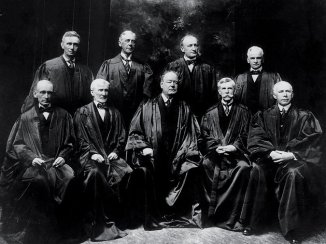
The Supreme Courts would continue to battle with the definition of “clear and imminent” danger when it came to free speech, and the Abrams case is an important case for this fight for free speech. What stands out the most in this case is the eloquent and well articulated dissent of Justice Holmes. He opens up the discussion for future generations of the connection between freedom of speech, the search for the truth, and the importance of worldly experimentation:holmes-and-supreme-court

” But when men have realized that time has upset many fighting faiths, they may come to believe even more than they believe the very foundations of their own conduct that the ultimate good desired is better reached by free trade in ideas — that the best test of truth is the power of the thought to get itself accepted in the competition of the market, and that truth is the only ground upon which their wishes safely can be carried out. That at any rate is the theory of our Constitution. It is an experiment, as all life is an experiment”


Wise words from a decent man.


Sources: https://scholar.google.com/scholar_case?case=14321466231676186426&hl=en&as_sdt=6&as_vis=1&oi=scholarr


Imprisonment & Economics: The Art of Legislation

You are who you imprison. Well, that’s what Plato would’ve said if he would’ve written The Republic in the modern era. Actually maybe not, but he would’ve been able to see the connection between modern economics, legislation and imprisonment. Being the genius that he was he’d probably devise a theory about this correlation, it’d be lofty, and well articulated. But since he’s no longer with us you’ll have to settle for my condensed version.

The first aggressive and transparent instances of this correlation emerge around the age of Mercantilism. They would debut in the form of legislative mandates all across Europe, particularly the Anglo-sphere. Michele Foucault (Historian and author of Madness and Civlisation) argues and points out that during this period:

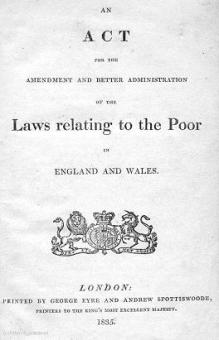
“The first houses of corrections were opened in England during a full economic recession. The act of 1610 recommended only certain mills and weaving & carding shops to all houses of correction in order to occupy the pensioners. But what had been a moral requirement became an economic tactic when commerce and industry recovered after 1651, the economic situation having been re-established by the Navigation act and the lowering of the discount rate. All able-bodied manpower was to be used to the best advantage, that is, as cheaply as possible. When John Carey established his workhouse project in Bristol he ranked the need for work first: “the poor of both sexes…. May be employed in beating hemp,dressing and spinning flax, or in carding wool and cotton”…Sometimes there were even arrangements which permitted private entrepreneurs to utilize the manpower of the asylums for their own profit” (Madness and Civilisation 52-53) 1834titlepage5.jpg

In a nutshell, Foucault emphasizes the interdependence between economics/legislation, and the effect they had on the development of correctional facilities in the age of Mercantilism. In this case an economic recession has hit England and in response the government passed legislation in order to regulate the economy. A fairly normal measure for governments trying to lessen the effects of an economic catastrophe. But it’s the methods that are deployed which raise cause for alarm.

In a desperate attempt to save the economy England outlawed abject poverty, homelessness, and “loose, idle  and disordley behavior(the latter was never given a clear legal definition) . They sent all “offenders” to correctional facilities, where they were locked in a cell and forced to work . The proper terminology for this systemic means of punishment is called Poor Relief. It was a way for the government to absorb the “non productive” members of society into a system of regulated labor. That newly established labor pool was then used by the big businesses of the time to make a profit during the economic recession.  These organizations would come into these ‘houses of correction’ and use the free prison labor enabling them to turn a profit during a recession. Basically they exploited the new source slave labor.

Additionally, Poor Relief should be looked at as a form of societal control in the face of economic hardship. By rounding up the impoverished of society, England was able to mask how catastrophic things were by forcing everyone to be economically productive. This enables a suppression of any societal/political agitation. After all people without jobs can’t protest the state of the economic climate if they’ve already been arrested for not having a job.  That allowed England to ‘kill two birds with one stone’:( 1) because more of the population is able contribute to the economy (increasing economic efficiency) and (2 )the threat of civil unrest is suppressed. The first instances of modern mass incarceration have begun to take shape.

(in hindsight England was able to fully recover from their economic catastrophe)

Fast forward to the latter part of the 20th century. A time of extreme ideological tension across the globe. Perpetrated by an ongoing Cold War between two world superpowers, the USSR and the USA. During the Reagan administration the goal was clear; the Soviets had to be stopped. The administration would spend their time conducting extensive research to determine the Soviet’s systemic weaknesses. One of the weaknesses identified was an economic one. The administration figured out that by strangling the USSR with economic sanctions and making sure the US economy expanded at an exponential rate, the USA could win the Cold War. Rendering the Soviet economist Leonid Kantorovich’s  Nobel prize winning work on optimal resource allocation useless. In hindsight, Reagan’s supply side economics (Reaganomics)  would prove to be an effective strategy in the aim to stimulate and grow the American financial sector, albeit artificially. By stripping away and adding new red tape, laissez-faire economics dominated and took American capitalism to places it had never been before. Despite all that, some sectors of the American economy needed artificial legislative means to achieve that record growth.

In the 1980’s the number of arrests of drug offenses rose by 126% (National Council on Crime and Delinguency 1989). Mainly due to legislative acts such as the Comprehensive Crime Control Act of 1984. It was a mandate which radically revised the American criminal code system;It gave the government more power in civil forfeiture, reinstated the federal death penalty, and increased federal penalties for cultivation, possession, or sale of Marijuana. This was an indirect effect of Reagan’s supply driven economic stimulus. Because in order for the USA to beat out the Soviets, the US market needed to be operating at near full capacity. That meant everyone was needed to contribute to the system. No matter who you were. What followed these mandates was the rapid development of the ‘for profit privatized prison industrial complex’ . In these new prisons a new criminal was cultivated to populate them, the non-violent drug offender.  As the prison industry grew so did the abundance of this newly cultivated criminal. This in effect meant more free labor for the American economic system as prisons became a new place for corporations to use “outsourced” prison labor.  Leading to even more diverse growth in the corporate structure. For example, if Walmart uses prison labor to create an assembly line for a product (which it does) , then that product is cheaper for consumers, which incentivizes them to shop at Walmart.

But a lot of the economic growth in this era was feigned under complicated laws which inflated economic statistics. An example of this would be corporate share buy back schemes. This financial technique is used by corporations to inflate numbers by buying shares of the company back from individuals who’ve bought them. Share prices are inflated because less shares are out in the public’s hands. But this alone doesn’t necessitate growth.  The reason why the profit margins grow is because investors are ignorant of the fact that the company is buying back it’s own shares. Generally, if people were aware of that corporate behavior confidence in that corporation would diminish. Ideally you’ll want the company to invest it’s money on the product/service it’s providing in order to turn a profit. When a company starts buying back shares that shows a lack of focus in terms of direct capital accumulation from the business. Instead buying back shares shows that a firm is more focused on marketing the fact they are still profitable. A desperate attempt to save their reputation. In principal nothing is wrong with this. But it’s wrong when the US legislation allows corporations to mask the fact they are buying back shares. This allows corporations to lie and potentially defraud investors. But ever since the 1980’s share buybacks have been allowed to remain nontransparent.  Practices such as these can result in big economic bubbles. This is especially concerning when considering the fact that Goldman Sachs has recently bought back $780 billion worth of it’s own shares to avoid public scrutiny, giving us insight that this behavior is alive and well in the 21st century. Subtly, there’s an implication that the  prison system may not have even played a significant part in the economic war waged by the USSR and USA. If it did generate growth then it must’ve been minimal. What seemingly played a significant role is the non transparency of certain economic strategies, one of them being corporate buy back schemes. But the creation of the non violent drug offender allowed the US private prison system a new source of labor, and therefore created growth within that industry. Nevertheless, Reaganomics resulted in a exponential growth for the American economy, one of the key factors that resulted in the collapse of the Soviet Union. Just another concrete example of the relationship shared between legislation, economics, and imprisonment.

In all, when economic instability is on the horizon, one should expect a response from those controlling the resources within a given society. This response will often translate into laws and it’s effect can be easily mapped overtime.

(Sources)

Madness and Civilisation By Michelle Foucault

The 1989 NCCD Prison Population Forecast: The Impact of the War on Drugs By James Austin Aaron David McVey