

Robert Moses is a figure that’s relatively obscure to the general public. However his influence has had a lasting impact throughout the United States. He would be paramount in engineering how cities in the States were structured, effectively influencing how and where Americans would spend their money.
Who was Robert Moses? Well, to start, he was unelected public official who held about 12 positions in the Greater New York city area. His stints in public office span from 1924-66. The positions he held had tremendous influence over urban planning. Urban planners aren’t often thought of as being political behemoths but Robert Moses’s tenure in these positions forces us to reconsider the influence unelected politicians may have over society.
Mr. Moses was a relentless, effective, and a calculated worker. His ability to start and finish public projects is arguably unmatched within the scope of American history. Furthermore, his ability to manipulate power goes far beyond the scope of anything Machiavelli could have imagined within a democratic republic. Robert Moses wasn’t fully understood or recognized outside of New York until the publication of Rob Caro’s Pulitzer winning book The Power Broker. The book gives us a grandiose look into the Moses. Robert Caro spent years researching for his book which spans roughly 1,300 pages. His scholarship, alongside with years of historical developments since the initial publication, are what guide my analysis on Robert Moses. Through our investigation of Robert Moses we will come to understand how a lot of cities in the United States mirror each other in terms of structure and societal development. And, albeit indirectly, an analysis of Moses forces us to consider a few philosophical questions when it comes to ideal local governance in the United States. But before we attempt to get understand why these two inquires are relevant , we have to investigate the rise of Robert Moses.
Robert Moses assent spanned various societal backgrounds. His tenure in public office spans three major historical events in the United States. Moses held positions during the economic boom of the 1920s, a crippling Depression in the 1930’s, World War II, and the subsequent post war economic boom.
The 1920’s: The Rise to Power
After finishing up his PhD at Columbia University, Moses decides to enter New York politics as a political idealist motivated to make change. A story familiar to many young professionals who aim to change the “old guard” within political systems. Moses had plenty of issues he wanted to grapple over. The society he was living in was corrupt, had little to no consumer protection, and certain industries were dominated by monopolies. He briefly worked for the Bureau of Municipal Research and with the U.S. Food Commission. But soon he realized that philosophical theories and logic, no matter how beneficial, wouldn’t take you far when it came to political advancement. His initial propositions were brushed under the rug by the seasoned veterans of government. Though his theoretical understanding of politics would come in handy from time to time, his practical education of political power would be where he was able to hone the craft of political power.
After a series of fortunate events Moses found himself appointed as the chief of staff to a woman named Belle Moskowitz. She was the leader of a commission tasked with organizing New Yorks administrative structure. A responsibility which came with significant power. It’s worthy to note Belle Moskowitz wasn’t elected by anyone. Rather, Moskowitz was appointed by Alfred Smith the Governor of New York. Smith was of course elected. I include these details not to be redundantly informative but rather to highlight the opaque nature of local government when it comes to transparency. People who you may assume are in control are passing that responsibility to an “advisor”, meaning there are various puppeteers pulling the strings. Moses’s time with Moskowitz is where he would learn the “tricks of the trade” in terms local governance. After managing to impress Alfred Smith through the early 1920’s, Moses found himself appointed to his first positions of power. The appointments would lead him to a notorious political squabble with an eventual US president, Mr. Franklin Delano Roosevelt.
The Appointed One & The Fight with Roosevelt.
In 1924 Moses was appointed as the leader of both the Long Island State Park Commission and State Council of Parks. Moses actually drafted the legislation that created the power of these commission earlier in his career. Personally, when I read the names of these positions I didn’t immediately think POWER. But let’s remember that Moses was calculated. He strategically used the power that he did have to gain even more power. Being head of these political bodies allowed him unprecedented control over land-use and highway construction. Behind the scenes he usurped control over certain political entities from elected officials. Moses would lobby constituents, politicians, and special interest groups into allowing him to have independent control over land-use and highway development commissions. Overtime he began to resemble a mini dictator. However, his power wouldn’t go unchallenged.
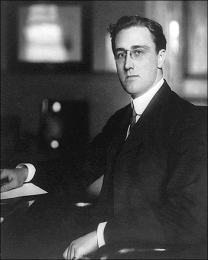
Franklin Roosevelt, at the time leader of the Taconic State Parkway Commission, had a political spat with Moses. It all started when Roosevelt had a plan to build a parkway through a region of New York City called the Hudson Valley. Moses had different plans. He managed to funnel all the funds from Roosevelt’s project to his own project. Moses was able to keep the funding to Roosevelt’s project so low that it could barely even maintain operations. Roosevelt complained to the governor that Moses was “skinning” Smith’s administration alive. But nothing happened. Eventually, Roosevelt became governor and eventually his parkway project was completed. Roosevelt had another goal in mind, and that was to remove Moses from power. But the removal of Moses was almost impossible by the time Roosevelt became governor. Robert Moses had set up a powerful base of political independence by using legislation, public funding, the press, and young political reformers to support his positions. He would later spearhead a commission which aimed to consolidate 187 separate agencies into eighteen departments. In just 10 year’s Moses was able to absorb power from potential opponents and build a powerful network to get his projects done. But this was just the start there was much more to come from Robert Moses.
The Depression & Beyond
During the 1930’s the United States suffered an economic depression. During this economic catastrophe Robert Moses would blossom. Ironically, his former rival actually enabled this via New Deal legislation lead by President Roosevelt. Moses was granted even more executive and monetary incentive to solidify his power by the Federal Government. Roosevelt, not forgetting his political tenure in New York, attempted to get Moses ousted by making federal funds available only if Moses was removed from office. Moses wasn’t threatened. He told the press of Roosevelts demands. Subsequently, the Federal Government had to stop after increasing public pressure. But as World War II was being waged, Robert Moses’s influence on New York City began to take shape. The Master Builder started to work on his vision. One unnamed federal official commented on Moses during this era saying:
“Because Robert Moses was so far ahead of anyone else in the country, he had greater influence on urban renewal in the United States – on how the program developed and on how it was received by the public – than any other single person.”
That quote gives us an insight on the magnitude of power Moses had. He was responsible for many projects ranging from the United Nations Headquarters, Shea Stadium, and the Pratt Institute. But he also led initiatives to spur more highway developments, suburban housing developments, strip malls, and other public amenities. Moses got even better at getting projects done. A common strategy involved starting projects knowing that financially they couldn’t be accomplished , but he would leverage political clout in order to manipulate political officials to complete his projects anyway. While in the depression his projects employed a largely jobless populous during the Great Depression. During this era, he held numerous public positions at the same time. None of the positions required him to be publicly elected.
WWII & The New America
The world dramatically changed after World War II. The United States emerged as an economic and political powerhouse within the International community. Moses understood this and he wanted to further influence the new world around him. His goal for NYC was one that attempted to integrate an urban center to suburban areas which would all be interconnected via parkways. The bureaucrat’s vision would influence America for the years to come.
After World War II America’s social community began to change. Women entered the work force in droves, the nation was in better economic shape than a lot of nations in the world, and the ideal of “Americanness” began to solidify. What do I mean by Americanness? I mean white picket fences, increased home & automobile ownership, and the development of mass consumerism. After WWII plenty of soldiers came home to start anew. They were incentivized to start “nuclear” families, to buy homes, develop their market skills, and most importantly to spend money in order to expand the American economy. Robert Moses was fully aware of this societal shift. He saw the traditional layout of American cities as archaic and counter intuitive to the world’s economic demands. Small retail owners were dismissed in favor of shopping behemoths
such as Macy’s, Sears, and the advent of the shopping mall. Local restaurants were forgotten as Dairy Queen and McDonalds slowly became staples in the American diet. Automobiles slowly eliminated the reliance on public transport, allowing people to buy suburban properties further away from NYC. Moses preferred a sprawl model over concentrated urban communities. And he developed plenty of projects to incentivize the sprawl model. New Yorkers, such as Robert Caro, criticize Moses for destroying New York neighborhoods in favor of vast highways that connected the suburbs to the City. When developing these projects Moses displaced hundreds of thousands of people, destroyed economic centers, and arguably community identity. This led critics to surmise that Moses perhaps preferred automobiles and shopping centers over people. Furthermore, Moses played a part in depleting New York’s resources to develop his projects. But despite that, the Moses model was in demand in post war America. Plenty of public officials from around the country demanded Robert Moses’s expertise in developing their city plans. This may explain why many American cities, especially in the Midwest, mirror each other in a plethora of ways.
In hindsight Moses’s city planning was a perfect model for a globalized economy. It was predictable; generally people would work a similar hourly schedule, consistently consume products from publicly traded corporations, and, by driving, consumers would
support the gas, oil, and automobile industry. This model has its merits. It’s predicable, safe, and allows people to consume their preferred products. However, a community too reliant on the Moses model is more susceptible to global economic crises. This isn’t just a theoretical proposition, practical examples are evident when we look at Detroit and Las Vegas during the 2008 financial crisis. But it’d be remiss to not mention how many new and innovative developments Moses was responsible for. He was able to engineer and execute massive urban plans that did help a considerable amount of people. But at the expense of displacing many people out of their communities. But one of the most disturbing things about Robert Moses is his ability to become an immensely influential political figure without having to get elected into political office.
Moses’s story forces us to think about the type of local (& perhaps national) governments people would prefer. Do we prefer governments that can be taken over by “Mosesesque” figures in order to get long term, and perhaps beneficial, projects done? Or do we want a system that is a bit more decentralized which doesn’t allow any one sole “political will” to dominate? Whatever you prefer, each has its positive and negative implication.
Which begs a peripheral question: How much do YOU know about the unelected officials in your local government? A question to consider.
Sources:
Power Broker by Robert Caro
ROBERT MOSES AND THE RISE OF NEW YORK THE POWER BROKER IN PERSPECTIVE by KENNETH T. JACKSON
A Consumer’s Republic: The Politics of Mass Consumption in Postwar America by Lizabeth Cohen
https://www.pbs.org/wnet/need-to-know/environment/the-legacy-of-robert-moses/16018/
http://fordhampoliticalreview.org/the-legacy-of-robert-moses/
 Sermo Civilis