Silk Road 2.0: China’s Plan For Global Economic Dominance.

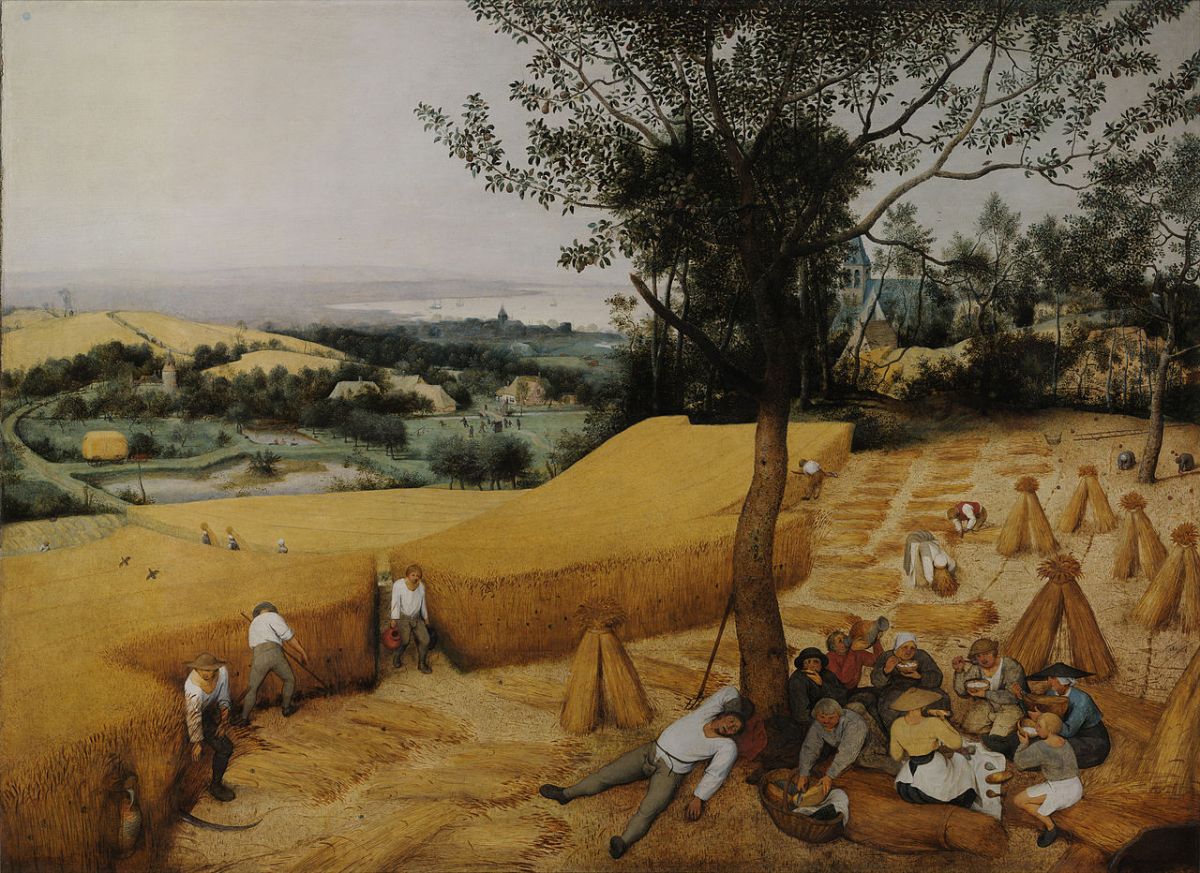
The Silk Road was one of the most important economic trade routes of antiquity. The road spanned from modern day Turkey to the Pacific side of China. Successfully  connecting various markets along the route. Not only did the road create immense wealth but indirectly lead to cultural exchange. In effect, Europeans were exposed to new spices. That created new pallets for various people, leading to the development of foods such as spaghetti & lasagna. The information passed through the silk road was also valuable. Technological advancements such as paper making, printing, gunpowder, and the compass gained traction across the world. Effectively leading to other advancements in society. However, despite all the positive effects the Silk Road had it would eventually decline due to political turmoil in the heart of the trade route. That lead to less security for traders, translating into a risky investment. Making it fall out of favor as a venture.

Fast forward to the 21st century. From relative obscurity & poverty, China has developed into an economic powerhouse. Climbing up the GVC (global value chain) and effectively becoming one of the world’s leaders in logistics. This only seems like the start. General Secretary Xi Jinping has announced a plan that has the potential to propel China into economic dominance. The project is called ‘The Silk Road Economic Belt’.

Silk Road 2.0

The new Silk Road project aims to unify large markets through a connected infrastructure. Creating one diversified market which trades products, talent, information, and culture. Sound familiar? It should because this is exactly what the old Silk Road did. However, a key difference is the route of the road. Instead of going through the Middle East it will go through central Asia. Rightly so, since the Middle East is experiencing a period of extreme instability. From central Asia the road is supposed to expand into eastern Europe. That would be a clear gateway into western European markets.

Now looking at the project through an optimistic lens this seem like a great opportunity to; develop Central Asian countries, reignite the stagnating economy of Eastern Europe, and take China deeper into a market Economy. Central Asian countries would gain the opportunity to develop their infrastructure, as well as become deeply integrated into the global economy. The idea China has is that new communities will sprout up on the road because of the economic benefits.

The same applies to Eastern European nations but to a lesser degree. How Eastern Europe would mainly benefit is as the direct gateway to Western European markets. An attractive venture for people trying to make money via Western Europe.Hypothetically, that should increase investment in the region which would stimulate the local economy. Allowing for growth. Thus reversing the stagnation.

China would be able to capitalize on this road by allowing their products to flow through the route. Increasing their market dominance as a producer. Additionally, products from Western Europe would come through as well. Allowing for consumption by the Chinese population. Specifically the middle class. Bam! Market economy.

The project aims to generate profit but in the process it enfranchises the disenfranchised. That’s always advantageous. Being able to make money while producing something by  helping those in need is beneficial for all parties.

Despite all it’s potential, it’d be naive to ignore the hurdles for this project.. Big projects need big money. The ambitious project is estimated to cost $5-8 trillion. In order for this to work a tremendous amount of cooperation & efficient execution. Only time will tell if this project gains traction.


While nations build walls, China plans to build roads. Times of economic growth (current growth is at 3.9% IMF) are the best times to plan for future. After all you want to fix the leaky roof while it’s sunny out.


Sources: IMF https://www.imf.org/en/Publications/WEO/Issues/2018/01/11/world-economic-outlook-update-january-2018


http://www.ejinsight.com/20160412-getting-lost-one-belt-one-road/
 

https://www.brookings.edu/research/chinas-rise-as-a-regional-and-global-power-the-aiib-and-the-one-belt-one-road/

How The Supreme Court Justified Eugenics: The Curious Case Of ‘Buck V Bell’

It’s no secret that the U.S. Supreme Court has a tumultuous past with certain rulings. A few examples being the infamous Dred Scott case which erroneously reasoned that certain set of humans were deemed property, Hammer v Dager which justified child labor, or Plessy v Ferguson the case that set the precedent for Jim Crow. People who’ve taken an American History course will more or less be familiar with the aforementioned cases. However, there’s an ambiguous case titled ‘Buck v Bell’ that deals with the controversial topic of eugenics. If you aren’t familiar with eugenics it’s basically a method of social engineering used to create the “best” race of humans. The method being notoriously implemented by Nazi Germany. Interestingly enough, it wasn’t just Nazis trying to make these plans come to fruition. The U.S. legal system had to deal with the topic of eugenics. Here’s how they addressed it.

Historical Context

In order to get a full understanding of the case some historical context on eugenics is necessary.  The theory of eugenics begins in the late 19th century, sometime after Charles Darwin publishes his magnum opus On the Origin of Species. During that time people rush to apply the theory of natural selection to human society. This movement gains traction throughout the western world. Peaking around the 1920’s. Universities in the USA begin to offer courses on eugenics. Increasing its popularity among academics. Despite the popularity of eugenics, academics begin to debate which humans were the superior ones. Some said the Anglos were & others argued that the Germans, Italians, Frenchs etc, were. Obviously in hindsight advancements in biology & genetics debunk all those aforementioned statements. But for the time this was the scientific truth. That lead the politicians of that era to make it their “moral” duty to prevent the degeneration of their race. This is similar to when the American Psychiatric Association classified homosexuality as a mental disorder in DSM III (published 1980), which falsely influenced societies perception on homosexuality. The same happened to eugenics in America. False research was given, debate ensued, and  legislation was implemented which leads us to the curious case of ‘Buck v Bell’.

The Case

The case begins with Carrie Buck. A resident of The State Colony for Epileptics and Feeble Minded at Lynchburg, Virginia which is headed by Albert Priddy. Carrie Buck finds herself at this institution after a series of unfortunate events in 1924.  Buck, a victim of rape, became pregnant and her adopted family had her committed to the SCEFM due to the “immorality” of having a child out of wedlock ( turns out they falsified she was raped). While at the institution they discover she has the “mental age of a 9 year old”, Priddy is a staunch supporter of eugenical sterilization, and suggests sterilization of Ms Buck due to her “moral delinquency”. Reasoning that it was probably passed down from her mother who was also known to be promiscuous and “feeble minded”.

Priddy was warned by a court in 1918 of his personal liability in sterilization operations and stopped for some time. However, realizing an opportunity to legally validate his operations, he takes the Buck case to the board of SCEFM. At the hearing Priddy argued his case to the board and it’s approved. It is then taken to local circuit court where evidence provided by an “expert”  detailed Buck’s “clear” lineage of moral delinquency. It also helped that Bucks consul (Irving Whitehead a founder of SCEFM) brought forth no arguments against Bell . The reason being was Whitehead sought the same end as Priddy; legal eugenical sterilization. The case would end up at the Supreme Court.


During the appeals process Mr. Priddy dies and the case is taken up by John H Bell. Who argues to the Court that due process was given to Buck and state police powers allowed them to protect and decide for persons such as Buck. Whitehead argued that institutions such as SCEFM could easily become havens where

” (The) worst forms of tyranny practiced…inaugurated in the name of science.” Furthermore, Bucks legal guardian argued that her right to procreate infringed on the due process clause of the constitution. Buck would lose the case 8-1. Supreme Court Justice Holmes writing for the court rejected Bucks arguments. The equal protection argument was shot down by Holmes because the policy applied to all within the institution. Furthermore, he adds that if the nation can call upon its “best citizens” in times of war, a lesser sacrifice can be made by those “lesser” that “sap the strength of society”.

The prevention of procreation is justified because “(t)hree generations of imbeciles are enough”. Strong words, iffy ruling.

Conclusion

After all was said and done Carrie Buck was sterilized in the name of eugenics. That ruling set the precedent for other states to enact similar laws. On the bright side after the Nazi’s were defeated and advancements in science, eugenics laws slowly began to fade. Despite this ‘Buck v Bell’ stands as the law of the land. The case has yet to be overturned.


Sources: The Oxford Guide to United States Supreme Court Decisions

Sapiens A Brief History of Human Kind by Yuval Noah Harari

John Deere & The Right To Fix.

Farming has been quintessential to America’s economy ever since 1776. Throughout history the American government has legitimized the aforementioned sentiment via different forms of legislation. For example, when the Great Depression hit Franklin Roosevelt decided that full economic recovery depended on enfranchising the agricultural sector. His New Deal through the Agricultural Adjustment Act created the AAA ( Agricultural Adjustment Administration) which is still active to this day. These measures not only helped local farmers, but also farming manufactures who would’ve surely gone under. An example being John Deere. However, thanks to some help John Deere & small farmers were able to recover, & develop a symbiotic relationship. Farmers could farm with the best equipment because John Deere (due to government assistance) decided not to repossess any tractors that weren’t paid off . An admirable gesture in trying times. However, despite John Deere’s role in making farmers lives easier via new farming technology & charitable business practices, a new trend seems to negate their storied history.

Farmers in the modern era are facing trying times. The reason for that is farmers can no longer independently fix their tractors that have malfunctioned. That’s because in order to fix modern tractors you need diagnostic software to figure out the problem. You might be asking yourself “Why don’t farmers just get the software”? Well, it turns out John Deere doesn’t allow the software to be purchased in the first place. That fact forces farmers to either pay a John Deere dealer to fix it (often times they are really far away & it’s expensive), or buy totally new equipment from John Deere, effectively wasting the farmers precious time & resources. Prior to this new trend you could purchase a diagnostic manual & fix tractors with little to no ease. Which is what most farmers did. Yet, if the farmer for some reason couldn’t, they’d take it to a tractor mechanic & he’d figure it out. This is now impossible due to John Deere’s reluctance to provide that software. A small percentage of farmers have even gone to great extents to purchase hacked software from Eastern European nations to curtail this dilemma. But farmers shouldn’t be forced to do shady black market deals to fix their property. Thankfully, some motivated people are fighting for the rights of farmers to access the diagnostics of their tractors. But there are still huge road blocks in their way.

The Library of Congress has granted an exemption for farmers from the DMCA Act (which protects corporations from online piracy) in order to shield them from legal repercussion if they were caught. However, immediately after that was implemented John Deere adjusted their terms of service to negate that ruling. A move you’d expect from El Chapo or Pablo Escobar. Despite that hurdle, motivated activists like Guy Mills & Lydia Brasch advocate for the freedom to purchase diagnostic tools. Lydia Brasch, a senator form Nebraska, has proposed the Fair Repair Act in order to help Farmers obtain the tools for repair. At that hearing in Lincoln, Nebraska lobbyists from Apple, Microsoft, & AT&T convened to violently oppose the Act. A rare thing in Nebraskan politics. Why would they show up? Simple, that legislation would set a precedent in the tech field because it would limit the tech firm monopoly over diagnostic info. Nebraska isn’t alone in trying to combat this problem. 12 states have recently proposed similar legislation.

In conclusion, information about fixing your property should be open to the public. That’s because this issue is similar to this scenario. Hypothetically lets say a specific hospital owned the rights to open heart surgery, & refused to give it out to other doctors. People would run riot. There’s no difference from that hypothetical scenario to the things John Deere is doing now.

Is John Deere a bad company? Of course not. But they should be a bit more active in trying to help these farmers instead of them being solely concerned with their own interests? Of course, and as Americans we should hold overly abusive corporations accountable for their actions . Remember, agricultural manufacturers & farmers should have a symbiotic relationship not a parasitic one.


The JFK Files: The Main Takeaways

Recently, The National Archives released thousands of classified government records on the John F. Kennedy assassination on October 23rd and November 3rd of 2017. Giving way for thousands of academics, journalists, & conspiracy theorists to sort through the ample amounts data. Though a great deal of the material is riddled with bureaucratic jargon, code names, and of course redacted info, the releases give an in depth and transparent look on these intelligence agencies at the time.

However, it’s worthy to note that thousands of other pages are being withheld for atleast 6 months. This coming after some slight pressure from the American intelligence community. Nonetheless, the recent releases have proved promising. The files cover a broad range of topics from detailing how intelligence was gathered from a stripper named “Kitty”, a 20 page “analysis” on Dr Martin Luther King, and even some  creative ideas on how Cuban leader Fidel Castro should be assassinated. But the main focus of this article will be on the intelligence gathered by the FBI and CIA in the midst of the JFK assassination. Here are 4 things the public should know about the recent releases.


1. The Anonymous Call

An intelligence cable from a CIA station in London received intel gathered by MI-5 (Britain’s Security Service) about a strange call a local news reporter received. On November 22, 1963 a senior reporter from the Cambridge News received a call from an anonymous caller who said “(The Reporter) should call the American Embassy in London for some big news” the caller promptly hung up. About 25 minutes later president John F Kennedy was assassinated.

The senior reporter said he’d never received a call like that ever in his life and the MI-5 went so far as to say he was ” (A) sound and loyal person with no security record”. The MI-5 found it worthy to also note that this call was similar to other calls received by various other journalist involving the Dr Ward Case ( a case which dealt with a sexual scandal & espionage that could’ve crippled the British government in 1963)

2. Oswald’s Visa Talk: Phone Call Intercepts from the Soviet & Cuban embassies

In the weeks prior to the murder of JFK Lee Harvey Oswald attempted to secure visas from Cuba and the Soviet Union while in Mexico City.  Both embassies seemed to try to help him get these long term visa’s despite his “terrible, hardly recognizable Russian” and poor Spanish. Silvia Duran (Cuban Consulate worker) was the first to be engaged in discussion with Oswald over a long term visa possibilities in Cuba. She tries to assist him in obtaining a Russian visa in order to make getting a Cuban Visa easier. She phones the Russian embassy and tries to see if they can come to some agreement over Oswald’s visa dilemma. Oswald claimed to be a part of a “pro-Cuban group”, but Silvia couldn’t get a visa for him initially because” he (knew) no one in Cuba” . Furthermore, obtaining a Russian Visa would take a long time, and evidently Oswald wasn’t worthy enough of a Russian recommendation. That didn’t stop his efforts.  Oswald would then go through a series of phone calls with Russian officials about his visa status (one being Kostikov a KGB Agent specialized in assassination). However a man called Obyedkov abruptly hangs up on him in the middle of a conversation about a telegram.

Now why is this whole visa situation important? Well, clearly it shows us that Oswald was trying to relocate to either Cuba or Russia. But that raises more questions. Specifically, what were his motivations for obtaining these visas? Was he trying to obtain them as an escape plan for him to use after his assassination plot? Or was he trying to defect to these countries for other purposes?

Moreover, “Obyedkov” hanging up on Oswald should be a cause for further questioning. Was “Obyedkov” simply frustrated with Oswald, did he finally find out about Oswald’s self caused hospitalization back when he visited the USSR, or was he aware of something else?


3. November 24, 1963: Tell ’em It was Oswald.

This document is the least legible of the documents covered in this article and was written around 45 minutes after Oswald died. Oddly, it has no title, the author of this document isn’t named (But it can be assumed the words came from Hoover) , and it’s prefaced with “Mr J. Edgar Hoover said as follows”.

Th Document starts off in a rather blunt tone the first sentence says ” There is nothing further on the Oswald case except that he is dead.” It goes on to talk about Jack Ruby as Oswald’s murder, and briefly mentions his background. In addition, it seems as if Hoover was worried that Dallas Police officials were revealing too much information on Oswald and Ruby. Hoover feared it could potentially compromise the legal process.

In the third to last paragraph Hoover seems to be concerned about “…having something issued so we can convince the public that Oswald is the real assassin.”. The paragraph goes on to talk about how the FBI could persuade the Attorney General that Oswald was the guy by using “pictures, laboratory work etc”. That would then lead the public to believe Oswald did it.


4. The Watson and Hoover Soviet MEMO

A couple sources working covertly in high Soviet and KGB positions offered some insight on how the Soviet government reacted to the Kennedy assassination.

The Soviets believed that the assassination wasn’t orchestrated by one man, but rather a highly organized “ultraright” group wishing to initiate a coup. In conjunction, they were fearful that some irresponsible general from the USA would launch a missile at the USSR. This coupled with other concerns instantly put the Soviet Union in a state of national alert.

The Soviets knew that Oswald was in the USSR for a period of time but they described him as “a neurotic maniac who was disloyal to his own country and everything else”. Additionally, they noted that he wasn’t involved in any organization in the Soviet Union and never received citizenship.

Also, the agents were able to infiltrate a high level KGB meeting, headed by Boris Ivanov (head of KGB)  in New York City. Ivanov felt that the recent assassination was a problem for the KGB. And that this problem needed to be brought to every KGB agents attention until it was solved. The KGB also felt that the assassination couldn’t have been conducted by a sole perpetrator. The agency then put forth a plan to gather as much data possible about any possible group that could’ve executed the assassination plot.

Furthermore, Ivanov emphasized collecting as much intel about Lyndon B Johnson as possible. Quite frankly the Soviets knew nothing about him. They wanted an in depth search on “his background, his past working experience and records in congress..”.

2 years later the KGB met again in NYC after gathering  intelligence about President Johnson. The source states that (per the instructions from Moscow) the KGB was in possession of data that would prove LBJ was responsible for the JFK assassination.

The document concludes with notes on several critical reports about the Warren Commission by Soviet media outlets.


Despite these main points, there is still plenty more to be uncovered by the recent data release. And the files that have revealed valuable information have in effect raised even more questions.


Feel free to indulge in the first hand declassified sources below. 


The Anonymous Call: https://www.archives.gov/files/research/jfk/releases/docid-32389606.pdf

VISA TALK: https://www.archives.gov/files/research/jfk/releases/104-10010-10249.pdf

TELL ‘EM IT WAS OSWALD: https://www.archives.gov/files/research/jfk/releases/docid-32263509.pdf

WATSON and HOOVER MEMO:  https://www.archives.gov/files/research/jfk/releases/docid-32204484.pdf


Gerrymandering & Redistricting; A Supreme Court Affair

Gerrymandering, a technique that has helped fuel various political machines, is a topic of great debate within the Untied States. Gerrymandering on the surface is undemocratic. Allowing a political party that’s in power to redraw voting lines will naturally lead them to misuse their power. Partly because parties have used the technique to maintain political power by redrawing districts in their favor by diluting voting power. As was the case in 2011 in Wisconsin, where Republicans received a majority of house seats (60%) with only 49% of the state wide vote. How is this possible? Simple; Gerrymandering. It’s this overt case of the corrupt technique that has brought the debate to the Supreme Court. The Court plans to issue it’s ruling on Gill v. Whitford (The Wisconsin casein June 2018. Whatever side the court rules on, one thing is for sure: it will set a monumental precedent in terms of governing in the USA. (I’ve included a video explaining gerrymandering further down below.)

However, gerrymandering has two sides. Interestingly enough it’s been used to empower disenfranchised voices that have been diluted (usually by gerrymandering). Though the Court didn’t directly state it, racial redistricting was deemed somewhat constitutional. Here’s how they justified it.

The case involved in the debate was called United Jewish Organization of Williamsburg v Carey. In short, Kings County administrators followed the District Attorneys of New York’s plan of redistricting (In conjunction with the Civil Rights Act). Part of the provision called for certain districts to reach a nonwhite majority of 65 percent. Coincidentally, a Hasidic Jewish community was located in one of these districts. The effect of the provision was that the community was split in half, and was reassigned to an adjoining district. The Jewish community would then bring a suit for injunctive and declaratory relief, alleging that the 1974 plan violated their rights under the Fourteenth and Fifteenth Amendments, arguing that the plan diluted their franchise. The case would soon make it’s self up the ladder to the eyes of the Supreme Court.

The Court tip toed on it reasoning of the case. For the sake of simplicity and to save you time on the legal jargon here are the main points of the Courts justification of  New York’s redistricting plan:


  1. The Court mentions that racial discriminatory redistricting is unconstitutional.
  2.  Since the redistricting follows the provisions in the Civil Rights Act it isn’t discriminatory but rather hopes to reverse discrimination.
  3. So the use of racial criteria in drawing district lines may be required per Civil Rights Act (Specifically Voting Act)
  4. Additionally, the use of racial criteria is not limited to remedies of explicit prior discrimination.
  5. The use of numerical racial quotas in establishing certain black majority districts does not automatically violate the Fourteenth and Fifteenth Amendments
  6. The Court also says the constitution doesn’t recognize the Jewish Communities right to reapportionment as a separate entity.

Clearly the court relied heavily on the Civil Rights Act legislation and rightly so, in terms of the specific justification for enfranchisement of persecuted communities. But also seems to undermine the Jewish community. American history shows that those people haven’t necessarily been treated fairly either. Furthermore, gerrymandering is totally ignored in the Courts argument. Perhaps trying to devout their attention to the pressing societal challenges plaguing the era at the time. Racial tensions were high and The Court justified the means to combat racial injustice. However, in that pursuit the Court  may have indirectly set a precedent for justifying gerrymandering.

In all, gerrymandering is a complicated and nuanced subject; making it justified in multiple idiosyncratic realms. But the core of the issue is undemocratic. It gives room for manipulation by people seeking to fulfill their own sinister interests. If those sinister acts are possible then shouldn’t it be abolished? We’ll see what the Supreme Court has to say when confronted with the core issue in June.


LINK


Sources: http://caselaw.findlaw.com/us-supreme-court/430/144.html